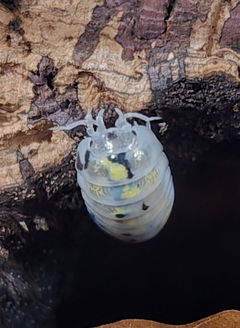
Porcellio expansus 'Prades' Isopods
Care Info:
 ORIGIN
 TEMP
TEMP
 HUMIDITY
 LENGTH
 DIFFICULTY
 RARITY
- Free shipping over £65
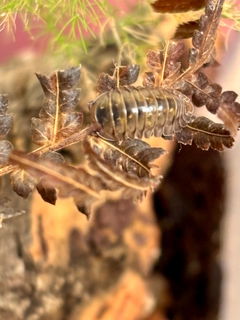
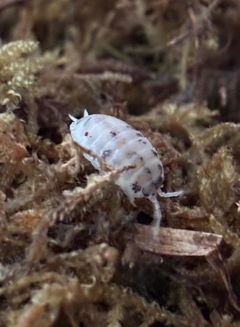
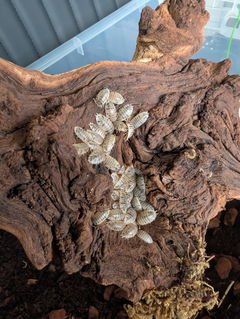
Set this next to the other Porcellio expansus lines we stock and what stands out is a subtraction. The Orange and the Tortosa locality both carry orange on the animal, as do the other locales we keep. The Prades line has none of it. What is left is an icy white and grey woodlouse, cold-looking in a way the rest of the species never is.
Underneath the colour it is the same Giant Spanish Isopod, and 'Prades' is a locality line, not a species of its own. The build is unmistakable: rough-textured across the back, long and elongated through the body, with prominent uropods projecting off the rear that hand the whole animal a prehistoric look. Body length for the species runs about 26 to 38mm. Old males are the ones worth waiting for, growing particularly large, with those uropods drawn out further still and very long antennae, which can push total length past 50mm once the appendages are included in the measurement. What Prades is not is the biggest expansus. That title belongs to the La Sénia line. This one is remarkable for its colouring, not for its size.
A cold mountain animal
Prades is a municipality in Tarragona, in Catalonia, sitting high in the Prades Mountains. The range is a large limestone massif that rises past 1,200m, forested in oak and pine, and the winters up there are very cold. It is not the warm coastal Spain people tend to picture when they hear Iberian isopod, and that is useful to hold in mind when you set the enclosure up.
Be aware before you order that this is a difficult animal and a rare one, and it is not where anyone should start. It does not conglobate either, so it will not roll into a ball when you disturb it. I would put it in the hands of a keeper who has already run a dry-gradient colony without losing it, and who is happy to wait. If you want a large Iberian Porcellio that asks less of you, the Titan is the sensible alternative.
Keeping it dry
Temperature is straightforward at 18 to 26°C, and anywhere inside that band will do. Humidity is where colonies are lost. Aim for roughly 45 to 55 per cent, keep the great majority of the enclosure dry, not merely less wet, and give it a single moist corner instead of an even damp. Pair that with medium to high ventilation so moisture leaves the box instead of settling in it. When you are unsure with the mister, err on the dry side, because damage done by too much water builds slowly enough that it usually gets blamed on something else.
Give them 7 to 10cm of substrate, deep enough to hold that gradient steady and to dig into. Hardwood only, in the wood and in the leaf litter, never softwood. An animal of this size spends a great deal of calcium at every moult, and a colony running short of it will start losing animals mid-moult. That is why cuttlebone stays in the enclosure as standing equipment. They are protein-hungry as well, and a regular protein offering is part of the routine, not an extra. There is more of the genus in the wider Porcellio range if you are building an Iberian shelf.
Live arrival is covered on every order. A colony travels bedded on damp sphagnum, the deli tub well vented, the whole thing boxed behind a double wall, tracked next-day Royal Mail before 1pm. Dispatch is Monday to Thursday and no further into the week, which keeps any parcel of ours clear of a weekend in the network, and there are always more animals in the tub than you ordered.
Use collapsible tabs for more detailed information that will help customers make a purchasing decision.
Ex: Shipping and return policies, size guides, and other common questions.