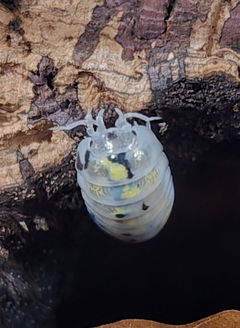
Porcellio Nicklesi Tang Isopods
Care Info:
 ORIGIN
 TEMP
TEMP
 HUMIDITY
 LENGTH
 DIFFICULTY
 RARITY
- Free shipping over £65
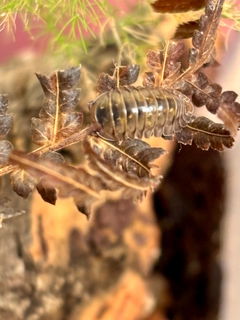
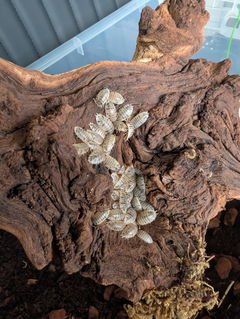
I cannot tell you how this differs from our Orange Blaze, and I have looked. No source anywhere separates the two: not a breeder writeup, not a European listing, not a hobby database. They may be one line under two names, or genuinely distinct animals whose difference nobody has bothered to write down. Both are orange Porcellio nicklesi, both came into the hobby the same way, and if you are choosing between them, choose on the photographs.
What I can do is tell you what the animal underneath is, because that part is well documented and most listings get it wrong.
The species
It is Porcellio nicklesi, Dollfus, 1892, with a C in the middle. You will see niklesi without one all over the trade, ours included until recently, and it is a misspelling that propagated. The species began life as a subspecies of P. bolivari before being raised in its own right.
Spanish, and a cave animal, which is where the trouble starts. People read cave and reach for a humid box. This species wants the opposite. Hold humidity down around the high forties to mid fifties, with no more than a corner of the floor kept moist, give it real airflow, and hold the substrate to 3 to 5cm rather than the deep damp column you would give a tropical isopod. Damp air is what this animal cannot take, and that single misunderstanding accounts for most failed colonies.
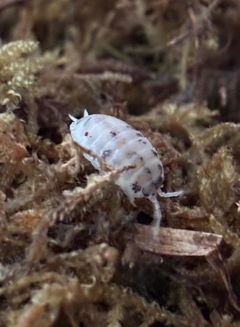
Temperature is easy at 18 to 28°C, so a British room needs no help. The body reaches around 20mm, though with the uropods trailing behind it the animal measures nearer 30mm, and those long paired tails are the feature that makes the genus worth keeping. Like all Porcellio it cannot roll into a ball, so its answer to being disturbed is to run.
Ventilation is the other half of it. These come from a dry climate and a stuffy box does them no favours, so mesh the enclosure generously and let the surface of the substrate actually dry between the damp corner and the rest.
Colour and lines
The wild type is grey. Orange forms carry that colour over black and white speckling, and there is a third named line, Rubivan, in circulation. The origin of the orange is disputed and no published account of it exists, so treat every claim about who bred what and when, on any shop's page, as unverified.
Keeping them
Feed as you would any large Spanish Porcellio. Leaf litter and rotten hardwood as the base, with protein offered once or twice a week, because this genus is markedly more protein-hungry than Armadillidium and a colony denied it stalls. Leave calcium out at all times, whether cuttlebone or crushed limestone. Expect a big isopod moulting through heavy armour to work through it quickly.
They breed seasonally rather than continuously, and maturity takes around six months, so patience is part of the deal. This is not a beginner animal, mostly because the dry regime is counterintuitive and easy to get wrong in the direction of kindness.
If you want the same species without the colour question, our wild-type nicklesi is the honest starting point, and the Spanish giants that suit a similar dry setup are gathered in the Porcellio range.
Colonies ride out over wetted moss, shut into a ventilated pot, that pot bedded between two walls of card. Posting runs early week only and finishes on Thursday, keeping every order clear of a Saturday. The service is tracked and overnight, landing by early afternoon, counts go out generously, and we guarantee they arrive alive.
Use collapsible tabs for more detailed information that will help customers make a purchasing decision.
Ex: Shipping and return policies, size guides, and other common questions.