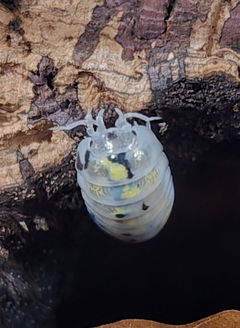
Porcellio silvestrii 'Black Senia' Isopods for Sale
Care Info:
 ORIGIN
 TEMP
TEMP
 HUMIDITY
 LENGTH
 DIFFICULTY
 RARITY
- Free shipping over £65
We made up the place name. This listing said the line was "named after the La Senia region of Tarragona in northeast Catalonia, Spain - the same locality that produces the spectacular Porcellio expansus 'La Senia' at 50mm+", and described the two as sharing a Mediterranean karst landscape. La Sénia is a real municipality and it really is where the expansus La Sénia line is tagged from. But nothing anywhere connects the Senia in this animal's name to that place. It could be a locality, a breeder's line name, a person, or a word that drifted across from the neighbouring listing on our own site. We wrote a provenance story out of a coincidence of spelling, and it has gone.
The handle carries a doubled a as well - "seniaa" - which is a typo we will fix with a redirect.
What is left when the story goes
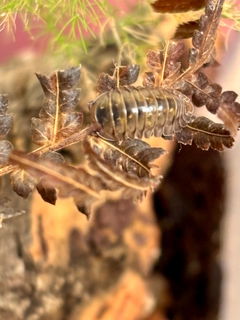
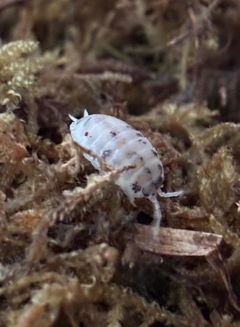
A dark charcoal to near-black line of Porcellio silvestrii, which Arcangeli published in 1924 as a form of P. monticola before it was given species rank of its own. The distribution is the one solid thing here: more than a hundred records, every one Spanish, with Catalonia and Valencia carrying almost all of them.
Beyond the colour we cannot separate this from the base animal for you. No seller outside this site uses the name. When the Spanish trade was audited in 2024 the species turned up in twenty shops with exactly one commercial variety logged against it, so we will not pretend these are three distinct lines in a sense a taxonomist would recognise. What they are is three colour selections we keep and breed separately, and that is what you are buying.
The size problem, since we caused it
The figure here was 15 to 20mm. Our two sibling pages for the same species both said up to 25mm. One species, two figures, and nothing published to arbitrate between them - no measured series exists for P. silvestrii anywhere we can find, and the 25mm circulating among sellers is one unsourced number being copied around. Ours sit between a common rough woodlouse and a Spanish giant. We would rather say that than pick one of our own numbers and defend it.
The species has two junior synonyms, published in 1954 and 1955 by different workers, which tells you it was described more than once by people who did not recognise it. That is common in this genus and it is part of why the trade names sit on such thin ground.
Keeping them
A room at 18 to 24°C does it, unheated, all year in Britain. Humidity 50 to 70%, dry-leaning, with a damp corner they can choose. Neither figure comes from a study, because none exists. And give it real airflow - this is not a stagnant-humid species, and a wet still tub is the usual way to lose one.
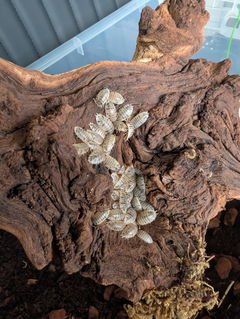
Five centimetres of substrate is ample; what matters is what sits on it. Stack flat stone and bark so there are tight gaps to wedge into, bed it with litter and white-rotted hardwood, leave calcium in, and give protein about once a week.
Dark animals show up badly against dark substrate, which is the one practical thing worth planning for. A pale limestone chip or a light bark flat gives you somewhere to actually see them.
No conglobation - they run, or flatten and grip. Large Iberian Porcellio can raise the rear of the body defensively, which looks like the start of a roll and never becomes one.
They are guaranteed to reach your door alive. Sending is Monday to Thursday, next working day, in a vented cup bedded on moist sphagnum inside twin-wall card, and we put a fifth again on top of the count you paid for.
Use collapsible tabs for more detailed information that will help customers make a purchasing decision.
Ex: Shipping and return policies, size guides, and other common questions.