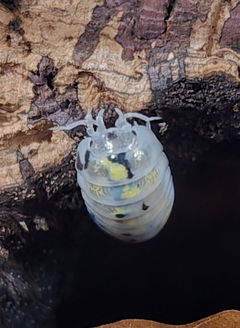
Porcellio Silvestri High Orange Isopods
Care Info:
 ORIGIN
 TEMP
TEMP
 HUMIDITY
 LENGTH
 DIFFICULTY
 RARITY
- Free shipping over £65
Until this rewrite, this page and its Dalmatian sibling both carried a note we wrote to ourselves and never took out. It said the care icons on this listing had not been verified, and that the figures underneath came from a named competitor and "other authoritative sources". That went live. It named a competitor as an authority, admitted the care figures had not been checked against our own animals, and sat on the page for months. A few lines above it sat a sentence that had lost half its words and no longer parsed.
We are starting with that because it is worse than any of the factual errors underneath it, and because the factual errors follow from it. If the figures were copied instead of kept, they were never ours to publish.
The name, which is wrong in the address bar
Porcellio silvestrii Arcangeli, 1924 - two i's at the end. Our URL uses one, as do both sibling listings, and so did the title above until today. This is not a variant spelling. It is a mistake that got into one taxonomic database and spread from there. Arcangeli originally set the animal inside P. monticola; it was pulled out to full species later, and since it never left the genus the authority stands unbracketed.
The double-i ending marks a species named after somebody, and the somebody is Filippo Silvestri, the Italian entomologist. Arcangeli's 1924 paper is not accessible to us so we cannot quote him saying it, and we should admit that the potted biography of Silvestri this page used to carry was written as though we had checked.
Range, also corrected
This listing said pine-forest habitats in northern and southern Spain. Neither end survives checking. Those northern specimens, from León, were re-examined and proved to be a different animal. The south rests on one record near Algeciras from 1952, published at the time as the furthest south anybody had found it. Every one of the 123 occurrence records is Spanish and most are Catalan or Valencian. The pine forest came off a seller's page and has gone with the rest.
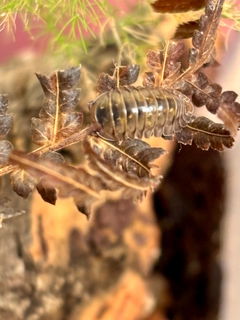
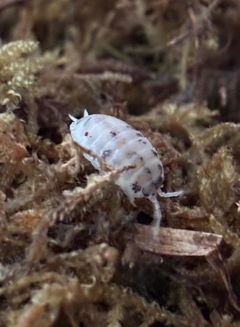
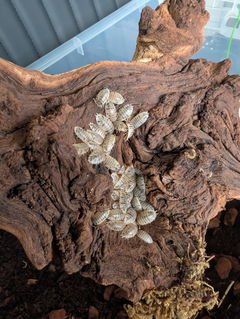
What 'High Orange' is
Our name for it. No other shop uses it for this species. One British breeder sells a selectively bred line he calls High Red, described as a pedigree bred so that females come out red like the males - that is a different name and we will not claim the two are the same thing.
Orange occurs naturally in this species, which is the honest complication: this is a concentration of something the wild animal already does, not a discrete morph. The old page called it selectively bred over generations to push orange in both sexes. We have no breeding records that would support that and have taken it out. The trade survey that counted this species in twenty shops recorded exactly one commercial variety beyond the base form.
One thing we have removed entirely: the instruction that bright orange animals are males. Sellers contradict each other on which sex is the orange one, one experienced keeper reports orange in both, and another concluded the colouring turns up at random and resists isolation. Colour is not a sexing method here.
Keeping them
We hold ours at 18 to 24°C with humidity graded 50 to 70% and a genuinely dry end. Those are shelf numbers; no tolerance study exists for the species. What does matter, and is consistent across everyone who keeps them, is ventilation - overwetting a stagnant tub is how this species is usually lost. Substrate 5cm, flat stone and bark, litter, calcium left in, protein weekly.
They do not conglobate. Large Iberian Porcellio can lift the back of the body when threatened, which reads as a half-roll and is not one.
Size we are leaving vague on purpose: the old pages in this trio said 25mm on two and 15 to 20mm on the third, for one species, and nothing is published. Ours are a little larger than a common rough woodlouse.
We send Monday through Thursday for delivery the next working day. Vented tub, moss kept damp, twin-wall outer, 20% over whatever you ordered, and a live arrival guarantee right up to your door.
Use collapsible tabs for more detailed information that will help customers make a purchasing decision.
Ex: Shipping and return policies, size guides, and other common questions.