Armadillidium gestroi 'Milky Way' Isopods for Sale
Care Info:
- Free shipping over £65
- Low stock - 5 items left
- Backordered, shipping soon
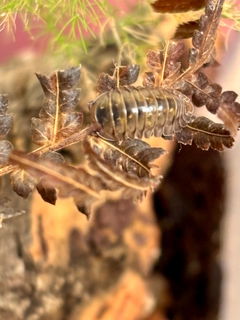
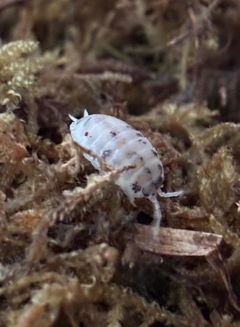
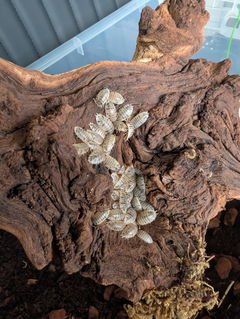
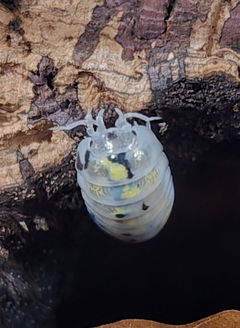
Armadillidium gestroi 'Milky Way' is one of the most genuinely beautiful UK-bred Armadillidium morphs available — a striking selectively-developed line of the Italian giant pill woodlouse, featuring a dark grey-to-black body scattered with bright white speckles and swirls. The "Milky Way" name describes it perfectly: the pattern looks remarkably like a starry night sky, with each isopod carrying its own unique distribution of white markings against the dark base. Combined with the impressive size of A. gestroi — one of the largest Armadillidium species in the hobby — and the classic conglobating roly-poly behaviour, you have a properly distinctive display isopod that's also genuinely accessible to keep.
This morph was first successfully isolated and developed in the UK by Jennifer Gosling, a respected breeder who established the line and shared stock with the broader hobby. Like the Mark Titterton 'Moby Dick' line, the Milky Way carries real UK-bred provenance — a quietly valuable selling point for keepers who care about where their stock comes from. They sit alongside their parent species, the standard Armadillidium gestroi, as a selectively-bred speckled variant — same easy Mediterranean species, very different look.
What makes the Milky Way particularly worth keeping is the combination of bold size, striking pattern, and easy care. They're rated Easy, hardy, and adaptable across both tropical and temperate setups — once established, they're very prolific. Adults are sexually dimorphic, with females developing a distinctive grey skirt around the body that helps identification. Like all Armadillidium, they conglobate (roll into a tight defensive ball) when disturbed.
Quick Care Summary
- Scientific Name: Armadillidium gestroi 'Milky Way'
- Common Names: Milky Way, Starry Night, Gestroi Milky Way
- Family: Armadillidiidae
- Origin: Species native to Italy (Mediterranean coastal shrubland); this morph UK-bred by Jennifer Gosling
- Adult Size: Up to 22–25 mm typically; exceptional specimens approach 38 mm under optimal conditions — one of the largest Armadillidium in the hobby
- Lifespan: 2–3 years typical
- Difficulty: Easy — hardy and adaptable, beginner-friendly for an Armadillidium
- Temperature: 20–24°C (room temperature; tolerates wider range)
- Humidity: Moderate to moderately high (60–80%) with a moisture gradient
- Ventilation: Medium — good airflow important
- Conglobation: Yes — rolls into a tight defensive ball
- Sexual Dimorphism: Yes — adult females develop a distinctive grey skirt around the body
- Behaviour: Active, bold, and social; mostly nocturnal but visible in dim conditions
- Breeding: Very prolific once established
- Rarity: Uncommon — a sought-after UK-bred morph
What Makes Milky Way Isopods Special
Several factors make the Milky Way genuinely worth keeping:
The starry night sky pattern. This is the headline — a dark grey-to-black body scattered with bright white speckles and swirling markings that genuinely evoke a starry night sky. Each individual carries its own pattern, so a settled colony shows real variety. It's one of the most poetically named morphs in the hobby, and the look genuinely lives up to it.
Impressive size for an Armadillidium. A. gestroi is one of the largest Armadillidium species in the hobby — adults typically reach 22–25 mm, with exceptional specimens approaching 38 mm under optimal conditions. They're "very big, very bright, very bold" — properly substantial pill bugs with real presence.
UK-bred provenance from a named breeder. Jennifer Gosling first isolated and developed this morph in the UK, and stock from her line has become the foundation of the morph in the wider hobby. For keepers who value where their isopods come from, this is genuine British provenance.
Sexual dimorphism makes sexing easy. Adult females develop a distinctive grey skirt around the body, while males don't — a clear visual difference that makes identification and breeding management straightforward.
Genuinely easy and adaptable. Despite the distinctive looks, they're hardy and forgiving — they do well in both tropical and temperate setups, which makes them unusually flexible. UK room temperature suits them year-round.
Aposematic and chemically defended. A. gestroi displays warning colouration and can produce an unpleasant odour from lateral plate glands when disturbed — a genuine chemical defence that deters bird predation in the wild. A quiet bit of natural-history interest that adds character.
Very prolific once established. They build colonies steadily and reliably under good conditions — satisfying for keepers who enjoy watching colony growth, and dependable for setting up bioactive enclosures.
How Milky Way Compares to Other Distinctive Armadillidium
If you're choosing between striking patterned Armadillidium, here's how the Milky Way fits in:
- vs Standard Armadillidium gestroi: Same species, different look. The standard gestroi shows the wild-type dark body with rows of yellow spots; the Milky Way is the UK-bred selective morph with bright white speckles and swirls on the dark base. Identical care, same large size — choose by preference, or keep both.
- vs Zebra (A. maculatum): Both are distinctive patterned Armadillidium. Zebras are smaller with crisp black-and-white stripes; the Milky Way is larger with speckled white-on-dark patterning. Both Easy — different scales and pattern styles.
- vs Nasatum Dalmatian (A. nasatum): Both feature white-spotted patterning on a darker base. Nasatum Dalmatians are smaller with a distinctive "nose" scutellum and cool-tolerant; the Milky Way is much larger with a finer starry-speckled look.
- vs Granulatum 'Pearl' (A. granulatum): Both are striking patterned Mediterranean Armadillidium. Pearl shows pale pearlescent colouration; Milky Way is the dark-base speckled morph. Different aesthetic in the same easy genus.
Browse the full Armadillidium collection to compare all species and morphs.
Setting Up the Enclosure
Because these are larger Armadillidium with a productive breeding rate, give them room — a 10–15 litre plastic container or terrarium suits a starter colony, with larger housing as the population grows. Plastic tubs with clip-lock lids hold appropriate humidity while allowing the ventilation Armadillidium need. The 3L Braplast tub works only for small starter groups; this species benefits from more space.
For ventilation, drill holes on opposite sides of the container for cross-ventilation, covered with fine mesh — Armadillidium aren't strong climbers but mesh prevents any escape. Medium ventilation suits them. Provide plenty of hides — cork bark, lotus pods, leaf litter, and natural botanicals — and various mosses for grazing and cover. Keep the enclosure out of direct sunlight, since they're mostly nocturnal. Browse our accessories collection for appropriate enclosures, vents, and other essentials.
Substrate
Build a straightforward substrate appropriate for this hardy Mediterranean species:
- Organic topsoil base (pesticide-free) as the foundation
- Sphagnum peat moss mixed throughout for moisture retention
- Crushed limestone or eggshells distributed throughout for calcium — important given the species' native Triassic limestone habitat
- Flake soil mixed in for added nutrition
- Decaying hardwood pieces and rotting wood incorporated throughout
- Forest moss for humidity and grazing
We recommend a topsoil and sphagnum-based mix rather than coco coir. Substrate depth: 5–8 cm for burrowing and security.
Top layer: Generous hardwood leaf litter — magnolia leaves and oak leaves work particularly well for long-lasting cover and food. Add cork bark, lotus pods, and natural botanicals for hides, plus a sphagnum moss patch on one side to create the moist zone of the gradient.
Humidity and Temperature
Maintain moderate to moderately high humidity (around 60–80%) with a moisture gradient. Keep one side of the enclosure damp with sphagnum moss and damp leaf litter, while the rest stays drier with leaf litter and bark cover. Good airflow prevents stagnation. The Milky Way is one of the more adaptable Armadillidium and does well in both tropical and temperate setups, but they still appreciate a gradient rather than uniformly soaking conditions.
As one PostPods customer noted about following the website's care guidance, getting moisture right is the key to keeping isopods successfully — too much moisture is the most common, avoidable mistake. Even with this forgiving species, aim for moderate humidity with a damp retreat rather than a waterlogged enclosure. Stable conditions matter more than absolute precision.
Temperature should be 20–24°C — UK room temperature works year-round in most heated homes. They're adaptable across this range and tolerate slight variation well, but avoid sustained extremes and sudden swings.
Diet
Milky Way isopods are unfussy detritivores with broad appetites:
- Primary diet (always available): Hardwood leaf litter (oak, beech), decaying rotting wood, dried plant matter, lichen, mosses
- Vegetables (1–2x weekly): Carrot, courgette, sweet potato, squash, leafy greens. Replace within 24–48 hours.
- Fruit (occasionally): Small amounts of soft fruit
- Protein (1x weekly): Fish flakes, freeze-dried shrimp, dried daphnia. Particularly beneficial for breeding females. Browse our accessories collection for the full range of protein supplements.
- Calcium (essential — always available): Cuttlefish bone, crushed limestone, oyster shell, eggshells. Essential for healthy moulting and the development of large adults — provide multiple sources distributed throughout.
Feeding approach: Maintain a base of leaf litter and decaying wood, supplementing with vegetables, occasional fruit, weekly protein, and a constant calcium source. Be aware that, like other Armadillidium, they may nibble live plants in a bioactive setup. Remove uneaten fresh foods within 24–48 hours to prevent mould.
Breeding
Milky Way isopods are very prolific once established — building substantial colonies quickly under stable, appropriate conditions. Sexual dimorphism makes sexing straightforward: adult females show a distinctive grey skirt around the body, males don't.
Breeding basics:
- Females carry developing young in a marsupium and release fully-formed live juveniles
- Sexual dimorphism develops at maturity (females grey-skirted)
- The speckled "starry" pattern develops as juveniles mature; pattern intensity varies between individuals
- A pure Milky Way colony breeds the morph reliably, with each individual showing its own pattern
For breeding success:
- Stable temperatures within range (20–24°C is ideal)
- A proper moisture gradient (moderate humidity with a damp side)
- Adequate calcium for breeding females (essential for large-bodied species)
- Regular protein supplementation
- Plenty of cork bark and leaf-litter hides
- A larger starter group establishes faster and provides genetic diversity
As a very prolific breeder once established, the Milky Way rewards keepers with strong, steady colony growth — and a settled colony of starry-speckled giants makes a genuinely impressive display.
Pair With Springtails
Add a thriving springtail culture to any Milky Way setup. Springtails handle mould and microbial growth at a scale isopods can't manage — particularly useful around protein foods and in the moist zone of the moisture gradient. They coexist peacefully with the Milky Way and form a helpful cleanup partnership.
Who Should Buy Milky Way Isopods?
Ideal for:
- Beginners and experienced keepers alike — easy care, distinctive looks, impressive size
- Keepers drawn to bold patterned isopods and the "starry night sky" aesthetic
- Display enthusiasts wanting a large, visible, prolific Armadillidium
- UK keepers who value British-bred provenance and named-breeder lines
- Bioactive setup builders wanting an attractive, hardy cleanup crew
- Anyone wanting fast, productive colony growth
Not ideal for:
- Heavily-planted bioactive setups where plant-nibbling is a concern (Armadillidium enjoy plants)
- Small enclosures that won't accommodate large adults or fast colony growth
- Keepers who tend to overwater (they want moderate humidity with drier zones)
- Those wanting tiny, dainty isopods (these are properly large)
Realistic Expectations
The starry pattern varies between individuals. Each Milky Way carries its own distribution of white speckles and swirls on the dark base — natural variation is part of the appeal. Pattern develops and stabilises as juveniles mature.
They're properly large. Don't underestimate the size — adults typically reach 22–25 mm, with exceptional specimens substantially larger. Plan enclosure space accordingly, especially given how prolific they are once established.
They're genuinely easy. As a hardy, adaptable A. gestroi morph, the Milky Way tolerates a moderate range of conditions and rewards basic husbandry with steady success. An ideal distinctive first Armadillidium.
They can produce a defensive odour. Like the wild-type A. gestroi, they have lateral plate glands that release an unpleasant smell when disturbed — natural chemical defence against birds. Rarely noticeable in normal handling, but a real part of the species' biology.
Pattern intensity develops with maturity. Juveniles may show paler or less-defined patterning; full starry-speckle effect develops over successive moults. An established colony shows the full range from young to adult.
Building Your Setup
A complete Milky Way setup needs a roomy enclosure, basic substrate components, abundant calcium-rich materials (essential for large-bodied breeders), generous leaf litter and bark, lotus pods and mosses, and protein supplements. Browse our accessories collection for everything you need — enclosures, ventilation, leaf litter, calcium (cuttlebone, limestone, oyster shell), and protein supplements.
Browse the full Armadillidium collection for more species and morphs — including the standard A. gestroi — or read our blog on gestroi isopod care for detailed species-specific guidance.
Use collapsible tabs for more detailed information that will help customers make a purchasing decision.
Ex: Shipping and return policies, size guides, and other common questions.