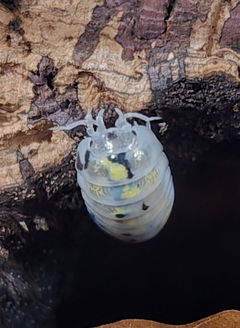
R13 Ducky Isopods (Cubaris sp.)
Care Info:
 ORIGIN
 TEMP
TEMP
 HUMIDITY
 LENGTH
 DIFFICULTY
 RARITY
- Free shipping over £65
- Low stock - 1 item left
The name is a road. R13 is said to be Federal Route 13 in Negeri Sembilan, Malaysia, a 13km stretch between Juasseh and Bahau, and the story goes that the founding animals came off a single spot beside it. We can tell you the road is real. We cannot tell you the collection is, because that account rests on two shop listings that phrase it identically, while a third seller downgrades it to "believed".
What it actually is
Undescribed. There is no scientific record of this animal under any name, no type locality and no published measurement. It sells almost everywhere as Cubaris sp. "R13 Ducky", but one American supplier places it in Venezillo instead and calls it a large species within that genus. Both genera sit in the family Armadillidae, so the disagreement is real without being wild.
We list it at genus level with the trade name attached, and we would sooner flag the uncertainty than dress it up. Cubaris is itself a taxonomic dumping ground of more than a hundred described species, and specialists have been calling for the whole genus to be revised for years. Our guide to the types of Cubaris has the wider picture.
One thing you may have read that we will not repeat: R13 is not a lineage or bloodline of the Thai Rubber Ducky. It shares the duck-faced look and the nickname, and that is the whole of it. Neither animal has been described, so nobody is in any position to say one is a lineage of the other. The same goes for the size comparison in circulation, which has this one smaller than the Thai animal. No scientific measurement exists for either; our own Rubber Ducky page quotes 15 to 18mm and that is a keeper figure, and the single seller who comments on R13's size says it is the larger of the two.
Appearance
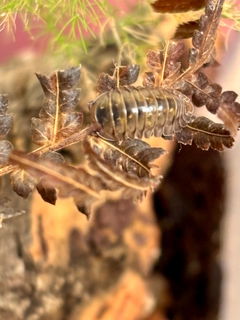
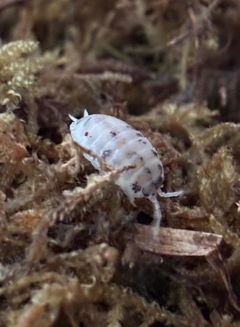
Variable, which is the honest headline. Colour runs across a group from deep orange heads through to bright yellow over a darker body, and no two tubs photograph quite alike. If you want a uniform animal, this is the wrong one.
Keeping them
Treat it as a premium Asian Cubaris and you will not go far wrong. 21 to 26°C. Our own earlier copy for this animal said 18 to 26 and our Thai Rubber Ducky page says 22 to 28, and none of those figures has anything behind it beyond practice, so take the low twenties as the safe middle.
Humidity as a gradient and not as a number: a wet end, a drier end, and cross-ventilation through mesh on opposing walls so the air actually moves. Stale humid air is what kills these animals, and our article on ventilation and humidity explains how to get both at once. Deep substrate with plenty of hardwood leaf litter and rotten wood, limestone permanently in the enclosure, and springtails in from day one to keep the surface clean.
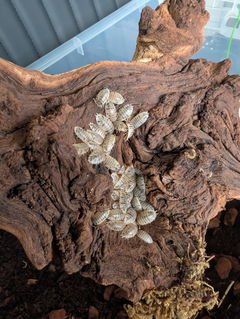
Slow. This is not an animal that fills a tub in a season. Broods are small, growth is unhurried, and you should be thinking in years before you have numbers to spare. That is normal for the group, and it is the main reason we do not recommend it as a first isopod.
Rarely offered in this country. The stock here is captive-bred.
Dispatch runs Monday to Thursday. Animals sit on damp moss inside an air-holed pot, boxed behind two thicknesses of card, and Royal Mail bring it overnight for a morning delivery before one. we add 20% over the count as standard, and live arrival is guaranteed.