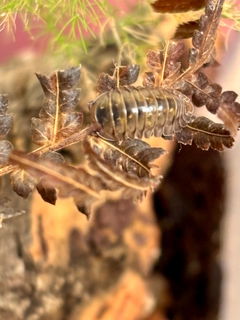
Armadillo Officinalis Red Brick Isopods
red brick isopods
red brick isopods for sale
A. Officinalis Red Brick Isopods
red brick isopods for sale
Armadillo Officinalis Red Brick Isopods

Armadillo Officinalis Red Brick Isopods

Care Info:

Origin icon ORIGIN
MEDITERRANEAN BASIN
Temperature icon TEMP
18-26 ℃
Humidity icon HUMIDITY
55-70 %
Length icon LENGTH
20 mm
Difficulty icon DIFFICULTY
EASY
Rarity icon RARITY
COMMON
Regular price£7.00
/
Tax included. Shipping calculated at checkout.

Quantity
  • Free shipping over £65
  • Low stock - 2 items left
  • Backordered, shipping soon

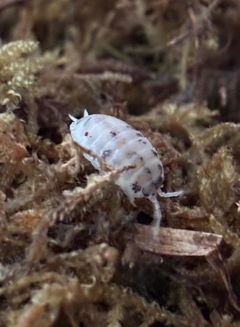
Armadillo officinalis 'Red Brick' is one of the most genuinely fascinating isopods in the UK hobby — the famous "hissing isopod" in a striking brick-red colour morph. It holds a real claim to fame: it's one of the very few isopod species capable of producing audible sounds, a stridulation behaviour unlike anything else in the commonly-kept hobby. Add to that a warm, rich terracotta-to-brick-red colouration, a substantial 2cm size, and genuinely easy care, and you have a species that's both a captivating talking point and a rewarding, beginner-friendly keep. For anyone who wants an isopod that does something genuinely different, the Red Brick delivers.

What makes the Red Brick particularly worth keeping is the combination of unique behaviour, attractive colour, and easy husbandry. They're hardy, adaptable, prolific, and rated Easy — suitable for beginners and experienced keepers alike — while offering the kind of distinctive interest few isopods can match. Watching a colony develop is rewarding in itself: juveniles are born a pale yellowish-orange and deepen to the characteristic brick-red as they mature, so a well-established colony shows bright red adults alongside paler youngsters. They sit among the more distinctive conglobating isopods, alongside Mediterranean Armadillidium like the Zebra and the dry-climate Armadillo tuberculatus.

It's worth noting that Armadillo is a separate genus from Armadillidium, despite the similar names and the fact that both roll into balls. The Armadillo genus has some distinctive characteristics — including the famous stridulation ability and a somewhat different body shape with a more elongated face. A. officinalis is also notable for remaining tightly curled for far longer than most other rolling species, taking its time before cautiously uncurling even after danger has passed.

They're a Mediterranean Basin species, found across Southern Europe from Spain to the western Black Sea coasts — which directly informs their care: moderate humidity with good ventilation and a gradient, not constant tropical wetness.

Quick Care Summary

  • Scientific Name: Armadillo officinalis 'Red Brick'
  • Common Names: Hissing Isopod, Red Brick Isopod, Spanish Hissing Isopod
  • Family: Armadillidae
  • Genus: Armadillo (distinct from Armadillidium)
  • Origin: Mediterranean Basin (Spain, Southern Europe, western Black Sea coasts)
  • Adult Size: Up to 20 mm (2 cm) — a good-sized, observable species
  • Lifespan: 2–3 years typical
  • Difficulty: Easy — hardy, adaptable, beginner-friendly
  • Temperature: 18–26°C (UK room temperature works year-round)
  • Humidity: Low to medium (55–70%) with a moisture gradient — Mediterranean care, not high tropical humidity
  • Ventilation: Moderate — good airflow important
  • Conglobation: Yes — rolls into remarkably tight, near-perfect spheres
  • Behaviour: Stridulates (hisses), shy, stays curled longer than most species
  • Breeding: Prolific once established; good brood sizes

What Makes Red Brick Isopods Special

Several factors make the Red Brick a genuinely standout isopod:

The famous hissing behaviour. This is the single most distinctive thing about the species. A. officinalis produces audible sounds — a stridulation often described as hissing or rattling — that no other readily-available isopod can match. It's a genuinely unique feature that makes them fascinating to keep and a real conversation piece.

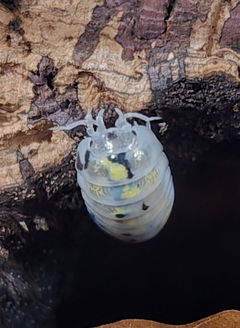
Rich brick-red colouration. The Red Brick morph displays a warm terracotta-to-brick-red colour that intensifies as the isopods mature. Watching juveniles transition from pale yellow-orange to deep brick-red through successive moults is one of the genuine rewards of raising a colony from mixed ages.

Substantial, observable size. At up to 2cm, they're a good-sized isopod that's easy to appreciate, with a distinctive, characterful body shape and a somewhat elongated face that sets them apart from many other conglobating species.

Remarkably tight conglobation. Like other Armadillo, they roll into near-perfect spheres when threatened — and notably stay curled far longer than most rolling species, taking their time before cautiously uncurling. Combined with the stridulation, this defensive behaviour is genuinely fascinating to observe.

Genuinely easy and hardy. Despite their unique characteristics, Red Bricks are adaptable, resilient, and breed readily in captivity — making them suitable for beginners as well as experienced keepers. A distinctive, behaviourally-interesting isopod that's also easy to keep is an unusual and welcome combination.

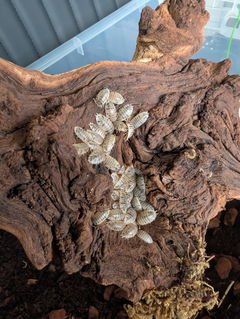
Attractive display species. A well-established colony of bright red adults alongside paler juveniles, against a naturalistic substrate, makes for a genuinely attractive display — looks and behaviour combined.

The Hissing Behaviour

The most famous characteristic of A. officinalis deserves its own explanation. Their stridulation — the hissing or rattling sound — is produced when the isopod curls into a ball and rubs its legs against the inner surface of its shell in rapid circular motions. Scientific research has shown this produces sounds peaking around 9 kHz and appears to function as a secondary defence mechanism; the isopods themselves also respond to these vibrations by moving away from the source, suggesting it may serve as an alarm signal within colonies.

You're unlikely to hear this from small colonies or individual isopods — the effect becomes more noticeable as colony numbers increase. When a larger group is startled, the collective sound of multiple isopods stridulating simultaneously becomes audible as a subtle rattling or hissing. It's a behaviour genuinely unique among commonly-kept isopod species, and a big part of what makes them such a rewarding keep.

How Red Brick Compares to Other Conglobating Isopods

If you're choosing between rolling, Mediterranean isopods, here's how the Red Brick fits in:

  • vs Armadillo tuberculatus: The closest relative in the hobby — both are Armadillo genus (not Armadillidium). Tuberculatus are bumpy blue-grey dry-climate specialists; Red Bricks are smooth terracotta-red hissing isopods. Natural companions in an Armadillo collection, with the Red Brick being the more forgiving on humidity.
  • vs Zebra Isopods (Armadillidium maculatum): Both are hardy, beginner-friendly conglobating Mediterranean species. Zebras are smaller Armadillidium with bold striping; Red Bricks are larger Armadillo with brick-red colour and the unique hissing. Different genus, different defensive repertoire.
  • vs Yellow Spanish Granulatum (A. granulatum): Both are larger, hardy Mediterranean conglobators. Granulatum are bumpy with yellow spots; Red Bricks are smooth brick-red with the stridulation behaviour. Both easy and rewarding — choose based on appearance and whether the hissing appeals.
  • vs Dairy Cow (Porcellio laevis): Dairy Cows are large, fast, non-rolling Porcellio cleanup crew; Red Bricks are slower, rolling, hissing Armadillo. Both easy and prolific — very different behaviour and defensive style.

Browse the full Armadillo collection for related species, or the broader isopods collection for comparison across genera.

Enclosure Setup

A straightforward setup works well, with attention paid to creating an appropriate humidity gradient. A 5–6 litre container suits a starter colony — these are reasonably active isopods that appreciate space as the colony grows. The 3L Braplast tub works for the smallest starter groups, with larger housing as numbers build.

Moderate ventilation is important — good airflow helps prevent the excessively moist conditions that cause problems, but avoid extremes. Cork bark pieces provide essential hiding spots: these isopods spend considerable time curled up and sheltering, so provide plenty of cover. A generous layer of mixed hardwood leaf litter provides both food and additional shelter. Keep the enclosure in low light, away from direct sunlight, with plenty of dark hiding spots. Browse our accessories collection for appropriate enclosures, ventilation, and other essentials.

Substrate

A substrate that balances moisture retention with good drainage suits this species well — avoid waterlogging, which can cause problems:

  • Organic topsoil or compost as a base (pesticide-free)
  • Decaying hardwood pieces and white-rotted wood
  • Flake soil for added nutrition
  • Sphagnum moss in the moist area only
  • Cork bark pieces
  • Limestone chips mixed through for calcium (also helps buffer acidity)

Substrate depth: around 5–7 cm allows for burrowing and shelter.

Top layer: A generous layer of mixed hardwood leaf litter — magnolia leaves, oak, beech, and hazel work well — provides food and shelter. Concentrate sphagnum moss in the moist zone only.

Humidity and Temperature — Mediterranean, Not Tropical

This is where care attention is needed. As a Mediterranean species, the Red Brick prefers low-to-medium humidity (around 55–70%) and can struggle in constantly wet conditions — high humidity can cause moulting problems. However, they still need access to moisture, as genuinely dry conditions can be fatal. The key is balance: a humidity gradient with one damp area and plenty of drier space works best:

  • Moist zone (20–30% of enclosure): Moist sphagnum moss on one side, misted to maintain dampness. This is where moulting individuals retreat.
  • Drier zone (70–80% of enclosure): Drier substrate with leaf litter and bark cover.

The gradient lets the isopods regulate their own moisture exposure. As one PostPods customer noted about following the website's care guidance for Mediterranean isopods, proper instructions prevent the common mistake of too much moisture — high humidity is genuinely more of a risk for this species than slightly dry conditions. When in doubt, err drier and ensure good ventilation.

Temperature should be 18–26°C — room temperature in most UK homes suits them well, with no supplemental heating usually needed. They tolerate moderate seasonal variation comfortably. Avoid sustained extremes in either direction.

Diet

The Red Brick has somewhat broader tastes than some isopods, and is known to consume soft-bodied plants alongside the usual detritivore fare:

  • Primary diet (always available): Mixed hardwood leaf litter (oak, beech, hazel), decaying hardwood pieces, white-rotted wood
  • Vegetables (1–2x weekly): Carrot, courgette, sweet potato, cucumber. Replace within 24–48 hours.
  • Oat flakes: They seem particularly fond of these — often observed eating them while lying on their backs
  • Soft-bodied plants and occasional fruit
  • Protein (1–2x weekly): Fish flakes. Browse our accessories collection for the full range of protein supplements.
  • Calcium (essential — always available): Cuttlefish bone, limestone chips, crushed eggshells, calcium powder. Particularly important, as moulting issues can occur in suboptimal conditions — a consistent calcium supply helps ensure successful moults.

Feeding approach: Provide portions consumed within 24–48 hours and remove uneaten fresh foods promptly to prevent mould. A springtail culture helps manage any mould in the moist zone.

Breeding

The Red Brick is known for prolific breeding once established, reproducing readily in appropriate conditions.

What to expect:

  • Regular reproduction once the colony settles
  • Good brood sizes
  • Steady colony growth (reliable rather than the fastest)
  • The rewarding colour development as juveniles transition from pale yellow-orange to brick-red

For breeding success:

  • Stable temperatures within range (18–26°C)
  • Proper Mediterranean moisture gradient (low-to-medium humidity)
  • Adequate calcium availability throughout
  • Plenty of cork bark and leaf-litter cover
  • Avoid excessively humid conditions, which can interfere with successful moulting of both adults and juveniles

Colonies typically establish at a moderate pace — not the fastest colonisers, but reliable breeders that build numbers consistently over time.

Pair With Springtails

Add a thriving springtail culture to any Red Brick setup. Springtails handle mould and microbial growth at a scale isopods can't manage — particularly useful around protein foods and in the moist zone of the moisture gradient. They coexist peacefully with the Red Brick and form a helpful cleanup partnership for Mediterranean setups.

Who Should Buy Red Brick Isopods?

Ideal for:

  • Beginners wanting an easy, genuinely interesting first species
  • Anyone fascinated by the unique hissing behaviour
  • Keepers who appreciate watching colour development from juvenile to adult
  • Those wanting a hardy, large, conglobating species
  • Bioactive enthusiasts with temperate or Mediterranean-style setups
  • Anyone wanting an isopod that's a genuine talking point

Not ideal for:

  • Very humid tropical setups — they can struggle with excessive moisture
  • Those seeking feeder isopods — the harder shell makes them less ideal (though larger reptiles/amphibians can take adults, and smaller predators the juveniles)
  • Keepers wanting highly visible, constantly active species — they're quite shy and spend time hidden and curled

Realistic Expectations

The hissing builds with colony size. Don't expect to hear stridulation from a handful of individuals — the audible effect emerges as numbers grow and a startled group stridulates together. Patience and a growing colony are rewarded with this genuinely unique behaviour.

They're shy and stay curled. Red Bricks spend considerable time hidden under bark and within the substrate, and when they roll up they stay curled far longer than most species, cautiously taking their time before uncurling. This is normal, fascinating behaviour — not a sign of poor health — but it does mean they're not a constantly-visible display species.

Colour develops with maturity. Juveniles start pale yellow-orange and deepen to brick-red through successive moults, so a mixed-age colony shows a range of shades. The full rich colour appears in mature adults.

They prefer moderate humidity, not constant wetness. As a Mediterranean species, high humidity can cause moulting problems — they do best with a gradient and good ventilation. If you've kept tropical species, err drier. They still need moisture access, so the gradient is key: one damp area, plenty of drier space.

Breeding is steady, not explosive. They're reliable rather than the fastest breeders, building numbers consistently over time. Patience is rewarded with a self-sustaining, characterful colony.

Building Your Setup

A complete Red Brick setup needs a well-ventilated enclosure, a well-draining substrate with limestone, abundant calcium, generous leaf litter and cork bark cover, and occasional protein. Browse our accessories collection for everything you need — enclosures, ventilation, leaf litter, calcium (cuttlebone, limestone, eggshells), and protein supplements.

Browse the full Armadillo collection for related species like Armadillo tuberculatus, or the broader isopods collection for more options across all genera.

Use collapsible tabs for more detailed information that will help customers make a purchasing decision.

Ex: Shipping and return policies, size guides, and other common questions.
You may also like


Recently viewed