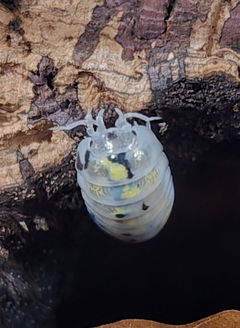
Delta Banded millipede (Ophistreptus Sp)
Care Info:
 ORIGIN
 TEMP
TEMP
 HUMIDITY
 LENGTH
 DIFFICULTY
 RARITY
- Free shipping over £65
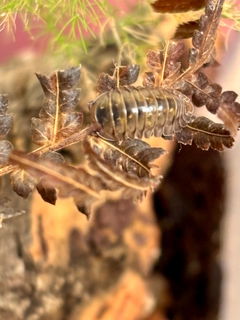
This line has a start date and a name attached to it, which is rarer in the millipede trade than it ought to be. The founding animals came to us from Mark Titterton, who had them from The Spider Shop in about 2021. We are breeding from that stock, so animals on this listing may be from the original group or from our own young. We have not seen it advertised anywhere else in the UK since.
About the name on the label
The genus in our URL is almost certainly wrong, and we would sooner say so than quietly leave it there. The Ophistreptus in the hobby, O. guineensis, is the animal behind our own African Giant Chocolate Millipede: a uniform milk-chocolate to bronze species whose juveniles are banded and lose it as they grow. Ours keep their banding at full size.
The single commercial listing of this trade name we can find outside our own is German, and it places the animal in Spirostreptus with an origin of Nigeria. That fits considerably better. Until somebody settles it with specimens in front of them, the honest handling is Spirostreptus sp. "Delta Banded", or Spirostreptidae sp. at family level. Either way it remains a Spirostreptida, so nothing in the care below changes.
The animal
Large and boldly banded, and the banding is the entire point: alternating dark and light rings carried into adulthood instead of fading out. The figure that has always sat on this listing is 200 to 260mm, and we should be clear that it is not a species figure, because no species figure exists. The German listing quotes 30cm for the same trade name, and its nearest relatives are quoted anywhere between 23 and 26cm, which tells you how soft these numbers are across the board.
Keeping them
Deep substrate, because it is food as much as flooring: 15cm at minimum for adults and more if the enclosure allows, hardwood broken right down with leaf mould and soil worked through it. Hardwood only. Limestone or cuttlebone permanently available, since a millipede this size burns calcium at every moult. Heat from a side-mounted mat on a thermostat or from the room, never from below, because an animal that burrows to escape heat will dig straight into it. The mix is covered in our millipede substrate guide.
24 to 28°C, and keep humidity at 70 per cent and above instead of letting it drift down. Damp all the way through, with the surface allowed to dry a little. Floor area matters more than height. Rotten wood on top gives them something to work at.
Breeding these wants a seasonal swing instead of steady conditions, which is the usual sticking point with big Spirostreptidae in captivity. What the genus responds to is a drier spell followed by a return to moisture. We are deliberately not printing a week-by-week protocol, because we would be inventing the precision.
Keep young animals in with the adults. Juveniles pick up their gut bacteria by eating adult faecal pellets, so a scrubbed-out tub is one where the young struggle. Disturbed, it screws itself down into a tight flat coil, and may release the benzoquinone secretion this order is known for, which stains skin brown, irritates it if it is left on, and burns an eye badly enough to need treating, so wash with soap before you touch your face. Expect brown fingers, and keep it away from your eyes. Other large species are in millipedes for sale.
Colony-bred here from the original line. We send livestock out Monday to Thursday only, packed on wet moss in a pot with air holes and boxed in twin-walled card, arriving overnight by Royal Mail before one o'clock the next day. Numbers are generous, and live arrival is guaranteed.
Use collapsible tabs for more detailed information that will help customers make a purchasing decision.
Ex: Shipping and return policies, size guides, and other common questions.