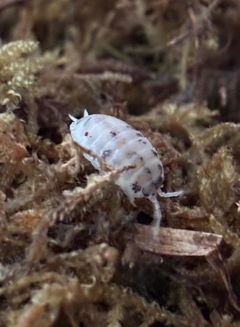
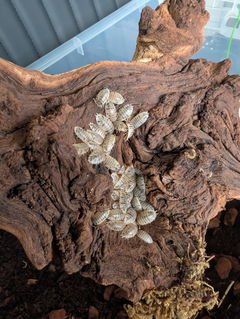
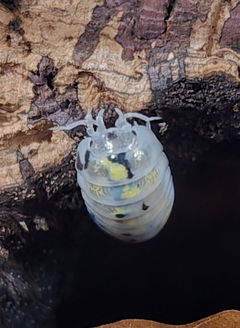
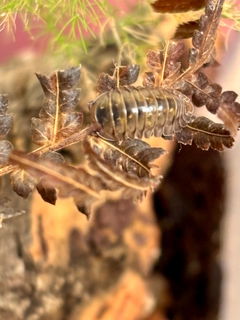
Yellow Fellow Isopods (Armadillidium Klugii)
Yellow Fellow Isopod
Klugii isopod with lots of high yellow spots on it

Armadillidium klugii 'Yellow Fellow' Isopods for Sale

Care Info:

Origin icon ORIGIN
UK
Temperature icon TEMP
18-28 ℃
Humidity icon HUMIDITY
50-70 %
Length icon LENGTH
18 mm
Difficulty icon DIFFICULTY
EASY
Rarity icon RARITY
RARE
Regular price£55.00
/
Tax included. Shipping calculated at checkout.

Quantity
  • Free shipping over £65
  • In stock, ready to ship
  • Backordered, shipping soon

Armadillidium klugii 'Yellow Fellow' is a UK-bred selective line of the famous Clown isopod — a Mediterranean Adriatic species with one of the most genuinely interesting natural-history stories in the hobby. The Yellow Fellow line was developed by JW Invertebrates here in the UK through careful selective breeding, isolated and stabilised to express enhanced yellow spotting across the carapace compared to the standard Montenegro or Dubrovnik varieties. The result is a distinctive and visually striking morph: brighter, more boldly-spotted, and very much its own animal within the broader klugii range.

The species story is the genuine hook. Wild A. klugii displays its bold spotted patterning as a form of mimicry — specifically, of the highly venomous Mediterranean Black Widow spider (Latrodectus tredecimguttatus), which shares the same Adriatic range. The theory is that predators encountering a small spotted shape on the leaf litter mistake the harmless isopod for a dangerous spider and leave it well alone. It's a textbook example of Batesian mimicry — a defenceless prey species evolving to resemble a defended one — and it makes the bold colouration of Clown isopods properly fascinating, beyond just being pretty.

Wild populations of A. klugii are found along the Adriatic Sea coast — Croatia, Montenegro, Albania, and into western Greece — and the various regional names you'll see in the hobby (Montenegro, Dubrovnik) reflect that range. The Yellow Fellow takes this Adriatic heritage and re-expresses it through UK selective breeding into a distinctive yellow-dominant morph. They sit naturally alongside other UK-bred named-breeder lines like the Armadillidium gestroi 'Milky Way' (Jennifer Gosling) and the Cubaris sp. 'Moby Dick' (Mark Titterton), forming a quietly distinctive British-bred provenance cluster within the hobby. Like all Armadillidium, they conglobate (roll into a tight defensive ball) when disturbed.

Quick Care Summary

  • Scientific Name: Armadillidium klugii 'Yellow Fellow'
  • Common Names: Yellow Fellow, Yellow Fellow Clown, JW Klugii
  • Family: Armadillidiidae
  • Origin: UK-bred selective line (JW Invertebrates); species native to Adriatic coastlines from Croatia to Greece
  • Adult Size: Up to approximately 18 mm (species reaches up to 21 mm)
  • Lifespan: 2–3 years typical
  • Difficulty: Easy to Medium — straightforward care but slow to establish from new culture
  • Temperature: 18–28°C (warmer end encourages breeding)
  • Humidity: 50–70% with a clear moisture gradient — drier than most isopods
  • Ventilation: Good — this is a dry-Mediterranean species; overhumidity is the leading cause of problems
  • Conglobation: Yes — rolls into a tight defensive ball
  • Behaviour: Shy and burrowing; mostly nocturnal; active in evening hours
  • Breeding: Slow to establish but prolific once settled
  • Rarity: Rare — limited UK-bred line
  • Provenance: Line developed by JW Invertebrates (UK breeder)

What Makes Yellow Fellow Isopods Special

Several factors make the Yellow Fellow genuinely worth its premium status:

The enhanced yellow expression. This is the headline. Through careful selective breeding, JW Invertebrates has stabilised a line where yellow spotting is the dominant pattern feature — markedly more yellow than standard Montenegro or Dubrovnik klugii, and with reduced red skirt colouration. The result is a distinctly bold, warm-toned look that sets the Yellow Fellow apart from the regional wild-type morphs.

The Black Widow mimicry story. One of the most genuinely fascinating defensive strategies in the isopod hobby. The bold spotted patterning that gives Clown isopods their charm is most likely Batesian mimicry of the Mediterranean Black Widow spider — a venomous arachnid that shares the same Adriatic range. The harmless isopod has evolved to look like something dangerous, and predators leave it alone as a result. A proper natural-history hook beyond just "they look nice."

UK-bred named-breeder provenance. The Yellow Fellow line was developed by JW Invertebrates, a respected UK breeder, and represents proper British selective-breeding work. For keepers who value where their stock comes from, this is genuine UK provenance — joining the small but growing cluster of named-breeder lines including Jennifer Gosling's Milky Way and Mark Titterton's Moby Dick.

A dry-Mediterranean species. Unlike most popular isopods that prefer humid conditions, A. klugii is comfortable with low-to-moderate humidity and good airflow — well-suited to keepers with drier homes, and refreshingly different from the perpetual moisture-management of Cubaris and tropical species.

Substantial size. At up to 18 mm (with the wild species reaching 21 mm), they're a properly sized Armadillidium — substantial enough to display the spotted pattern clearly and have real presence in an enclosure.

Conglobation. Like all Armadillidium, they roll into a tight defensive ball when disturbed — the classic roly-poly behaviour, here on a vibrantly-spotted UK-bred morph.

Prolific once established. While slow to start, settled colonies become reliably productive — a satisfying long-term keep for patient hobbyists.

How Yellow Fellow Compares to Other Distinctive Armadillidium

If you're choosing between patterned or selectively-bred Armadillidium, here's how the Yellow Fellow fits in:

  • vs other A. klugii regional morphs: Wild-type Montenegro shows red tones with yellow or white spotting; Dubrovnik has red-edged skirting with white/yellow spots in three rows. Yellow Fellow is the UK-bred selective line with enhanced yellow expression and reduced red colouration — a distinct British take on the same species.
  • vs A. gestroi 'Milky Way' (Jennifer Gosling): Both are UK-bred named-breeder Armadillidium morphs. Milky Way is the speckled-on-dark "starry night sky" gestroi; Yellow Fellow is the yellow-spotted klugii. Different species, similar British provenance story.
  • vs Magic Potion (A. vulgare): Both are striking selectively-bred Armadillidium. Magic Potion is the cooler pale vulgare morph; Yellow Fellow is the warm yellow-spotted klugii. Different palettes, similar premium tier.
  • vs Zebra (A. maculatum): Both feature high-contrast patterning. Zebras show banded black-and-cream stripes; Yellow Fellow shows yellow spotting on a darker base — different pattern philosophies, both dry-tolerant Mediterranean Armadillidium.

Browse the full Armadillidium collection to compare all species and morphs.

Setting Up the Enclosure

Yellow Fellow isopods are a dry-Mediterranean species and need a setup that reflects this — good airflow, a clear moisture gradient (mostly drier, one damp corner), and room to burrow. A 6–10 litre plastic container with a secure clip-lock lid suits a starter colony. The 3L Braplast tub works for small starter groups; for an established colony, more space is better.

Drill ventilation holes on opposite sides for cross-ventilation, covered with fine mesh. Generous airflow is essential — stagnant humid conditions are the leading cause of klugii problems. Provide multiple hides: cork bark flats (their favourite), leaf litter, decaying wood. They prefer burrowing to climbing, so emphasise floor cover and substrate depth over vertical decor. Browse our accessories collection for appropriate enclosures, vents, and other essentials.

Substrate

Build a moisture-controlled substrate suited to this dry-Mediterranean species:

  • Organic topsoil base (pesticide-free) as the foundation
  • Sphagnum peat moss mixed throughout for moderate moisture retention
  • A proportion of sand for drainage and texture (Mediterranean species appreciate gritty substrate)
  • Crushed limestone or eggshells distributed throughout for calcium
  • Flake soil mixed in for added nutrition
  • Decaying hardwood pieces and rotting wood incorporated throughout

We recommend a topsoil and sphagnum-based mix rather than coco coir — coir retains too much moisture for klugii's preference. Substrate depth: 5–8 cm for burrowing — they need genuine depth to feel secure and establish properly.

Top layer: Generous hardwood leaf litter — magnolia leaves are particularly well-liked by klugii (Mediterranean leaf litter parallel) — plus oak and beech for variety. Add cork bark flats as preferred hides, and decaying softwood pieces for both food and cover.

Humidity and Temperature

This is where klugii husbandry differs sharply from typical isopod care. They want it drier than most species. Maintain approximately 50–70% humidity with a clear moisture gradient: keep about one-third of the enclosure damp (sphagnum moss patch, occasional misting of that corner), with two-thirds drier and well-ventilated. Avoid uniform high humidity — overwetting is the leading cause of klugii die-offs and one of the most common new-keeper mistakes with this species.

As one PostPods customer noted about following the website's care guidance, getting moisture right is the key to keeping isopods successfully — and for klugii specifically, "too dry with a damp corner" is the target rather than "uniformly damp." When in doubt, err drier and let the moist corner do the work.

Temperature should be 18–28°C — warmer than most temperate species. UK room temperature works year-round, but the warmer end of the range (around 24–28°C) noticeably encourages breeding. Heat sources can help in cooler rooms, but always positioned to maintain the gradient.

Diet

Yellow Fellow isopods are detritivores with broad appetites:

  • Primary diet (always available): Hardwood leaf litter (oak, beech, magnolia), decaying softwood, dried plant matter, lichen
  • Vegetables (1–2x weekly in small portions): Carrot, sweet potato, squash, courgette. Drier vegetables work better than wet ones — they suit the lower-humidity setup. Replace within 24–48 hours.
  • Fruit (occasionally, small amounts): Soft fruit pieces
  • Protein (1–2x weekly): Fish flakes, dried shrimp, dried daphnia. Important for breeding. Browse our accessories collection for the full range of protein supplements.
  • Calcium (essential — always available): Cuttlefish bone, crushed limestone, oyster shell, eggshells. Critical for healthy moulting on a hard-shelled Armadillidium — provide multiple sources distributed throughout.

Feeding approach: Maintain a base of leaf litter and decaying wood, supplementing with small amounts of vegetables, occasional fruit, regular protein, and a constant calcium source. Remove uneaten fresh foods promptly — mould is particularly problematic in klugii setups because the lower humidity isn't enough to support a strong microfauna cleanup, so spoilage builds up faster than in tropical setups.

Breeding

Yellow Fellow isopods are slow to establish but reliably prolific once settled — a pattern characteristic of A. klugii across all regional and selectively-bred lines. Patience during the establishment phase is essential.

Breeding basics:

  • Females carry developing young in a marsupium and release fully-formed live juveniles
  • The yellow-dominant pattern develops and intensifies as juveniles mature
  • A pure Yellow Fellow colony breeds the morph reliably, though individual variation remains within the line

For breeding success:

  • Warmer temperatures (24–28°C) encourage breeding
  • A proper moisture gradient (one-third damp corner, rest drier)
  • Abundant calcium for breeding females
  • Regular protein supplementation
  • Plenty of cork bark and leaf-litter hides
  • Minimise disturbance during the establishment phase
  • A larger starter group establishes faster and provides genetic diversity

One important note on line integrity: as a selectively-bred line, Yellow Fellow stock should be kept separate from other A. klugii varieties. Mixing with standard Montenegro, Dubrovnik, or other klugii morphs will dilute the enhanced yellow expression over successive generations, and the line will gradually lose its defining feature. Worth knowing if you're keeping multiple klugii morphs.

Pair With Springtails

Add a thriving springtail culture to any Yellow Fellow setup. Springtails handle mould and microbial growth at a scale isopods can't manage — particularly important around protein foods in the lower-humidity klugii environment where mould risk concentrates. They coexist peacefully with the Yellow Fellow and form a helpful cleanup partnership.

Who Should Buy Yellow Fellow Isopods?

Ideal for:

  • Keepers wanting a genuinely striking yellow-spotted UK-bred Armadillidium
  • Collectors building a UK-bred named-breeder cluster (Yellow Fellow, Milky Way, Moby Dick)
  • Those drawn to the natural-history story (Black Widow Batesian mimicry)
  • Keepers with drier homes — this is a dry-Mediterranean species
  • Hobbyists who appreciate the Clown isopod aesthetic but want something distinctive
  • Patient keepers willing to wait through the slow establishment phase

Not ideal for:

  • Tropical bioactive setups with high humidity (this is the wrong genus for them)
  • Impatient keepers — they take time to establish
  • Mixed klugii colonies where line integrity will be lost
  • Heavily-planted bioactive setups where plant-nibbling is a concern (Armadillidium enjoy plants)
  • Beginners wanting a fast-breeding starter species

Realistic Expectations

The enhanced yellow is real but variable. Individual specimens within the line still show natural variation — some more yellow, some less. The line breeds true overall, but every isopod is its own animal, and that variation is part of the appeal.

They're slow to start, then prolific. The slow-establishment pattern is universal across klugii varieties — losing some specimens during the initial culture phase is unfortunately normal. A larger starter group buffers against this and helps the colony establish more reliably. Once settled, productivity climbs steadily.

They want it drier than you'd expect. The temptation with any isopod is to keep things uniformly damp — for klugii, that's the wrong instinct. A clear gradient with mostly-dry conditions and a single damp corner is the husbandry target.

The Black Widow mimicry is real biology. The bold spotting genuinely is defensive — predators in the Adriatic range mistake klugii for the venomous spider and leave them alone. A small but proper natural-history story behind the look.

Keep the line pure to preserve the yellow. Mix with other klugii varieties and successive generations will progressively lose the enhanced yellow expression. Worth maintaining the line if you value the morph.

Building Your Setup

A complete Yellow Fellow setup needs a well-ventilated enclosure, basic substrate components, abundant calcium-rich materials, generous leaf litter, multiple cork bark hides, and protein supplements. Browse our accessories collection for everything you need — enclosures, ventilation, leaf litter, calcium (cuttlebone, limestone, oyster shell), and protein supplements.

Browse the full Armadillidium collection for more species and morphs, or explore other UK-bred named-breeder lines including the A. gestroi 'Milky Way'.

Use collapsible tabs for more detailed information that will help customers make a purchasing decision.

Ex: Shipping and return policies, size guides, and other common questions.
You may also like


Recently viewed