Vulgare Gem Mix Isopods (Armadillidium)

Armadillidium vulgare 'Gem Mix' Isopods for Sale

Care Info:

Origin icon ORIGIN
EUROPE
Temperature icon TEMP
18-27 ℃
Humidity icon HUMIDITY
40-60 %
Length icon LENGTH
20 mm
Difficulty icon DIFFICULTY
EASY
Rarity icon RARITY
COMMON
Regular price£12.00
/
Tax included. Shipping calculated at checkout.

Quantity
  • Free shipping over £65
  • Low stock - 3 items left
  • Backordered, shipping soon

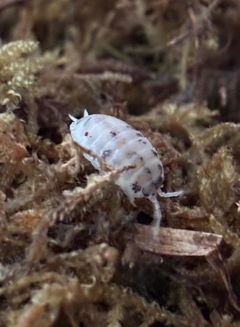
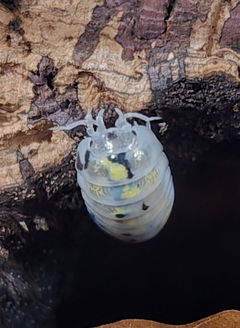
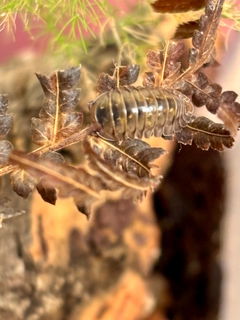
The 'Gem Mix' is a curated culture of multiple Armadillidium vulgare colour morphs kept together as a single mixed colony, giving keepers a properly varied display of the genetic colour range within the species in one purchase. Rather than a single uniform morph, you'll receive a lottery-style mix of wild-type animals alongside selectively bred colour expressions — typically including the classic dark wild-type, the warm Orange Vigor, and the pearlescent Magic Potion, with occasional appearances of yellow, white, purple-tinged or intermediate individuals depending on what the parent colony has been throwing.

This is part of our wider Armadillidium collection and sits naturally alongside the dedicated single-morph A. vulgare lines we stock — Magic Potion for the pearlescent pure-line, plus our other Armadillidium species like A. depressum for keepers interested in the broader genus. For collectors who want to see the full vulgare colour range side by side, or for breeders interested in isolating their own morphs from a varied genetic base, the Gem Mix is a properly different proposition from any single-line culture.

One honest framing point up front. 'Gem Mix' is among the most beginner-friendly isopods in the hobby — hardy, forgiving of moderate husbandry mistakes, and prolific once established. This is one of the rare premium-looking cultures that doesn't require premium-level husbandry skills, making it an excellent entry point for new keepers who want something more visually interesting than the standard plain wild-type. To set things up properly from the start, browse our accessories collection for the leaf litter, calcium sources, sphagnum moss and protein supplements you'll need.

Quick Care Summary

  • Scientific Name: Armadillidium vulgare Latreille, 1804
  • Common Names: Common Pill Woodlouse, Roly-Poly, Potato Bug (Gem Mix is the trade name for the mixed-morph culture)
  • Family: Armadillidiidae
  • Origin: Native to Mediterranean Europe; now naturalised across much of the world's temperate regions
  • Adult Size: Up to approximately 18 mm; most adults around 15 mm
  • Lifespan: 2–3 years typical
  • Difficulty: Easy — among the most beginner-friendly isopods available
  • Temperature: 18–26 °C — happy at standard UK room temperature
  • Humidity: 50–70% with a moisture gradient (low-to-medium overall); tolerates semi-arid through moderately humid conditions
  • Ventilation: Medium
  • Conglobation: Yes — rolls into a perfect, fully sealed ball when disturbed (one of the defining features of A. vulgare)
  • Appearance: Mixed culture displaying a range of vulgare colour morphs — typically dark wild-type, warm Orange Vigor, pearlescent Magic Potion, plus occasional yellow, white, or intermediate individuals
  • Behaviour: Surface-active and observable; not particularly skittish; happy to forage in open during cooler hours
  • Breeding: Fast and prolific once established — colonies expand readily
  • Rarity: Mix culture is uncommon; individual component morphs are widely available

What Makes 'Gem Mix' Special

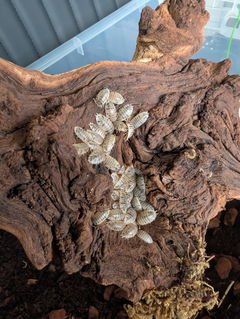
The varied visual display in a single culture. Most isopod cultures are uniform — buy a Magic Potion colony, all the animals look like Magic Potion. The Gem Mix breaks that pattern by deliberately maintaining multiple colour expressions in the same population. A well-established Gem Mix colony shows the full visual range of A. vulgare side by side: classic dark wild-type pillbugs alongside warm orange specimens, pearlescent pale animals, and the various intermediate forms that emerge from the genetic shuffling. The result is a colony that looks more like a wild population than a selectively-bred display line.

The lottery appeal. Each batch of Gem Mix animals is a genuine genetic lottery — you don't know exactly which morphs will be present in what proportions until you open the container. For collectors who enjoy variety, this is a feature rather than a bug. Some batches lean orange-heavy, others throw more Magic Potions, occasionally you'll get an unusual high-yellow or pied individual. The variability is the point.

The breeding project potential. For keepers interested in isolating their own morphs, a Gem Mix is the ideal starting point. With multiple colour-carrying lines in one culture, you can selectively pull out specific colour expressions and start dedicated single-line breeding projects. This is how many of the established morphs in the hobby were originally developed — from mixed-genetic parent stocks where keepers identified unusual individuals and bred them separately to fix the trait. Gem Mix gives you the same starting position.

The beginner-friendly premium aesthetic. The Gem Mix delivers premium-display visuals without premium-level husbandry demands. A. vulgare is one of the most studied and most forgiving isopod species in the world — they tolerate a wide range of conditions, breed readily, and bounce back from minor husbandry mistakes that would crash more demanding cultures. For new keepers who want something more visually interesting than plain wild-type without taking on the difficulty of a Cubaris or Fillipinodillo, this is the right purchase.

The perfect conglobation. A. vulgare is the textbook example of complete conglobation — they roll into a perfectly sealed ball with no visible gap, unlike A. nasatum or A. depressum which leave a small opening. Watching a colony of mixed-colour Gem Mix animals roll into their defensive balls is genuinely one of the more satisfying isopod experiences on offer.

About the Name and Composition

A brief clarification on what's in a Gem Mix and how the name works.

  • Armadillidium vulgare: The single species underlying all the colour morphs — every animal in the mix is the same species, just expressing different colour genetics.
  • 'Gem Mix': The trade name for a curated mixed-morph culture, referencing the gem-like variety of colours present.
  • Standard mix composition: Wild Type (dark grey to nearly black), Orange Vigor (warm orange tones), and Magic Potion (pearlescent pale with crystalline sheen) are the three core morphs in most Gem Mix lines internationally.
  • Extended mix possibilities: Some breeder lines also include additional morphs — yellow, white-out, purple-tinged, high-yellow, and various intermediate forms. The exact mix varies by source and batch.
  • Not a single morph: Don't expect every animal to look the same. The mixed appearance is the entire point of the product.

Setting Up the Enclosure

A 5–10 litre plastic container with a secure clip-lock lid suits a starter colony of 10–15 individuals. A. vulgare aren't fussy about enclosure design — a basic plastic tub with cross-ventilation works perfectly well. Drill ventilation holes on opposing sides, covered with fine mesh. Medium ventilation is fine for this species; you don't need the high airflow that Mediterranean Porcellio require.

Distribute hides across the moisture gradient — cork bark flats, lotus pods, and decaying hardwood pieces all work well. A. vulgare are happy to cluster under shared hides rather than dispersing. Browse our accessories range for cork bark, lotus pods, and other natural hide options. Keep the enclosure out of direct sunlight and away from radiators where temperatures fluctuate dramatically.

Important husbandry note: Skip the standing water dish. A lightly misted moist corner with sphagnum moss provides all the moisture this species needs, and standing water encourages mould without serving a real purpose for a low-to-medium humidity species like A. vulgare.

Substrate

Use a moderately moist, calcium-rich substrate appropriate to the species's Mediterranean European origin:

  • Organic topsoil (pesticide-free) as the foundation
  • Sphagnum moss concentrated in the moist corner only — not mixed throughout
  • Composted hardwood leaf litter mixed through the upper layer — browse our accessories collection for ready-prepared options
  • Crushed limestone or oyster shell distributed throughout for calcium
  • Small pieces of rotting hardwood as a food source and natural cover
  • A small amount of fine sand mixed in to keep the dry zone well-draining

We recommend a topsoil-based mix rather than coco coir. Substrate depth around 5–8 cm gives A. vulgare room to burrow when they want to — they're moderate burrowers rather than dedicated tunnelers.

Top layer: a generous covering of hardwood leaf litter — oak, beech, hazel — plus multiple flat cork bark pieces for cover.

Humidity and Temperature

Maintain humidity in the 50–70% range overall, with roughly a quarter of the enclosure kept lightly damp via misted sphagnum moss and the remainder allowed to dry out properly between waterings. A. vulgare is genuinely tolerant of a wide humidity range — from semi-arid through to moderately humid — which is one of the reasons it's such a forgiving beginner species. Many keepers run a 30/70 damp-to-dry ratio successfully.

Temperature should be 18–26 °C, which matches UK room temperature year-round. A. vulgare is well-adapted to standard UK home conditions and needs no supplementary heating. The species tolerates cooler conditions in winter and warmer conditions in summer without issue, as long as the moisture gradient remains stable.

Diet

Like all Armadillidium, the Gem Mix are detritivores that accept a broad range of foods:

  • Hardwood leaf litter (oak, beech, hazel) — the dietary foundation, always available. Our accessories range includes properly prepared leaf litter.
  • Rotting hardwood pieces — important secondary nutrition source
  • Vegetables 2–3x weekly: courgette, carrot, sweet potato, squash, cucumber. Replace within 24–48 hours.
  • Fruit occasionally in small amounts (apple, melon, banana)
  • Protein 1x weekly: fish flake, dried shrimp, dried daphnia. Armadillidium have a lower protein requirement than Porcellio, so don't overdo it. Our accessories collection stocks the protein supplements you'll need.
  • Calcium (essential — always available): cuttlebone, crushed limestone, oyster shell. Browse our calcium options in the accessories range.
  • Moss and lichen — also eaten and appreciated

Don't overfeed. Uneaten fresh food spoils quickly and attracts fungus gnats and mites. The bulk of the diet comes from substrate-borne detritus, with fresh and protein offerings as supplements.

Breeding

A. vulgare are reliable, prolific breeders — among the easiest isopod species to establish a self-sustaining colony from. Females carry developing young in a brood pouch (marsupium) for 4–6 weeks before releasing them as fully-formed miniature versions of the adults, with the parent's colour expression visible from birth. Sexual maturity comes at around 3–5 months, and breeding continues year-round in stable conditions.

For Gem Mix specifically, the breeding interest goes beyond just colony growth — the mixed genetics mean each generation produces a varied mix of offspring, with occasional unusual colour combinations appearing as the lines cross. For keepers interested in selective breeding projects, this is the ideal starting material:

  • Maintain the colony as a mixed group to preserve genetic variety
  • Watch for unusual or particularly vivid individuals as juveniles mature
  • Move standout individuals to a separate enclosure to start a single-line breeding project
  • Maintain the main Gem Mix colony as the source population for continued genetic diversity

For purely display purposes, no special breeding considerations are needed — the colony will multiply happily on its own with basic stable husbandry. Calcium availability and consistent moisture matter more than precise environmental tuning.

Who Should Buy 'Gem Mix' Isopods?

Ideal for:

  • Beginner isopod keepers who want premium-display visuals without premium-level husbandry demands
  • Keepers building a varied first colony with multiple colour expressions in one purchase
  • Breeders interested in selective breeding projects — Gem Mix is ideal starting genetic material
  • Display enthusiasts who prefer a "wild population" look over uniform single-morph cultures
  • Bioactive setups needing hardy, prolific cleanup crew with added visual interest
  • Anyone wanting to see the full A. vulgare colour range side by side in one enclosure

Not ideal for:

  • Collectors specifically wanting pure single-morph lines — buy Magic Potion or other single-line cultures instead
  • Keepers who want predictable uniform appearance — the mix is by definition varied
  • Anyone looking for an exotic or rare premium species — Gem Mix is hardy and approachable, not rare
  • Setups running consistently wet without a proper dry zone — A. vulgare prefer the moisture gradient

Realistic Expectations

The mix composition varies between batches. Some Gem Mix shipments will lean heavily towards one or two morphs; others will be more evenly distributed. This is normal and reflects the genetic shuffling within the parent colony rather than a quality issue. If you want guaranteed proportions of specific morphs, buy them as separate single-morph cultures instead.

The Magic Potions in the mix won't all look identical to dedicated pure-line Magic Potions. Pure-line Magic Potion cultures have been selectively bred for the maximum pearlescent effect; Magic Potions from a mixed-genetic Gem Mix may show slightly less intense colour expression because they're carrying genes from other morphs too. They'll still look distinctly Magic Potion, just not always at the saturation level of a dedicated breeding line.

Wild-type animals are still in the mix. New keepers occasionally expect every animal in a Gem Mix to look unusual or premium-coloured. In reality, classic dark wild-type pillbugs are typically the most numerous component of any well-balanced Gem Mix — and they should be, since they represent the genetic foundation that the other morphs are derived from. Don't view them as "fillers"; they're essential to the mix.

The colony will breed fast. A. vulgare are prolific. A starter culture of 10–15 individuals can easily expand to several hundred within a year under good conditions. Plan enclosure size accordingly, or be ready to split colonies as they grow.

Selective breeding takes patience. If you're buying Gem Mix specifically with selective breeding intentions, accept that isolating a stable single-morph line takes multiple generations and considerable patience. The lottery nature of the mix is exciting, but turning lottery wins into a fixed line is the real work. Several years of careful selection is the typical timeline for establishing a new fixed colour morph.

Use collapsible tabs for more detailed information that will help customers make a purchasing decision.

Ex: Shipping and return policies, size guides, and other common questions.
You may also like


Recently viewed