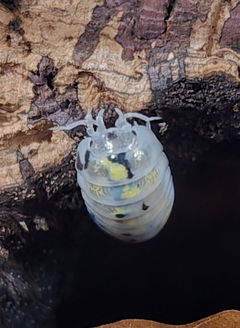
Armadillidium vulgare 'T+ Albino' Isopods for Sale UK
Care Info:
- Free shipping over £65
- In stock, ready to ship
- Backordered, shipping soon
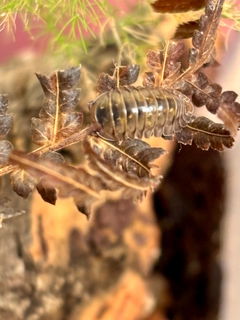
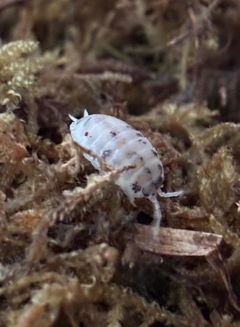
Armadillidium vulgare 'T+ Albino' is a beautiful warm-toned colour morph of the classic common pill bug — one of the most genuinely glowing, accessible isopods in the UK hobby. Where you might expect "albino" to mean white, the T+ albino is the opposite: a warm pale-orange to sienna body washed with wispy yellow patterning and golden flecks, often with a solid band of yellow running down the centre of the back. The effect is a soft, sunlit, honey-and-amber glow quite unlike the wild grey pill bug — and genuinely different from the near-white T- (tyrosinase-negative) albinos. For keepers who love warm colour but want the easiest, hardiest care in the hobby, the T+ Albino is a lovely choice.
What makes the T+ Albino particularly worth keeping is exactly that combination: a distinctive, warm-glowing morph with the famously easy, forgiving care of Armadillidium vulgare — the most widespread, hardiest, and best-understood pill bug in the world. They're true roly-polys, conglobating into a perfect, gapless ball when disturbed, and they share the beginner-friendly, reliable husbandry that makes A. vulgare the ideal isopod for newcomers. They sit alongside the other vulgare morphs and easy Armadillidium like Magic Potion and Jelly Bean.
The "T+" refers to the genetics: T stands for tyrosinase, the enzyme that drives melanin (pigment) production. T+ (tyrosinase-positive) albinos can't produce the traditional black melanin of the wild type, but they CAN still produce warm pigments — which is exactly why they glow in shades of orange, sienna, and yellow rather than appearing white. It's the same well-known albino gene recognised in the reptile-keeping world, applied to a pill bug.
Quick Care Summary
- Scientific Name: Armadillidium vulgare 'T+ Albino'
- Common Names: T+ Albino, T-Positive Albino, Tyrosinase-Positive Albino, Yellow Albino Pill Bug
- Family: Armadillidiidae
- Origin: Captive-developed morph of A. vulgare (native to Mediterranean Europe, naturalised worldwide)
- Adult Size: Up to approximately 15–18 mm — a large Armadillidium
- Lifespan: 2–3 years typical
- Difficulty: Easy — one of the hardiest, most beginner-friendly isopods
- Temperature: 18–25°C (tolerates warmth; UK room temperature suits them)
- Humidity: Medium (55–70%) with a moisture gradient — tolerates slightly drier conditions
- Ventilation: Medium — good airflow important
- Conglobation: Yes — rolls into a complete, gapless ball
- Behaviour: Calm, hardy, reasonably active; classic roly-poly
- Breeding: Reliable and moderately prolific — breeds readily in a good setup
What Makes T+ Albino Isopods Special
Several factors make the T+ Albino a genuinely appealing Armadillidium:
The warm orange-and-gold colouration. A pale orange-to-sienna base with wispy yellow patterning and golden flecks gives them a soft, sunlit glow that's quite different from both the grey wild type and the stark near-white T- albinos. Each individual carries its own pattern, and a colony has a genuinely warm, honeyed quality.
Colour that deepens with maturity. A lovely feature of the T+ Albino is that the colour can intensify with each moult — juveniles and freshly-moulted individuals may appear paler, deepening into richer orange and sienna tones (sometimes almost amber-brown) as they mature. An established colony shows an attractive range of shades.
The fascinating "T+" genetics. The tyrosinase-positive trait is a genuinely interesting talking point — the same albino gene recognised across the reptile and exotic-pet world, here producing warm pigments instead of black. It's a nice educational angle for keepers interested in colour genetics and morphs.
Famously easy care. Armadillidium vulgare is the most widespread and best-understood pill bug in the world — hardy, forgiving, and genuinely beginner-friendly. The T+ Albino gives you a distinctive warm-toned morph without any increase in difficulty, making it an ideal colourful first isopod.
Perfect conglobation. Like all A. vulgare, they roll into a complete, gapless ball when disturbed — the textbook roly-poly behaviour, and a glowing orange sphere is a particularly charming sight.
A large, observable isopod. At up to 15–18 mm, they're a good-sized, easily-appreciated Armadillidium — the warm colouration well displayed on a substantial body.
How T+ Albino Compares to Other Armadillidium
If you're choosing between easy, colourful Armadillidium, here's how the T+ Albino fits in:
- vs Magic Potion: Both are colour morphs of the easy, hardy A. vulgare. Magic Potion shows pale semi-transparent tones with yellow markings; the T+ Albino glows warm orange-and-gold. Identical easy care — choose between the pale "potion" look and the warm albino glow.
- vs Jelly Bean: Both are bright, colourful, beginner-friendly Armadillidium. Jelly Beans show multi-coloured patterning; the T+ Albino is a warm, uniform orange-gold. Both lovely easy display morphs.
- vs Zebra (A. maculatum): Zebras are boldly black-and-white striped; the T+ Albino is warm orange-gold. Both hardy, beginner-friendly Armadillidium — choose based on whether bold pattern or warm glow appeals.
- vs Yellow Spanish Granulatum (A. granulatum): Granulatum are larger, bumpy, and yellow-spotted on grey; the T+ Albino is smooth and warm orange-gold. Different textures and tones within the easy Armadillidium range.
Browse the full Armadillidium collection to compare all species and morphs.
Setting Up the Enclosure
A 10–15 litre plastic container or terrarium suits a starter colony, with room to expand as the colony grows. Plastic tubs with clip-lock lids hold appropriate humidity while allowing the ventilation Armadillidium need. The 3L Braplast tub works for smaller starter colonies, with larger housing as the population grows.
For ventilation, drill holes on opposite sides of the container for cross-ventilation. Medium ventilation suits them — enough airflow to prevent stagnant, overly-humid conditions while maintaining the moist zone of a gradient. Provide plenty of hiding spots with cork bark, leaf litter, and various mosses (which also serve as snacks). Keep the enclosure out of direct sunlight. Browse our accessories collection for appropriate enclosures, vents, and other essentials.
Substrate
Build a straightforward substrate appropriate for this hardy temperate species:
- Organic topsoil base (pesticide-free) as the foundation
- Sphagnum peat moss mixed throughout for moisture retention
- Crushed limestone, oyster shell, or eggshells distributed throughout for calcium
- Flake soil mixed in for added nutrition
- Decaying hardwood pieces and cork incorporated throughout
Substrate depth: 5–8 cm for burrowing — they appreciate enough depth for moulting and security.
Top layer: Generous hardwood leaf litter — magnolia leaves and oak leaves work particularly well for long-lasting cover and food. Add cork bark, decaying wood, and various mosses (pillow, sheet) for hides and grazing, plus a sphagnum moss patch on one side to create the moist zone of the gradient.
Humidity and Temperature
Maintain medium humidity (around 55–70%) with a moisture gradient. A. vulgare are adaptable and tolerate slightly drier conditions than many isopods, but they still prefer a nice damp area to retreat to. Set up a gradient: one side wetter with sphagnum moss, the middle moist with leaf litter and bark, and the opposite side drier with leaf litter — letting the colony self-regulate. Good ventilation prevents stagnation.
Avoid extremely wet conditions. As one PostPods customer noted about following the website's care guidance, getting moisture right is the key to keeping isopods successfully — too much moisture is the most common mistake. While A. vulgare are forgiving, they do best with a proper gradient and good airflow rather than a uniformly soggy enclosure. An occasional light misting to maintain the moist zone is sufficient.
Temperature should be 18–25°C — UK room temperature works year-round in most homes. As a temperate European species they're comfortable across a range and tolerate warmth well, though they appreciate stable conditions. Avoid sustained extremes in either direction.
Diet
T+ Albino isopods are unfussy detritivores with broad appetites typical of Armadillidium:
- Primary diet (always available): Decaying hardwood, cork, hardwood leaf litter (oak, beech), dried leaves, grasses, lichen
- Vegetables (1–2x weekly): Potato, squash, carrot, courgette, sweet potato. Replace within 24–48 hours.
- Fruit (occasionally): Small amounts of soft fruit
- Protein (1–2x weekly): Fish flakes, dried shrimp, isopod foods. Place on the drier side, as it spoils quickly in humid areas. Browse our accessories collection for the full range of protein supplements.
- Calcium (essential — always available): Cuttlefish bone, crushed limestone, oyster shell, eggshells. Essential for healthy moulting and shell development — provide multiple sources distributed throughout.
Feeding approach: Maintain a base of leaf litter and decaying wood, supplementing with vegetables, occasional fruit, protein, and a constant calcium source. Be aware that A. vulgare will happily nibble live plants in a bioactive setup. Remove uneaten fresh foods within 24–48 hours to prevent mould.
Breeding
T+ Albino isopods breed readily and are moderately prolific in a well-established colony — like most A. vulgare, reliable and satisfying to reproduce.
Breeding basics:
- They reproduce sexually — males and females mate, and females carry fertilised eggs in a marsupium (brood pouch)
- Live mancae emerge as fully-formed miniature versions of adults
- The T+ albino trait is genetic, so a pure colony produces albino offspring
- The warm orange-gold colouration develops and deepens as juveniles mature through successive moults
For breeding success:
- Stable temperatures within the comfort range (20–24°C optimal)
- A proper moisture gradient (medium humidity with a damp retreat)
- Adequate calcium availability throughout
- Regular protein supplementation
- Multiple bark and moss hides
- Larger starter groups establish faster and provide genetic diversity
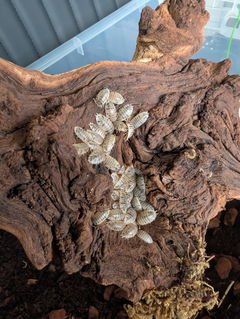
As a reliable breeder, the T+ Albino rewards keepers with steady colony growth — and a colony of warm orange-gold pill bugs makes a genuinely beautiful, glowing display.
Pair With Springtails
Add a thriving springtail culture to any T+ Albino setup. Springtails handle mould and microbial growth at a scale isopods can't manage — particularly useful around protein foods and in the moist zone of the moisture gradient. They coexist peacefully with the T+ Albino and form a helpful cleanup partnership.
Who Should Buy T+ Albino Isopods?
Ideal for:
- Beginners wanting a colourful, easy, hardy first isopod
- Keepers who love warm orange-and-gold colouration
- Anyone interested in colour genetics and morphs (the tyrosinase-positive trait)
- Collectors building a colourful A. vulgare morph collection (Magic Potion, Jelly Bean, T+ Albino)
- Bioactive setup builders wanting an attractive, hardy cleanup crew
- Display enthusiasts who appreciate a glowing, sunlit colony
Not ideal for:
- Heavily-planted bioactive setups where plant-nibbling is a problem (A. vulgare enjoy live plants)
- High-humidity tropical setups (they prefer a gradient with drier zones)
- Keepers who tend to overwater (they dislike constantly soggy conditions)
- Anyone wanting non-rolling fast surface species (these are rolling pill bugs)
Realistic Expectations
"Albino" doesn't mean white here. The T+ (tyrosinase-positive) trait produces warm orange, sienna, and yellow tones rather than the near-white of T- albinos. If you're expecting a white isopod, the T+ is the warm-glowing opposite — which is precisely its appeal.
Colour deepens with maturity. Juveniles and freshly-moulted individuals may look paler, developing richer orange and sienna (sometimes almost amber-brown) tones with each moult. An established colony shows a lovely range of shades.
It's genuinely easy. As an A. vulgare morph, the T+ Albino is hardy, forgiving, and beginner-friendly — a distinctive colour with none of the demands of fussier species. An ideal colourful starter isopod.
It prefers a gradient, not constant wetness. While forgiving and tolerant of slightly drier conditions, it does best with a proper moisture gradient and good ventilation rather than a soggy enclosure.
It may nibble live plants. Like all A. vulgare, they enjoy live plants, so bear that in mind in a heavily-planted bioactive vivarium.
Building Your Setup
A complete T+ Albino setup needs basic substrate components, abundant calcium-rich materials, generous leaf litter and bark, mosses, and protein supplements. Browse our accessories collection for everything you need — enclosures, ventilation, leaf litter, calcium (cuttlebone, limestone, oyster shell), and protein supplements.
Browse the full Armadillidium collection for more species and morphs, or read our blog post on isopod genetics, colours, and morphs for more on how traits like the tyrosinase-positive albino arise.
Use collapsible tabs for more detailed information that will help customers make a purchasing decision.
Ex: Shipping and return policies, size guides, and other common questions.