Pink Panda King Isopods (Cubaris sp.)
Care Info:
 ORIGIN
 TEMP
TEMP
 HUMIDITY
 LENGTH
 DIFFICULTY
 RARITY
- Free shipping over £65
- Low stock - 8 items left
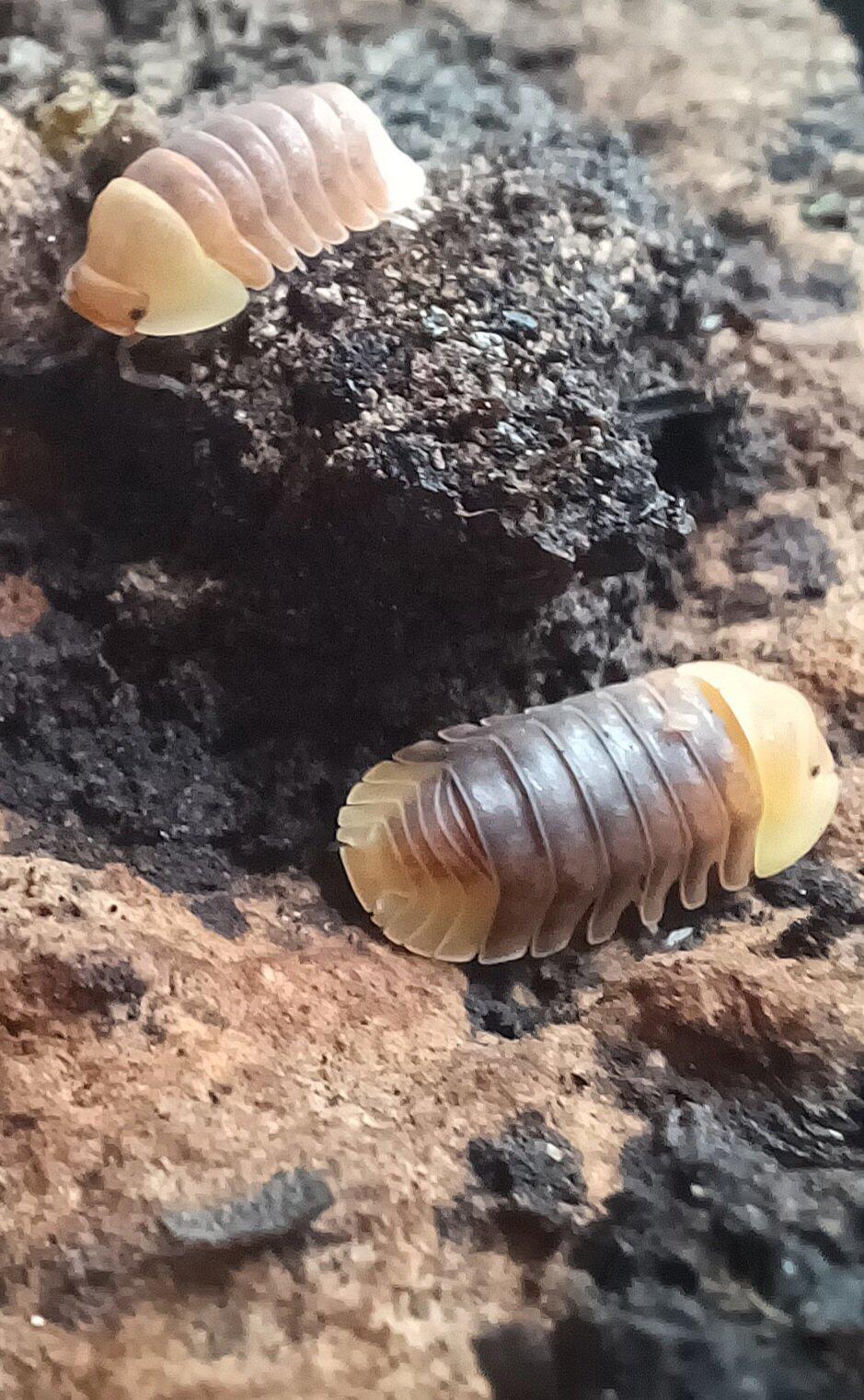
Set a Pink Panda King next to a standard Panda King and the draw is immediate. It carries the same bold panda face and banding that made the original a hobby favourite, but rendered in soft pink and cream rather than hard black and white. Of all the colour forms in the Panda King group, the Pink is the one people ask me for by name once they have seen one in the flesh. Every colony we send is captive-bred here in the UK.
Introduction
This is Cubaris sp. "Pink Panda King", a selectively bred colour form of the Panda King, also sold simply as the Pink Panda. It shares the open question over the group's origin: sellers place them in limestone karst country, most of them in Vietnam and a few in Thailand, and we have found no published record of a collector, a year or a collection site. What sets the Pink apart is purely the palette. Breeders have worked a softer pink-and-cream colouration into the familiar Panda King pattern, and because it is a scarcer look than the standard black-and-white Panda King, an established Pink colony is worth having.
Appearance
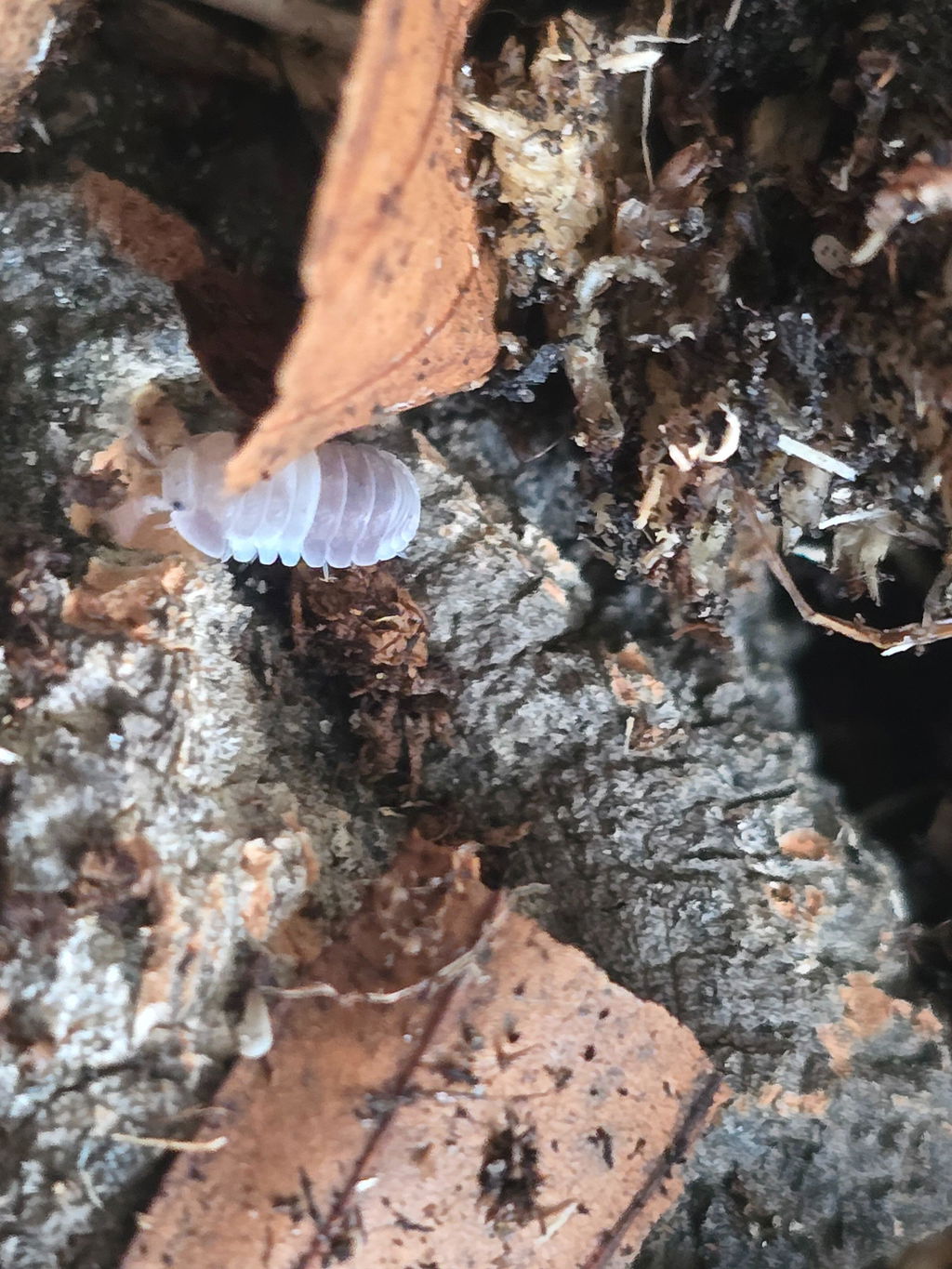
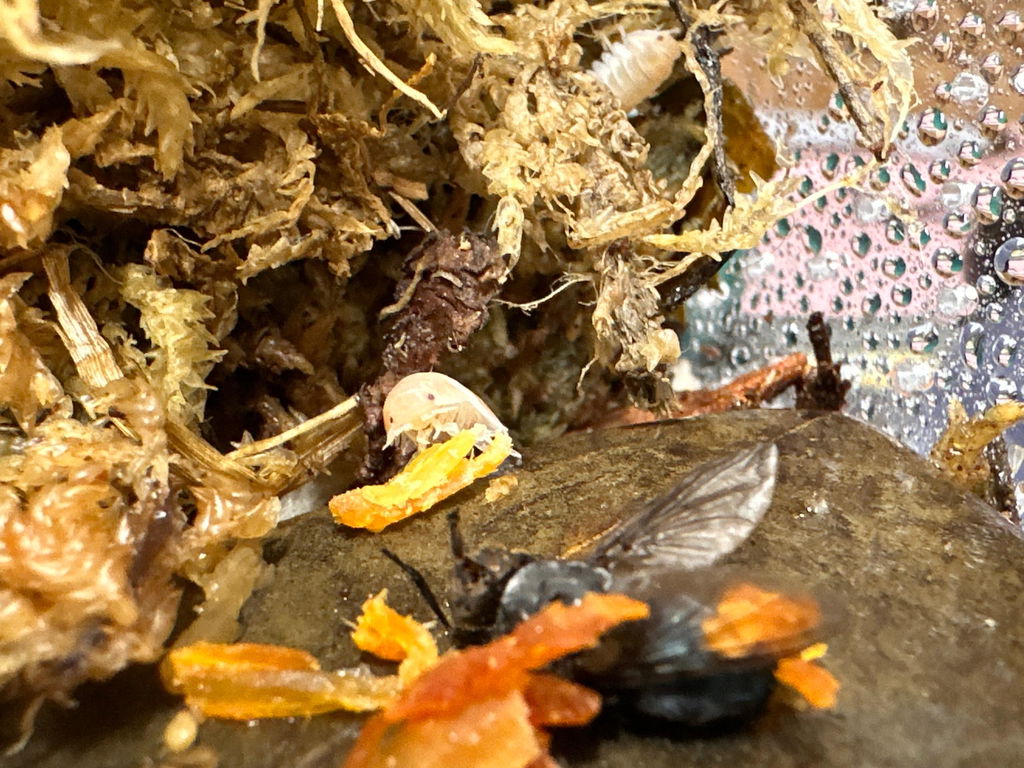
Small and rounded, in line with the rest of the Panda King group at roughly 1 to 1.5 cm. The banding and facial markings read as the recognisable Panda King, but the contrast is gentle: pale pink through to cream rather than crisp monochrome, which gives the animal a pastel, almost dusty look under soft light. Colour firms up over successive moults, so freshly emerged young can look paler and less defined than settled adults. Like the rest of the genus they draw into a tight ball when startled, and a pink one tucked into itself is a particularly good-looking thing. Our guide to pink isopods compares it with the Cherry Blossom, the pinkest of the five we sell.
Care
Care is identical to the standard Panda King, and it differs from the hardy European isopods in one important way. It wants warmth and high humidity, around 21 to 27°C and 70 to 80%, but it wants less airflow than the strong cross-breeze Mediterranean species need. A plastic tub with a clip-lock lid and a few small vents holds conditions far better than a breezy glass terrarium. Low is not none, though. Seal a tub completely and the air stops turning over, so aim for low to moderate ventilation rather than none at all. Give a deep substrate to burrow through, built on a nutritious base of flake soil, white-rotted hardwood and organic topsoil rather than coco coir, which holds water but feeds nothing to an animal that eats its substrate. And because woodlice build a calcium carbonate cuticle, a permanent calcium source such as cuttlebone or crushed limestone is not optional; it feeds directly into moulting and breeding. Our substrate guide, calcium guide and complete Cubaris care guide cover the detail, and the components are in our accessories range.
Diet
Pink Panda Kings are detritivores, so leaf litter and decaying hardwood do the bulk of the feeding and should be kept topped up as they work through it. Add small amounts of vegetable and the occasional pinch of protein, a little fish flake or dried shrimp, and lift anything uneaten within a day or two. In a warm, humid, poorly ventilated tub, leftover fresh food is the quickest route to mould and mites. A springtail culture running alongside grazes the soft mould on anything you miss and earns its place in any Cubaris setup.
Breeding
The Pink shares the trait that made the Panda King the gateway into the genus: it actually breeds, where many premium Cubaris stall for months. Give a settled group stable warmth and humidity and it will build steadily rather than in bursts, which is exactly why a colour form like this stays within reach instead of being priced out. Start with a group rather than a pair, keep the calcium constant, and resist digging around after a new colony while it establishes. Our guide to breeding Rubber Duckys and Panda Kings walks through it. If you are keeping the pink look distinct, house them apart from the standard and Red Panda King, since mixing the morphs gives mixed young.
Who is this for?
The Pink suits the keeper who likes the standard Panda King but wants something scarcer on the shelf, and the collector building the group in all its colours. It is fine for a beginner, even as a first isopod: what it asks for is steady warmth and humidity, some air moving through the tub, and a few months for a new group to settle. It stays one of the more forgiving Cubaris and a sound place to build confidence before moving on to the demanding rarities like the Rubber Ducky. It is not a fast clean-up crew, nor a feeder; the shell and the modest numbers rule that out.
For the family's husbandry in one place, morphs and all, our Panda King care guide covers it from airflow to breeding, the Pink included.
All stock is captive-bred here in the UK and travels under our live arrival guarantee, packed into a ventilated deli tub with damp sphagnum inside a double-walled box. We post Monday to Thursday by Royal Mail Tracked 24, or Special Delivery Guaranteed by 1pm if you choose Next Day at checkout, with a 20% overcount in every order so nothing sits in the system over a weekend.