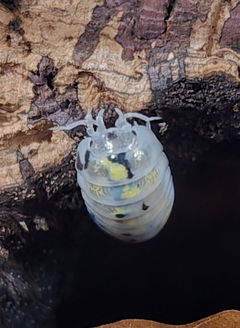
Armadillidium Hauseni 'Triceratops' Isopods
Care Info:
- Free shipping over £65
- Low stock - 4 items left
- Backordered, shipping soon
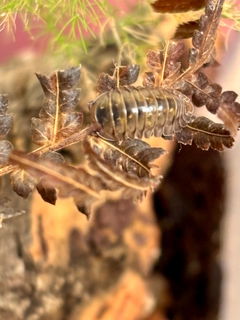
Armadillidium hauseni — widely known in the hobby as the Triceratops Isopod — is one of the most genuinely distinctive Greek-endemic Armadillidium species to enter the UK trade in recent years. Adults carry a prominent, shield-like horned tubercle structure on the head that's the source of the dinosaur common name, and the body itself shows the heavily armoured, granulated appearance that sets it apart from the smoother members of the genus. A properly striking species, both visually and in terms of how rarely it appears in UK collections.
This is part of our wider Armadillidium collection and sits naturally alongside other Mediterranean-line species in the catalogue — particularly Armadillidium klugii 'Clown' and other granulated or patterned forms. For collectors building a focused Greek or Mediterranean Armadillidium cluster, this is one of the more visually unusual additions available.
One honest framing point up front. A. hauseni only entered the UK hobby in autumn 2024 and remains extremely scarce. Care itself is moderate intermediate — the species follows classic Armadillidium husbandry, which is forgiving by Cubaris standards but still benefits from a keeper who's worked with other isopods first. New keepers should master Porcellio scaber Dalmatian or a more common Armadillidium like A. vulgare before stepping up to a premium acquisition like this one.
Quick Care Summary
- Scientific Name: Armadillidium hauseni
- Common Name: Triceratops Isopod
- Family: Armadillidiidae
- Origin: Greece (endemic) — Mediterranean Europe
- Adult Size: Approximately 12–18 mm (mid-sized for the genus)
- Lifespan: 2–3 years typical
- Difficulty: Moderate — comfortable for keepers with prior isopod experience
- Temperature: 18–26 °C — happy at standard UK room temperature
- Humidity: 55–70% with a clear moisture gradient — drier than most tropical isopods
- Ventilation: Medium to high — the genus does poorly in stuffy conditions
- Conglobation: Yes — rolls into a tight defensive ball when disturbed, classic Armadillidium behaviour
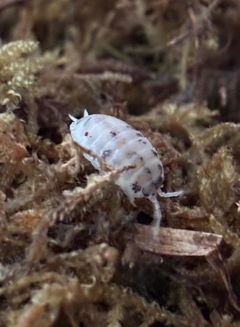
- Appearance: Heavily granulated, armoured body with a prominent shield-like horned tubercle on the head; rugged, prehistoric look; muted grey-brown colouration with subtle granulation patterning
- Behaviour: Slower-moving than Porcellio; classic Armadillidium temperament; rolls into a ball when disturbed rather than running
- Breeding: Slow to establish but reliable under stable conditions; typical Mediterranean Armadillidium reproductive rate
- Rarity: Extremely Rare in the UK hobby — only entered captive breeding in the UK in autumn 2024
What Makes 'Triceratops' Special
The horned head. The defining feature of this species is the prominent shield-like tubercle structure on the head, which gives it both its scientific recognisability and its 'Triceratops' trade name. The horn-like projection is genuinely unusual in the Armadillidium genus and sets hauseni apart from the smoother-headed species that dominate the trade. Combined with the heavily granulated body, the overall impression is distinctly prehistoric — far closer to a small living trilobite than the rounded, smooth-bodied isopods most keepers are familiar with.
The Greek endemic provenance. A. hauseni is endemic to Greece, joining the small but growing group of Greek-origin Armadillidium available in captive culture. Greek Armadillidium diversity is considerable but largely unexplored in the hobby — most cultured species in the genus come from Croatia, Italy or France — which makes any Greek-origin species a genuine geographic novelty. Authentic provenance, not a fabricated trade designation.
The new arrival to the UK hobby. This species only began entering UK captive breeding in autumn 2024, making it one of the newest Armadillidium in the UK trade. UK-bred stock is correspondingly scarce, and the species is documented as "extremely rare" across the entire UK collector community. For keepers interested in being early adopters of emerging hobby species, this is a properly meaningful acquisition.
The classic Armadillidium temperament with a distinctive look. Where some of the more visually striking isopods compromise on temperament — fast, skittish, hard to observe — A. hauseni brings the unusual appearance together with the steady, predictable behaviour of the wider Armadillidium genus. They roll into a tight ball when disturbed, move at a measured pace, and don't try to escape every time the lid comes off. Easy to observe and a sensible introduction to Mediterranean Armadillidium for a keeper who's used to Porcellio or Cubaris.
The Mediterranean Armadillidium cluster. A. hauseni sits well in a focused Mediterranean Armadillidium collection alongside Croatian A. klugii 'Clown', French A. maculatum 'Zebra' forms, and other Italian and Greek species. Together they show off how much visual and morphological diversity exists in this single genus across the Mediterranean basin.
About the Name
You'll see this species sold under two main names — worth a brief clarification.
- Armadillidium hauseni: The formal scientific binomial. Use this name when researching in scientific or taxonomic sources.
- 'Triceratops Isopod': The common hobby name, referring to the prominent shield-like horned tubercle on the head. The name is used widely across UK and international hobby sources and has become the de facto trade designation.
Both refer to the same animal. You may also occasionally see it referenced simply as 'Greek Triceratops' or 'Hauseni' in informal hobby contexts.
Setting Up the Enclosure
A 5–10 litre plastic container with a secure clip-lock lid suits a starter colony of 5–10 individuals. Drill ventilation holes on opposite sides for proper cross-flow, covered with fine mesh. The Armadillidium genus generally appreciates better airflow than Cubaris, so don't undersize the ventilation. Get this right and the colony establishes well; insufficient airflow is one of the more common reasons Mediterranean isopod cultures struggle.
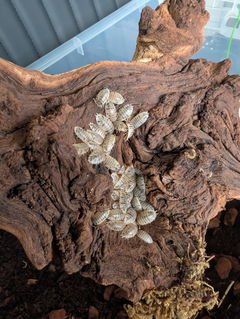
Provide multiple hides distributed across the moisture gradient — cork bark flats, decaying hardwood pieces, flat stones, ceramic hides. Limestone and other carbonate rocks are particularly appreciated by Greek-origin Armadillidium, both as hiding spots and as a slow-release calcium source. Keep the enclosure out of direct sunlight and away from heat sources that cause humidity to swing.
Important husbandry note: Skip the standing water dish. A lightly misted moist corner provides all the moisture this species needs, and standing water in a moderate-humidity setup encourages mould without serving a real purpose. Armadillidium drink primarily from substrate moisture rather than open water sources.
Substrate
Use a free-draining, calcium-rich Mediterranean-style substrate:
- Organic topsoil (pesticide-free) as the foundation
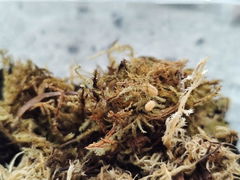
- Sphagnum moss concentrated in the moist corner only — not mixed throughout
- Composted hardwood leaf litter mixed through the upper layer
- Crushed limestone or oyster shell distributed liberally throughout — Greek Armadillidium respond well to calcium-rich substrates
- Small pieces of rotting hardwood as a food source and natural cover
- A small amount of fine sand or aquarium gravel mixed in to keep the dry zone well-draining
We recommend a topsoil-based mix rather than coco coir. Substrate depth around 5–7 cm is adequate — Armadillidium are surface foragers rather than deep burrowers, so getting the moisture gradient and calcium availability right matters more than depth.
Top layer: a generous covering of hardwood leaf litter — oak, beech, hazel — plus flat limestone pieces and cork bark for cover. Maintain a clear distinction between the moist end and the dry end so the colony can self-regulate.
Humidity and Temperature
Maintain humidity around 55–70% overall, with roughly a quarter to a third of the enclosure kept consistently damp via lightly misted sphagnum, and the remaining majority allowed to dry out properly between waterings. Mediterranean Armadillidium need a clear moisture gradient rather than uniform dampness — they evolved in habitats that dry out significantly between rainfall events, and consistently wet conditions stress the colony.
Temperature should be 18–26 °C, which matches standard UK room temperature for most of the year. They handle the cooler end without difficulty, and breeding picks up modestly in the warmer half of the range. No supplementary heating is required in most heated UK homes. Avoid placement near radiators, windows or other heat sources that cause humidity to swing unpredictably.
Diet
Like the rest of the genus, A. hauseni are detritivores that accept a broad range of foods:
- Hardwood leaf litter (oak, beech, hazel) — the dietary foundation, always available
- Rotting hardwood pieces — important secondary nutrition source
- Vegetables 1–2x weekly: courgette, carrot, sweet potato, squash. Replace within 24–48 hours.
- Fruit occasionally in small amounts (apple, melon)
- Protein 1x weekly: fish flake, dried shrimp, dried daphnia. Armadillidium have a lower protein requirement than Porcellio, so don't overdo it.
- Calcium (essential — always available): cuttlefish bone, crushed limestone, oyster shell, eggshell. Greek Armadillidium are particularly calcium-hungry and respond well to multiple distributed sources.
Don't overfeed — uneaten fresh food spoils quickly and damages air quality. The bulk of the diet comes from substrate-borne detritus, with fresh and protein offerings as supplements rather than staples.
Breeding
Information on captive breeding for this specific species is limited given how recently it entered the UK hobby, but it follows the general pattern for Mediterranean Armadillidium — slower to establish than tropical species, but reliable once a colony settles into a stable rhythm. Females carry developing young in a brood pouch (marsupium) and release fully-formed miniature versions of the adults, which inherit the granulated body and horned head from birth.
For breeding success:
- Stable temperature in the upper half of the range (22–25 °C tends to support better breeding rates)
- Consistent moisture gradient — avoid wet swings or stuffy conditions
- Abundant calcium for breeding females, with multiple distributed sources
- Occasional protein supplementation to support reproductive output
- Plenty of secure hides, especially flat limestone and cork bark
- Larger starter groups establish noticeably faster than smaller ones and offer better genetic diversity — important given how narrow the current UK genetic base is
- Patience — initial colony establishment can take several months before visible breeding begins
Because this species is so new to UK captive breeding, keeper observation contributes meaningfully to community understanding. Documented brood sizes, growth rates and other husbandry data for this species are still being established.
Who Should Buy 'Triceratops' Isopods?
Ideal for:
- Experienced isopod keepers looking for a genuinely distinctive premium Armadillidium species
- Collectors building a focused Mediterranean or Greek Armadillidium cluster
- Display enthusiasts drawn to unusual armoured, prehistoric-looking isopods rather than bright colour morphs
- Early-adopter keepers interested in species new to the UK hobby — this is one of the most recent arrivals available
- Keepers comfortable with steady rather than prolific breeding and willing to support a slowly-establishing colony
- Anyone interested in the morphological diversity of Armadillidium beyond the standard vulgare and klugii
Not ideal for:
- Complete beginners — start with Porcellio scaber Dalmatian or a common Armadillidium vulgare form first
- Keepers wanting fast colony expansion — this species breeds at typical Mediterranean Armadillidium rates, not Porcellio rates
- Setups that run consistently damp without a proper dry zone — Mediterranean species need the gradient
- Keepers wanting bright colour visuals — the appeal here is morphological and textural rather than chromatic
- Anyone wanting extensive published care literature — documentation is still developing given how new this species is to the trade
Realistic Expectations
The husbandry data is still developing. Because A. hauseni only entered UK captive breeding in autumn 2024, the published care information available is limited and largely based on early keeper experience rather than long-term observation. The guidance here follows the well-established profile for Mediterranean Armadillidium, which is the appropriate baseline — but expect community understanding of this specific species to refine over the coming years.
Breeding is steady, not prolific. Plan for patient colony establishment over many months rather than rapid expansion. Mediterranean Armadillidium in general breed at a more measured pace than tropical species, and the slow growth rate is partly why A. hauseni remains rare even where it's available.
The appeal is morphological, not chromatic. The colouration is muted greys and browns, with the visual interest coming from the granulated body texture and the prominent horned head. If you're looking for vivid colour, this isn't the right species — the appeal here is the prehistoric look and the genuine rarity, not bright pigmentation.
UK availability will remain limited for some time. Given the recent introduction to UK captive breeding and the slow reproductive rate of the species, expect ongoing scarcity rather than the broad availability you'd see for established hobby species. Securing a starter colony now means starting your line at a point when the wider UK population is still genuinely small.
It's a Greek endemic, not a widely distributed species. Unlike A. vulgare and the other globally-distributed members of the genus, A. hauseni has a genuinely narrow native range restricted to Greece. The species hasn't been widely studied in the wild, which contributes to the limited published husbandry data.
Use collapsible tabs for more detailed information that will help customers make a purchasing decision.
Ex: Shipping and return policies, size guides, and other common questions.