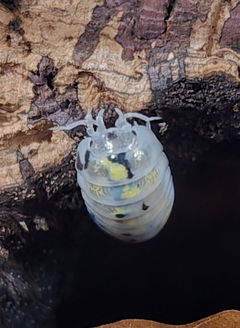
Jelly Bean Isopods (A.Vulgare st.lucia)
Care Info:
- Free shipping over £65
- Low stock - 2 items left
- Backordered, shipping soon
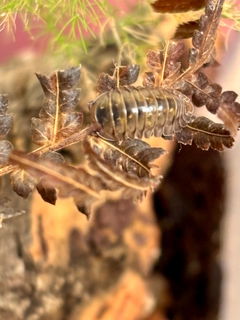
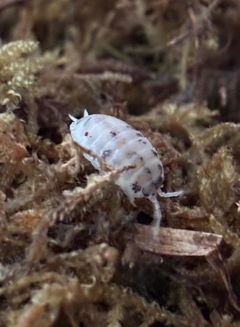
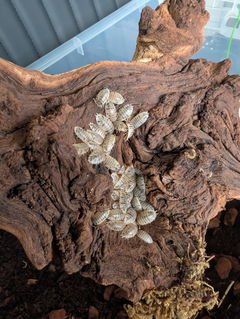
The Jelly Bean Isopod is one of the most genuinely captivating Armadillidium species in the entire UK hobby — a Caribbean locality of the common pillbug famous for producing remarkable colour variation within a single colony. Named after their resemblance to multicoloured jelly bean sweets, individuals from the same colony can display colours ranging from deep burgundy to bright orange, yellow, grey, white, and everything in between. No two animals look identical, which makes building a colony genuinely interesting — every individual is its own unique pattern expression.
What makes Jelly Beans scientifically interesting is that this colour variation appears genetically fixed in a way that resists isolation. Researchers and hobbyists have attempted to breed single-colour lines by pairing same-coloured individuals, but offspring consistently display the full range of colours regardless of parental colouration. This complex polymorphism is genuinely unusual among isopods and gives Jelly Beans a science-meets-aesthetics appeal that few other species can match.
Beyond their visual appeal, they're confident, active isopods with excellent appetites that make them genuinely enjoyable to keep. Unlike many shy nocturnal species, Jelly Beans are often visible on cork bark during the day and respond enthusiastically to food rather than waiting for darkness. They're also remarkably easy to keep — hardy Armadillidium vulgare genetics underneath the colourful exterior means they tolerate the kinds of husbandry variations that would damage delicate species.
Available in groups of 10, 20, or 50. Captive-bred stock from established UK colonies. Low stock — only 2 packs left.
Quick Care Summary
- Scientific Name: Armadillidium vulgare 'St. Lucia'
- Common Names: Jelly Bean Isopod, St. Lucia Isopod, St. Lucia Vulgare
- Family: Armadillidiidae
- Origin: Saint Lucia, eastern Caribbean — volcanic island, tropical climate
- Adult Size: 15–20 mm (up to ¾ inch)
- Lifespan: 2–3 years typical
- Difficulty: Easy — genuinely beginner-friendly
- Temperature: 21–27°C (UK room temperature works year-round)
- Humidity: 70–80% with moisture gradient
- Ventilation: Medium — balance airflow with humidity retention
- Conglobation: Yes — rolls into tight defensive balls (the classic pillbug defence)
- Behaviour: Bold, social, often visible during the day — unusually confident for an isopod
- Breeding: Prolific and reliable — fast-breeding colony builders
What Makes Jelly Bean Isopods Special
Several factors have made Jelly Beans one of the most consistently popular Armadillidium morphs in the UK hobby:
The colour variation is genuinely unique. Where most isopods display uniform colouration or simple patterns, Jelly Beans span the full rainbow within a single colony — deep burgundy, bright orange, yellow, grey, white, and various intermediate shades. A handful of Jelly Beans against natural substrate genuinely looks like a scattered handful of jelly bean sweets. This isn't selectively bred designer colouration; it's natural polymorphism that occurs spontaneously in the population.
The "uninheritable colour" genetic puzzle. Pair two orange Jelly Beans together — you don't get all-orange offspring. Pair burgundy with burgundy — same result. The colour variation appears to be controlled by complex genetic mechanisms that resist simple inheritance patterns. This scientific curiosity is genuinely fascinating and makes Jelly Beans interesting beyond just their looks.
Notably confident and active. Where most isopods hide constantly and only emerge at night, Jelly Beans are bold and often visible during the day. They're frequently seen on top of cork bark, exploring openly rather than constantly hiding. When you add food to the enclosure, they go for it immediately — you'll see them eating within minutes rather than wondering if they've found it. This makes them genuinely engaging pets rather than secretive substrate dwellers.
Excellent appetites and feeding behaviour. Their enthusiastic feeding response makes interaction satisfying. You see immediate response to offerings, which makes monitoring colony health straightforward and feeding genuinely enjoyable.
Hardy A. vulgare genetics. Underneath the colourful exterior, they're common pillbugs — one of the hardiest, most adaptable isopod species on the planet. The same forgiving genetics that let wild A. vulgare colonise gardens worldwide make Jelly Beans resilient pets.
Prolific breeding. A starter colony of 10–20 grows quickly under good conditions. Sub-adults often begin breeding before reaching full size, and brood sizes are substantial. Within 6 months, you'll have a thriving population that can sustain regular harvesting or splitting into new enclosures.
Conglobation. Like all Armadillidium, Jelly Beans roll into tight defensive balls when disturbed — the classic pillbug defence. The combination of their varied colouration and the conglobation behaviour makes them genuinely engaging to observe.
How Jelly Beans Compare to Other Armadillidium
If you're choosing between Armadillidium species, here's how Jelly Beans fit in:
- vs Magic Potion (A. vulgare): Same species, different locality and morph approach. Magic Potions are selectively-bred with the dalmatian gene producing yellow-and-black speckling on white. Jelly Beans show natural multi-colour polymorphism. Magic Potions are designer-tier complexity; Jelly Beans are natural colour variation. Different aesthetic appeals.
- vs Zebra Isopods (A. maculatum): Zebras have crisp black-and-white striping. Jelly Beans have varied multi-colour appearance. Different visual styles — Zebras for clean monochrome patterning, Jelly Beans for rainbow variety. Both are hardy beginner-friendly Armadillidium.
- vs Yellow Spotted Isopods (A. gestroi): Gestroi have yellow spots on dark Mediterranean bodies. Jelly Beans have full-colour variation from Caribbean origins. Gestroi need drier Mediterranean conditions; Jelly Beans need Caribbean humidity. Different climates, different aesthetics.
- vs Yellow Spanish (A. granulatum): Granulatum are Spanish with granulated texture and yellow spots. Jelly Beans are Caribbean with colour variation. Both are hardy beginner-friendly Armadillidium with very different visual appeals.
Browse the full Armadillidium collection to compare all species.
Setting Up the Enclosure
A 6–10 litre tub or small glass enclosure suits a starter colony of 10–20. Their bold visible nature genuinely benefits from glass terrariums where their colourful appearance can be appreciated — these are display animals worth showing off. Plastic tubs work fine for breeding setups but glass is better for showcase enclosures.
For ventilation, drill multiple small holes on opposite sides of the container to create cross-ventilation. Medium ventilation works well — enough airflow to prevent stagnation but not so much that humidity drops below their preferred range. Cover holes with fine mesh to prevent escapes.
Browse our accessories collection for appropriate enclosures, vents, and other essentials.
Substrate
Use organic topsoil (pesticide-free) as a base, with at least 5 cm depth. Mix in flake soil for added nutrition. Jelly Beans aren't deep burrowers, but enough depth gives them options for moulting and security.
Mix sphagnum peat moss throughout the substrate for moisture retention. Add crushed limestone or eggshells incorporated throughout — Jelly Beans benefit from constant calcium availability for healthy moulting and shell development.
Top layer: Generous hardwood leaf litter (oak, magnolia, beech, sycamore) — they love leaf litter and use it for both food and cover. Add cork bark pieces and tubes spread throughout the enclosure. Multiple hiding options support their social behaviour while leaving open spaces for their bold daytime activity.
Humidity and Temperature
Maintain humidity at 70–80% — consistent moisture reflecting their humid Caribbean origins. This is notably higher than most Mediterranean Armadillidium species require, so don't assume standard Armadillidium care applies. Mist regularly to maintain humidity, and provide a moisture gradient where possible — one side damper with sphagnum moss patches, the other slightly drier.
Avoid overwetting — moist not waterlogged is the rule. Standing water at the bottom of the enclosure causes problems.
Temperature should be 21–27°C, which is typical UK room temperature year-round in most homes. They appreciate gentle warmth but heat lamps aren't essential in heated homes. Avoid temperatures consistently below 18°C or above 30°C.
Diet
Jelly Beans are detritivores with hearty, unfussy appetites — their enthusiasm at feeding time makes them genuinely fun to feed:
- Primary diet (always available): Hardwood leaf litter (oak especially), decaying organic matter, rotting hardwood, cork bark — generously provided
- Vegetables (regular): Carrots, courgette, cucumber, sweet potato, leafy greens. Replace within 24–48 hours.
- Fruit (in moderation): Apples, berries, bananas, other soft fruits
- Protein (essential — 1–2x weekly): Shrimp pellets, fish flakes, dried shrimp, crushed high-quality pet food, dried daphnia, freeze-dried peas. Browse our accessories collection for the full range of protein supplements.
- Calcium (always available): Cuttlefish bone, calcium powder, crushed limestone, eggshells.
Their bold feeding behaviour makes monitoring easy — you see immediate response to food, so portion adjustment is straightforward. Remove uneaten fresh food before it spoils to prevent mould.
Breeding
Jelly Beans breed readily and reliably in captivity — among the more prolific Armadillidium species available.
Breeding biology: Females use brood pouching (marsupium) — carrying fertilised eggs in a pouch on the underside of their body until offspring are ready to emerge. Fully formed juveniles emerge from the pouch ready to explore independently.
The fascinating colour inheritance: This is where Jelly Beans become genuinely scientifically interesting. Breeding same-coloured individuals doesn't produce single-colour offspring. The colour variation appears to be maintained regardless of parental colouration — offspring display the full range of colours even when both parents are identical. With current understanding, "isolating" specific colour lines is essentially impossible.
This means you can't predictably breed for any particular colour, but it also means every generation continues to display the full Jelly Bean spectrum that makes the morph special.
Optimal breeding conditions:
- Stable temperatures around 22–26°C
- Consistent humidity (70–80%)
- Adequate calcium availability for gravid females
- Regular protein supplementation
- Sufficient social group (they're colony breeders, not isolated pairs)
- Generous leaf litter and hides
Colony management: Their prolific breeding means colonies can grow substantially. Ensure your enclosure accommodates growing populations or be prepared to divide colonies as numbers increase. A starter colony of 10–20 can become several hundred animals within a year under optimal conditions.
Pair With Springtails
Add a thriving springtail culture to any Jelly Bean setup. Springtails handle mould and microbial growth at a scale isopods can't manage, particularly important in the humid conditions Jelly Beans require. They coexist peacefully with Jelly Beans and form an essential cleanup partnership.
Who Should Buy Jelly Bean Isopods?
Ideal for:
- Beginners wanting attractive, easy isopods with serious visual interest
- Keepers wanting visible, active species that don't hide constantly
- Anyone interested in colour variation and isopod genetics
- Humid bioactive setups needing colourful cleanup crew
- Display enclosures where appearance matters
- Those who find shy, hiding isopods frustrating to keep
- Keepers wanting reliable, prolific breeding
- Educational settings (schools, families) — bold visible isopods that respond to feeding
Not ideal for:
- Arid or low-humidity setups (they're Caribbean, not Mediterranean)
- Keepers wanting to isolate single-colour lines (genuinely not possible with current understanding)
- Very small enclosures that won't accommodate prolific breeding
- Anyone preferring subtle naturalistic colouration over bold variety
Realistic Expectations
Expect a genuinely colourful, active colony that's actually visible and entertaining to watch. Expect bold feeding behaviour that makes interaction satisfying — you'll see immediate response to food rather than wondering if they've found it. Expect prolific breeding that builds colonies quickly, potentially requiring expansion to additional enclosures within months.
Don't expect to be able to selectively breed single colours — the variation is part of their charm and resists isolation attempts. If you're looking to develop pure colour lines, choose a different species (like Magic Potion) where genetic inheritance is more predictable.
Newly arrived juveniles may show less vivid colouration than mature adults. Pattern intensity and colour saturation develop with age and good nutrition. Given 2–3 months of stable conditions, juveniles develop into the bold-coloured adults you see in marketing photos. Customer feedback consistently confirms the "super colourful" appearance — each one different, each one cool.
Building Your Setup
A complete Jelly Bean setup needs basic substrate components, calcium sources, leaf litter, and protein supplements. Browse our accessories collection for everything you need — enclosures, ventilation, leaf litter, calcium (cuttlebone, limestone), and protein supplements (daphnia, fish flakes, freeze-dried peas).
For more on Armadillidium species and morphs, browse the full Armadillidium collection. To explore isopod genetics in more depth — particularly relevant given the unusual polymorphism of Jelly Beans — see our blog post on isopod genetics, colours, and morphs.
Use collapsible tabs for more detailed information that will help customers make a purchasing decision.
Ex: Shipping and return policies, size guides, and other common questions.