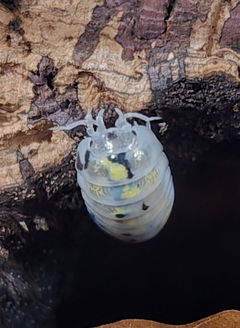
Frontetriangulum Orange Isopods (Armadillidium sp)
Frontetriangulum Orange Isopods For Sale
Frontetriangulum Orange Isopods

Armadillidium frontetriangulum 'Orange' Isopods for Sale

Care Info:

Origin icon ORIGIN
GREECE
Temperature icon TEMP
21-27 ℃
Humidity icon HUMIDITY
70-80 %
Length icon LENGTH
18 mm
Difficulty icon DIFFICULTY
EASY
Rarity icon RARITY
UNCOMMON
Sale price£20.00
/
Tax included. Shipping calculated at checkout.

Quantity
  • Free shipping over £65
  • In stock, ready to ship
  • Backordered, shipping soon

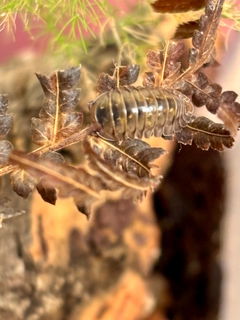
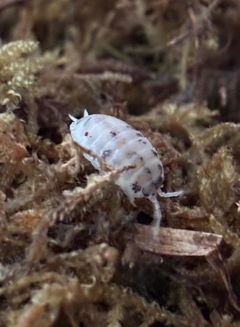
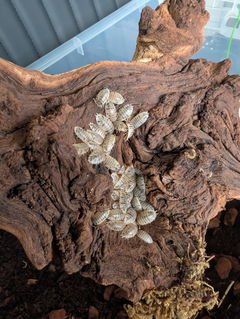
Armadillidium frontetriangulum 'Orange' is one of the most genuinely characterful Greek Armadillidium in the UK hobby — a vibrant orange morph of an already distinctive Corfu species, dotted with white and yellow markings that lift the warm orange base into something properly photogenic. The wild-type form of this species is a much more reserved dark brown, so the Orange selectively-bred morph is a dramatic visual transformation — bright tangerine-orange with crisp pale dots, a clean contrast that catches the eye immediately on a naturalistic substrate.

The species name itself is one of the genuinely lovely details in the hobby. Fronte is Latin for "forehead" and triangulum for "triangular shape" — and that combination is also reflected in the species' common name, the Triangled-faced Pill Woodlouse. The reason becomes clear when you look at one head-on: the head has a distinctive triangular forehead profile that, viewed from the front, gives the isopod a faintly mantis-like face. Once you've spotted it, it's hard to unsee — and it's one of those small biological details that makes a species genuinely memorable to keep.

Native to Corfu, Greece, Frontetriangulum sits naturally within your growing Corfu Armadillidium cluster — alongside the larger A. pallasii (standard and Orange morphs) and the metallic A. corcyraeum 'Silver'. Four Corfu Armadillidium species and morphs together form a proper Greek-island geographic niche. Like all Armadillidium, they conglobate (roll into a tight defensive ball) when disturbed.

One small but interesting taxonomic note: this species belongs to the family Armadillidiidae, which is closely related to but technically distinct from the Armadillidae family that includes the larger Armadillo officinalis "true Armadillo" species in your range. Both families conglobate; the taxonomic distinction is subtle but worth knowing.

Quick Care Summary

  • Scientific Name: Armadillidium frontetriangulum 'Orange'
  • Common Names: Triangled-faced Pill Woodlouse 'Orange', Frontetriangulum Orange, Corfu Triangle-Face
  • Family: Armadillidiidae
  • Origin: Corfu, Greece (Kerkyra)
  • Adult Size: Approximately 15–18 mm
  • Lifespan: 2–3 years typical
  • Difficulty: Easy — drought-tolerant and beginner-friendly; forgives mistakes
  • Temperature: 19–27°C (room temperature works year-round)
  • Humidity: Moderate (60–75%) with a clear moisture gradient — keep about one-third moist, the rest drier
  • Ventilation: Good — airflow important to prevent mould
  • Conglobation: Yes — rolls into a tight defensive ball
  • Distinctive feature: Triangular forehead profile creates a mantis-like head shape when viewed face-on
  • Visual: Vibrant orange base with white and yellow dots (a dramatic contrast to the dark brown wild-type form)
  • Behaviour: Most active at night and early morning; calm temperament
  • Breeding: Easy to breed and prolific once established
  • Rarity: Uncommon — selectively-bred coloured stock

What Makes Frontetriangulum 'Orange' Isopods Special

Several factors make this morph genuinely worth keeping:

The triangular face — and the mantis-head effect. This is the genuine hook. The species name frontetriangulum describes exactly what you see: a triangular forehead profile that, viewed head-on, gives the isopod a strikingly insect-like face — almost reminiscent of a mantis. Once you've noticed it, it becomes a defining feature of the species. Properly memorable, and a genuinely interesting biological detail that distinguishes them from most other Armadillidium.

Vibrant orange with white and yellow dots. The selectively-bred Orange morph shows a warm tangerine-orange base body decorated with clean pale (white and yellow) dots — a clear contrast that catches the eye. The wild-type dark brown form is much more subdued; this Orange line is genuinely transformed in appearance.

Corfu provenance. Native to the Greek island of Corfu (also known as Kerkyra), this species sits alongside the larger Pallasii and the metallic Corcyraeum 'Silver' as a coherent Corfu Armadillidium trio (now quartet, counting the Pallasii Orange morph). For collectors interested in geographic niches, Corfu is one of the more recognisable Armadillidium sources in the hobby.

Drought-tolerant and beginner-friendly. Despite the distinctive appearance, Frontetriangulum is genuinely easy to keep — drought-tolerant by Armadillidium standards, forgiving of beginner mistakes, and adaptable to a range of conditions. A surprising amount of character for a beginner-tier species.

Easy to breed and prolific. Settled colonies build reliably and productively — among the more prolific Armadillidium in the hobby, which makes them dependable for setting up bioactive enclosures or maintaining display populations.

Conglobation. Like all Armadillidium, they roll into a tight defensive ball when disturbed — the classic roly-poly behaviour, here on a vivid Greek species.

The Armadillidiidae family heritage. Technically distinct from the closely-related Armadillidae family (which includes the Armadillo officinalis "true Armadillo"), Frontetriangulum represents the broader pill woodlouse lineage with all the conglobation behaviour and characteristic body form.

How Frontetriangulum Compares to Other Corfu and Beginner Armadillidium

If you're choosing between Greek/Corfu Armadillidium or beginner-friendly distinctive morphs, here's how Frontetriangulum fits in:

  • vs Standard A. pallasii: Both are Corfu native Armadillidium. Pallasii is the larger species (up to 24 mm) with wild-type colouration; Frontetriangulum is the smaller species (~18 mm) with its distinctive triangular face. Same island, different species and shapes.
  • vs A. pallasii 'Orange': Both are Corfu orange morphs. Pallasii Orange is the larger, brighter, semi-translucent orange species; Frontetriangulum Orange is the smaller orange-with-pale-dots species with the mantis-like head shape. Natural display companions from the same Greek island.
  • vs A. corcyraeum 'Silver': All three Corfu Armadillidium together. Corcyraeum is the metallic silver morph; Frontetriangulum Orange is the warm orange-with-dots morph; Pallasii morphs are the larger options. A natural Corfu Armadillidium cluster.
  • vs Magic Potion (A. vulgare): Both are accessible coloured Armadillidium beginner species. Magic Potion is the pale-toned A. vulgare morph; Frontetriangulum Orange is the warm-toned Greek species. Different palettes, similar Easy tier.
  • vs A. vulgare T+ Albino: Both are orange-toned Armadillidium morphs. T+ Albino is the orange-gold A. vulgare albino; Frontetriangulum Orange is the Greek species with the distinctive triangular face. Both warm-toned, different species heritage.

Browse the full Armadillidium collection to compare all species and morphs.

Setting Up the Enclosure

A 6–10 litre plastic container with a secure lid suits a starter colony, with larger setups as the colony grows. Frontetriangulum is genuinely forgiving about enclosure choice — they handle plastic tubs with appropriate ventilation comfortably. The 3L Braplast tub works for small starter groups; larger colonies benefit from more space, especially given how prolific they breed once established.

Drill ventilation holes on opposite sides for cross-ventilation, covered with fine mesh. Good airflow prevents stagnation and mould. Provide plenty of hides — cork bark, leaf litter, decaying wood, and natural botanicals. Their bright orange shows particularly beautifully against dark naturalistic substrate. Browse our accessories collection for appropriate enclosures, vents, and other essentials.

Substrate

Build a moderately moisture-retentive substrate suited to this drought-tolerant Greek species:

  • Organic topsoil base (pesticide-free) as the foundation
  • Sphagnum peat moss mixed throughout for moderate moisture retention
  • Crushed limestone or eggshells distributed throughout for calcium
  • Flake soil mixed in for added nutrition
  • Decaying hardwood pieces and pieces of rotting white wood incorporated throughout
  • A little forest moss for humidity retention and grazing

We recommend a topsoil and sphagnum-based mix rather than coco coir. Substrate depth: 5–8 cm for burrowing and security.

Top layer: Generous hardwood leaf litter — magnolia leaves, oak, and beech all work well — plus cork bark and decaying wood for hides. Concentrate a sphagnum moss patch on roughly one-third of the enclosure to create the moist zone of the gradient.

Humidity and Temperature

Maintain moderate humidity (around 60–75%) with a clear moisture gradient — keep about one-third of the enclosure properly moist with damp sphagnum moss and leaf litter, while the rest stays drier with leaf litter and bark cover. Despite the existing care guidance you may see elsewhere suggesting uniform 70–80% humidity, the species is genuinely drought-tolerant and prefers a gradient with a damp side over uniformly wet conditions. Authoritative European breeders consistently report better results with the "one-third moist" approach.

As one PostPods customer noted about following the website's care guidance, getting moisture right is the key to keeping isopods successfully — and for Frontetriangulum, "drought-tolerant" is the operative description. They handle drier conditions better than most isopods, but still appreciate the moist retreat being available. When in doubt, the gradient does the work.

Temperature should be 19–27°C — UK room temperature works year-round in most heated homes. They handle some variation comfortably, and avoid sustained extremes.

Diet

Frontetriangulum 'Orange' are unfussy detritivores with broad appetites:

  • Primary diet (always available): Hardwood leaf litter (oak, beech, magnolia), decaying rotting wood — particularly white-rotted softwood, dried plant matter, lichen, mosses
  • Vegetables (1–2x weekly): Carrot, courgette, sweet potato, squash, leafy greens. Replace within 24–48 hours.
  • Fruit (occasionally): Small amounts of soft fruit
  • Protein (1x weekly): Fish flakes, dried shrimp, dried daphnia. Beneficial for breeding females. Browse our accessories collection for the full range of protein supplements.
  • Calcium (essential — always available): Cuttlefish bone, crushed limestone, oyster shell, eggshells. Important for healthy moulting — provide a constant source.

Feeding approach: Maintain a base of leaf litter and decaying wood, supplementing with vegetables, occasional fruit, weekly protein, and a constant calcium source. Remove uneaten fresh foods within 24–48 hours to prevent mould.

Breeding

Frontetriangulum 'Orange' are easy to breed and reliably prolific once established — among the more productive Armadillidium in the hobby. Stable conditions and appropriate nutrition produce steady colony growth.

Breeding basics:

  • Females carry developing young in a marsupium (fluid-filled brood pouch) and release fully-formed live juveniles
  • The vivid orange-with-dots colouration develops as juveniles mature through successive moults
  • A pure Orange colony breeds the morph reliably, with some individual variation in dot pattern
  • The triangular face profile develops with maturity — juveniles may show less pronounced "mantis head" appearance than adults

For breeding success:

  • Stable temperatures within range (22–25°C is ideal)
  • A proper moisture gradient (one-third moist, two-thirds drier)
  • Adequate calcium for breeding females
  • Regular protein supplementation
  • Plenty of cork bark and leaf-litter hides
  • A larger starter group establishes faster and provides genetic diversity

As a prolific Easy-tier breeder with a genuinely distinctive look, Frontetriangulum 'Orange' is one of the more satisfying beginner-tier Armadillidium to scale into a substantial colony.

Pair With Springtails

Add a thriving springtail culture to any Frontetriangulum setup. Springtails handle mould and microbial growth at a scale isopods can't manage — particularly useful around protein foods and in the moist zone of the moisture gradient. They coexist peacefully and form a helpful cleanup partnership.

Who Should Buy Frontetriangulum 'Orange' Isopods?

Ideal for:

  • Beginners wanting a properly distinctive coloured Armadillidium
  • Keepers drawn to vibrant orange with white-and-yellow-dotted patterning
  • Collectors building a Corfu Armadillidium cluster (Frontetriangulum + Pallasii Standard + Pallasii Orange + Corcyraeum Silver)
  • Naturalists who appreciate the mantis-head etymology and triangular forehead detail
  • Bioactive setup builders wanting a hardy, prolific cleanup species
  • UK keepers with drier rooms who want a drought-tolerant Armadillidium

Not ideal for:

  • Heavily-planted bioactive setups where plant-nibbling is a concern (Armadillidium enjoy plants)
  • Keepers wanting tropical-humidity-only species
  • Anyone wanting a non-conglobating isopod — try Porcellio scaber Mix instead

Realistic Expectations

The mantis head is real — and brilliant. The triangular forehead profile genuinely does give the species a striking face-on appearance. Once you've noticed it, you'll see it on every individual in the colony. A small but properly engaging biological detail.

Orange + white/yellow dots is the visual story. Set expectations toward the warm orange base with clean pale dots — not just plain orange. The dotted pattern is part of the morph's character.

They're genuinely Easy. Drought-tolerant, prolific, beginner-friendly — among the more forgiving distinctive Armadillidium in the hobby. They reward basic husbandry with steady success.

Corfu provenance is real. Native to a specific Greek island, alongside several other Armadillidium species and morphs. Geographic provenance matters for hobbyists building locality-based collections.

Breeding is reliable. Settled colonies expand steadily — not explosively, but dependably. A satisfying long-term keep rather than a fast-cycle population.

Building Your Setup

A complete Frontetriangulum 'Orange' setup needs a basic enclosure, substrate components, calcium, generous leaf litter, cork bark hides, and protein supplements. Browse our accessories collection for everything you need — enclosures, ventilation, leaf litter, calcium (cuttlebone, limestone, oyster shell), and protein supplements.

Browse the full Armadillidium collection for more species and morphs — including the larger Corfu native A. pallasii 'Orange' and the metallic A. corcyraeum 'Silver' for a complete Corfu Armadillidium cluster.

Use collapsible tabs for more detailed information that will help customers make a purchasing decision.

Ex: Shipping and return policies, size guides, and other common questions.

You may also like


Recently viewed