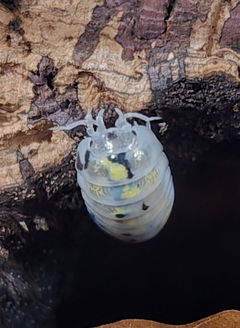
Armadillidium flavoscutatum 'Redhead' Isopods
Care Info:
 ORIGIN
 TEMP
TEMP
 HUMIDITY
 LENGTH
 DIFFICULTY
 RARITY
- Free shipping over £65
- Low stock - 2 items left
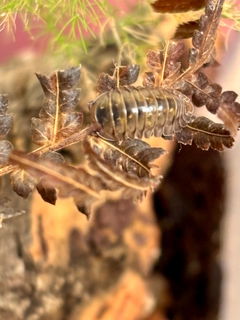
The name points straight at the thing you notice first. The Redhead is Armadillidium flavoscutatum in a form that carries a vivid red-orange head shield above a shiny, near-black body, and the contrast is the whole appeal: a clean, almost lacquered dark shell topped with a bright head, unlike much else among the European isopods. Better still, it pairs that striking look with genuinely easy care. Every colony we send is captive-bred here in the UK.
Introduction
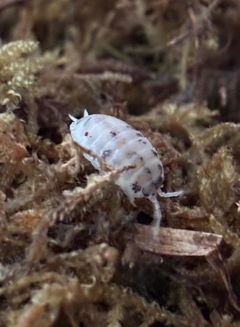
This is the Albanian 'Redhead' locality of Armadillidium flavoscutatum, a form found in Albania in the summer of 2023 and still fairly fresh in the hobby. Unlike the common spotted "clown" flavoscutatum, this population drops the yellow-and-white markings for a cleaner dark-body-and-red-head look. As a European species it is well suited to UK keeping, shrugging off the cooler temperatures and seasonal swing that would trouble a tropical isopod, and it sits comfortably among the more distinctive Armadillidium.
Appearance
A medium-to-large Armadillidium at roughly 18 to 20 mm, glossy dark brown to black with that bright red-orange head shield. The finish is genuinely shiny, which lifts the contrast further, and the red is visible even on young animals, intensifying as they mature. They are true pill woodlice, rolling into a tight ball when disturbed, and a dark glossy bead topped with red is a particularly handsome thing curled up.
Care
This is the one point to get right, and it is simple: the Redhead is Mediterranean, not tropical. It prefers medium humidity, around 50 to 70%, with good airflow and a moisture gradient rather than uniform wet, a drier main area with one damp retreat. Overwetting and stagnant air are more of a risk than a slightly dry tub, so when in doubt err drier and keep the ventilation up. A range of 18 to 26°C works the year round, and normal UK room temperature sits inside it. Give 5 to 8 cm of organic topsoil and flake soil with leaf litter, cork and white-rotted wood over the top, and mix limestone or crushed eggshell through for the calcium a healthy shell needs. Coco coir makes a poor base and is best left out.
Diet
An unfussy detritivore: hardwood leaf litter and decaying wood always available, vegetable once or twice a week, the occasional bit of fruit, and regular protein to fuel the prolific breeding. Keep a constant calcium source, lift uneaten fresh food within a day or two, and a springtail culture will keep the damp zone clean.
Breeding
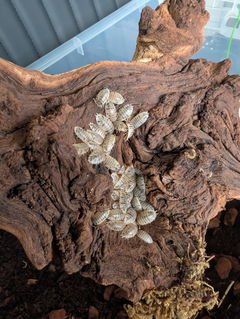
This is one of the Redhead's real strengths: it breeds easily and throws notably large broods once its moderate Mediterranean conditions are met, so a colony builds quickly and reliably. Young emerge fully formed and already show the red head, deepening as they grow. Give it stable warmth, the right moisture gradient, steady calcium and a few hides for gravid females and it does the rest. Our notes on calcium cover the mineral side that heavy breeders lean on.
Who is this for?
The Redhead suits the beginner who wants something genuinely distinctive without demanding care, the collector after a fresh recently-found locality, and the display keeper who would rather actually see their isopods, since this one is calm and out across day and night. It sits well beside the Zebra, Gestroi, the marbled Espanyoli and the bold Skeleton Nebula. It is a poor fit only for a uniformly wet tropical setup. Our new flavoscutatum Redhead care guide goes deeper on the Mediterranean setup, feeding and breeding.
Every colony is captive-bred from established UK stock and ships under our live arrival guarantee, in a ventilated deli tub with damp sphagnum inside a double-walled box. We dispatch Monday to Thursday by Royal Mail next day before 1pm, with a 20% overcount in every order.