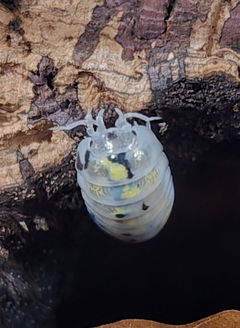
Yellow Zebra Isopods (Armadillidium Maculatum)
Care Info:
 ORIGIN
 TEMP
TEMP
 HUMIDITY
 LENGTH
 DIFFICULTY
 RARITY
- Free shipping over £65
If you want an isopod that forgives a beginner's mistakes and still looks like a collector kept it on purpose, this is a good place to start. The Yellow Zebra is a selectively bred form of the standard Zebra, Armadillidium maculatum, with the familiar banding rendered in warm gold instead of white. It is the same bulletproof animal underneath, just wearing a brighter coat. Every colony we send is captive-bred here in the UK.
Introduction
This is the yellow morph of Armadillidium maculatum, sold as the Yellow Zebra or A. maculatum Yellow. The parent species is one of the most recommended first isopods in the hobby, a hardy Mediterranean pillbug from the semi-arid woodland of France and southern Europe, and the Yellow keeps all of that while swapping the black-and-white contrast for gold-on-dark. It sits in a whole family of Zebra colour forms alongside the Chocolate and the spotted lines, and it is one of the more distinctive of them.
Appearance
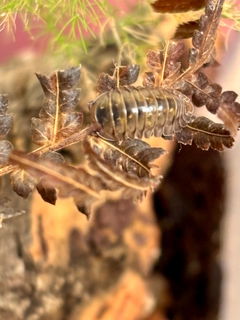
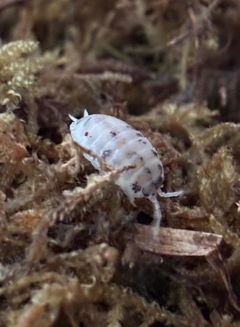
A medium Armadillidium at around 14 to 18 mm, banded gold on a near-black base. Depth of colour varies animal to animal, some boldly striped, others more muted, which gives a settled colony real character rather than a stamped-out uniformity. Colour firms up with age, so young stock reads paler than the adults. Like every Armadillidium they roll into a tight ball when startled, and the gold banding stays on show even then.
Care
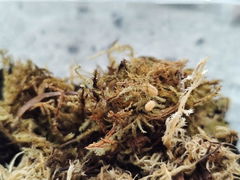
The key with the Yellow Zebra is remembering it is Mediterranean, not tropical: it wants drier, better-aired conditions than a cave species, roughly 50 to 70% humidity with real airflow, and normal UK room temperature suits it the year round. Work to a moisture gradient rather than a wet tub, keeping about a third damp with sphagnum and leaf litter and letting the rest run drier so the colony can choose. Give 5 to 8 cm of organic topsoil and flake soil with plenty of leaf litter and bark over the top, and mix limestone or crushed eggshell through for the calcium a moulting pillbug needs. Skip coco coir as a base, it feeds nothing. Our substrate guide covers the mix.
Diet
Yellow Zebras are unfussy detritivores: a constant base of hardwood leaf litter and decaying wood, vegetable once or twice a week, the odd bit of fruit, and regular protein such as fish flake or dried daphnia for the breeding females. Keep a permanent calcium source going, and lift uneaten fresh food within a day or two so it does not draw mould in the damp corner. A springtail culture alongside handles the fine cleanup.
Breeding
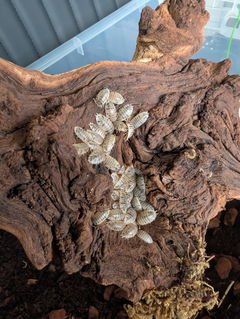
They breed reliably once settled, at the steady Armadillidium pace rather than a Porcellio-style boom, with fully-formed young released from the female's brood pouch. Give a new group a couple of months to find its feet before you expect much. If you want the yellow to stay true, keep the line to itself, away from the standard and Chocolate Zebras, since mixing the morphs gives mixed offspring. Our notes on isopod colour and morphs go into the selective side.
Who is this for?
The Yellow Zebra suits the beginner who wants something better-looking than a starter grey, the keeper building a Mediterranean Armadillidium shelf next to Gestroi and the multicoloured Jelly Bean, and anyone wanting a visible, active display animal that does real cleanup work. About the only setup it does not suit is a uniformly wet tropical one.
Every colony is captive-bred from established UK stock and ships under our live arrival guarantee, sent in a ventilated deli tub with damp sphagnum inside a double-walled box. We dispatch Monday to Thursday by Royal Mail next day before 1pm, with a 20% overcount so nothing sits in the post over a weekend.