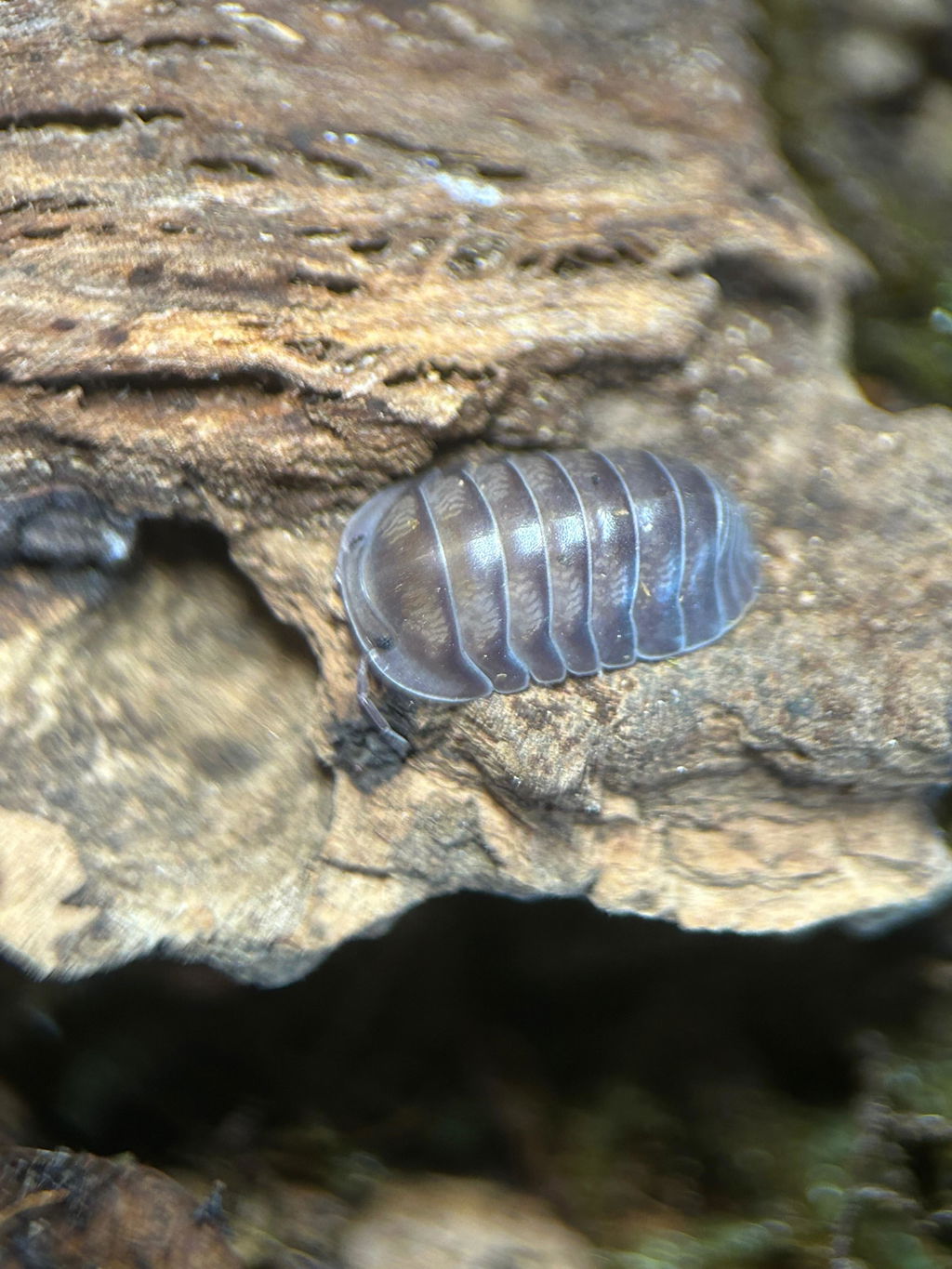
Cubaris sp. 'Black Pearl' Isopods
Care Info:
 ORIGIN
 TEMP
TEMP
 HUMIDITY
 LENGTH
 DIFFICULTY
 RARITY
- Free shipping over £65
- Low stock - 4 items left
No pattern, no bands, no bright edge. Just a deep, smooth, glossy black, and that restraint is exactly why it stands out. Cubaris sp. 'Black Pearl' is a premium Southeast Asian cave Cubaris, named for that uniform, slightly glossy colouration, and in a genus that mostly trades in browns, greys and bold patterns, a solid black jewel is a rare thing. It sits firmly at the collector's end of the hobby: sought-after, seldom seen, and prized precisely because so few Cubaris come dressed this simply.
Look closely and the appeal is all in the finish. The whole body carries the same clean black from head to tail, with a smooth, pearl-like sheen rather than any iridescence or metallic flash. That distinction matters when you set it beside the other dark Cubaris, because the Black Pearl is the smooth, uniform, pearl-finish black, quite separate from the lustrous solid-black Black Sapphire of the Rubber Ducky lineage. Against pale leaf litter and cork the effect is quietly striking, and being shy and nocturnal by nature, this is an animal inclined to hide rather than wander, so every sighting feels earned.
Why keep one? Partly for that dark elegance, which reads as more refined than the patterned and brightly coloured species filling most shelves, and partly because it offers a premium Cubaris without the steepest care demands. If you already enjoy the marbled Cappuccino, or cut your teeth on a forgiving gateway species like Cubaris murina, the Black Pearl makes a sensible next step: rated Medium, it is neither bulletproof nor among the most demanding Thai species, sitting comfortably in the middle of the Cubaris range.
Care follows the classic Cubaris blueprint, and it helps to picture the home ground: limestone country in Thailand or Vietnam, warm and humid. Give it warm, stable temperatures and steady humidity with a damp end and a drier end, so it can choose its own comfort along the gradient. Keep the damp end damp rather than wet, since standing moisture is the quickest way to lose a Cubaris colony. Build a deep living substrate from flake soil, rotted hardwood and topsoil, keeping a plain coco-coir base out of the mix, as it holds no calcium and turns acidic over time. The flake soil brings nutrition and structure, gentle cross-ventilation keeps the air fresh without drying everything out, and calcium stays on offer at all times. Finish the top with leaf litter and a few pieces of cork or limestone for cover, and the colony will settle.
Breeding is a patient affair, though a dependable one. Females carry their young in a brood pouch and release fully formed miniatures, born dark and holding that black as they grow. Broods run small and numbers build gradually rather than booming, so the reward lies in consistency: stable warmth, even humidity, plenty of calcium for laying females, and as little disturbance as you can manage. Resist the urge to dig through the substrate counting juveniles, and keep a thriving springtail culture alongside to hold mould in check while the population climbs.
Our Black Pearls are captive-bred here in the UK. Each order travels in a ventilated tub of damp sphagnum, cushioned inside a double-walled box, dispatched Monday to Thursday by tracked next-day Royal Mail for delivery by 1pm, with a live-arrival guarantee and a 20% overcount in every culture. If you would like to read around the genus first, our guide to the types of Cubaris places the Black Pearl in context alongside its relatives.