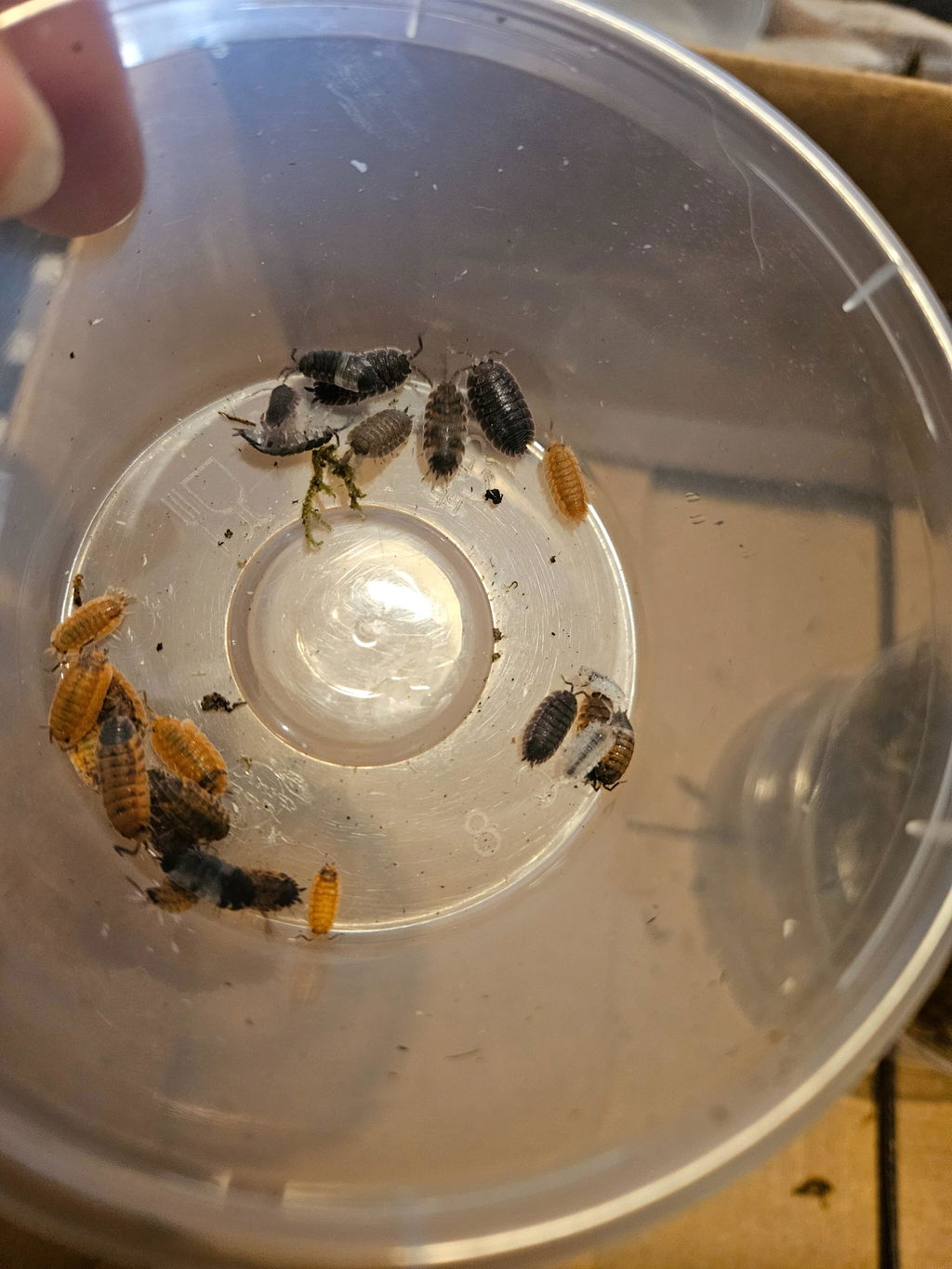
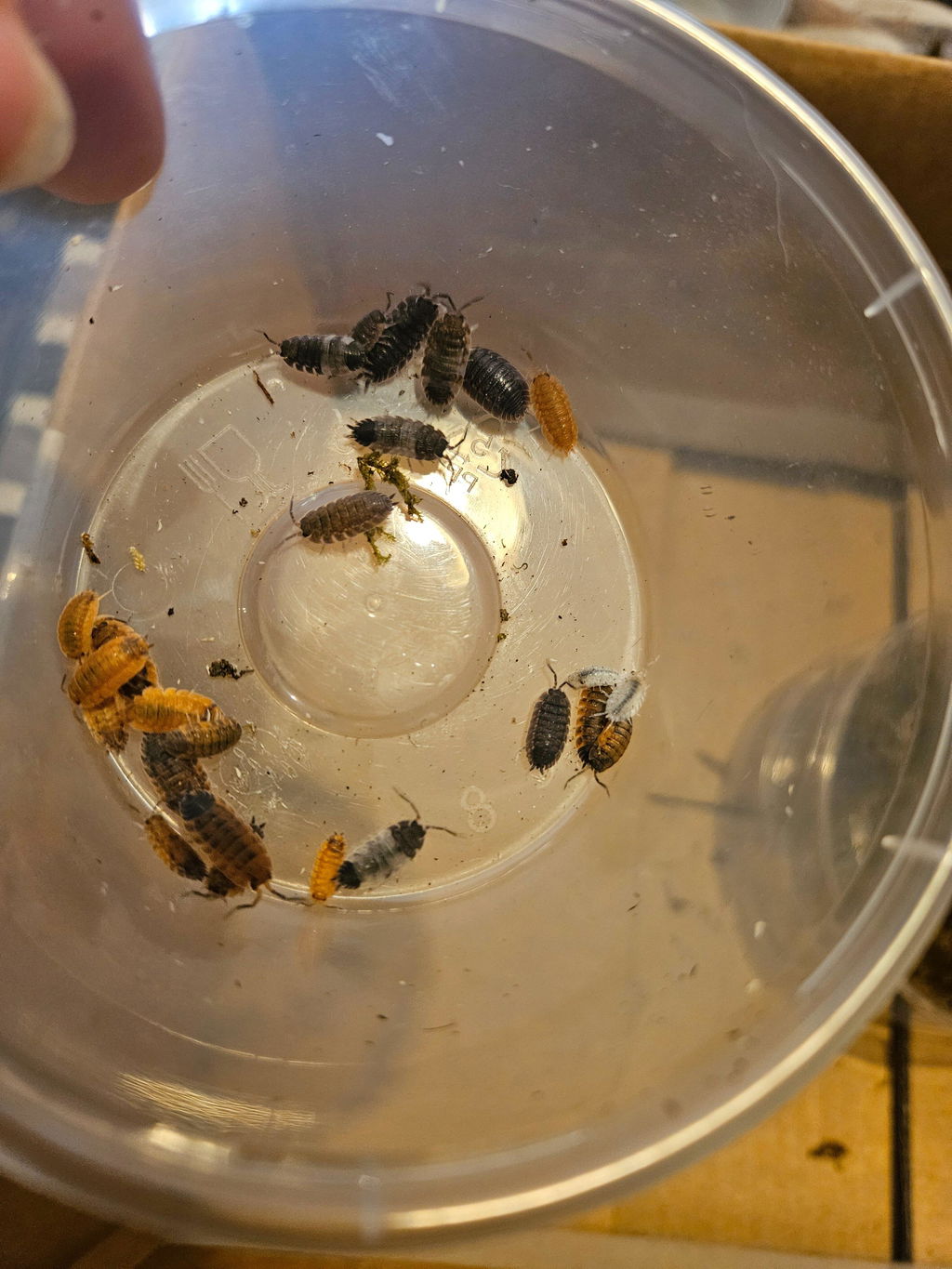
Porcellio scaber Mix Isopods
Care Info:
 ORIGIN
 TEMP
TEMP
 HUMIDITY
 LENGTH
 DIFFICULTY
 RARITY
- Free shipping over £65
- Low stock - 5 items left
If you want the easiest, cheapest way into the world of Porcellio scaber colour morphs, this is where I'd point you. The Rough Woodlouse Mix is exactly what it sounds like, a grab-bag of established scaber morphs all bundled into one tub, so instead of buying a single line you get a little of everything in one go. Every batch is a bit different, but you can expect a spread of the oranges, dalmatians, pieds and other morphs I've bred over the years, jumbled together into one starter colony.
I put these mixes together for a simple reason. Picking one morph before you know the species is a lot to ask, and buying several separately gets expensive fast. A mix lets you keep a colourful colony from day one, learn to spot the different forms as they grow, and work out which ones you actually want to chase. If a particular line grabs you later, you can always start a pure colony of it down the road, whether that's a Moo Cow, a Rust or a Lava.
Underneath the colours, this is the common Rough Woodlouse, the same animal you'll find under any damp log in a British garden. The name scaber is Latin for rough, after the pebbled, slightly tuberculed shell that catches the light and gives every morph a bit of extra depth. That familiarity is a good thing. Porcellio scaber is one of the hardiest, most forgiving isopods I keep. Adults reach around 17 to 18 mm and live two to three years, and they breed fast and freely, so a small starter group becomes a busy colony in a matter of months. If you've never kept isopods before, I can't think of a better place to begin.
Care is refreshingly plain. These live happily at normal room temperature, no heat mat needed in most UK homes, and they aren't fussy about their setup. Unlike the pill woodlice, P. scaber doesn't roll into a ball when startled, it flattens out and bolts for cover, relying on speed instead. Give them a moderate moisture gradient, roughly 50 to 70% with one damp end and one drier, and pair it with good ventilation. This is not an animal that wants a wet, stuffy box.
The one thing I'd stress is protein. These are hungry animals, and a colony left short of it will start nibbling its own moulting members, which is the last thing you want. Keep a protein source available and they'll leave each other alone. A few centimetres of substrate is plenty, since these aren't deep burrowers, so a base of flake soil with a good layer of magnolia leaf litter on top gives them somewhere to live, most of what they eat, and enough moisture to keep the colony ticking over on its own.
Give them time and they'll reward you. As the colony grows you'll watch the morphs sort themselves out, learn to tell one form from another, and start noticing which individuals carry the colours you like best. If you fancy trying your hand at the genetics, the mix gives you plenty of material to play with, since forms like orange and dalmatian follow simple, well-documented inheritance you can separate out and breed for. When you're ready to go further, the rest of the Porcellio collection is waiting.
Whichever morphs turn up in your batch, the care does not change, and our Porcellio scaber care guide walks through the moisture gradient, ventilation and protein routine in full.
Every order is captive-bred, and I box it double-walled around a ventilated tub of damp sphagnum before posting Monday to Thursday by Royal Mail Tracked 24, or Special Delivery Guaranteed by 1pm if you choose Next Day at checkout, with a live-arrival guarantee and a 20% overcount included as standard.