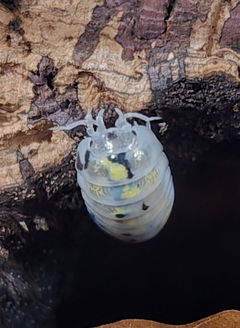
Armadillidium klugii 'Giant Omiš' Isopods for Sale
Care Info:
 ORIGIN
 TEMP
TEMP
 HUMIDITY
 LENGTH
 DIFFICULTY
 RARITY
- Free shipping over £65
The word Giant is doing more work in this name than the evidence supports, and you should hear that from us rather than work it out later. Nothing published, and nothing from any independent seller, shows this line running larger than other Armadillidium klugii. Our own listing has quoted up to 15mm, which is not a giant anything. What the name usefully marks is a place.
Omiš
Omiš sits on the Dalmatian coast between Split and Makarska, at the point where the Cetina river breaks out of a limestone gorge into the Adriatic. The cliffs come down almost to the water and the town is built into the gap. It is exactly the sort of hot, stony, crevice-riddled ground klugii occupies throughout its range, and if you like the idea of keeping an animal from a specific piece of coastline rather than a country, that is the appeal here.
The collecting claim traces to one European source, so read the provenance as plausible rather than proven. Nobody has published a survey of Omiš klugii, and the town does not appear as a locality in Schmalfuss's revision of the group.
Worth knowing that Omiš is not a locality Schmalfuss recorded when he revised the group in 2013, and that revision is the reference work for the species. Its absence proves nothing, since a taxonomic revision only lists the material somebody happened to collect, but it does mean there is no published record to check this line against.
What you get
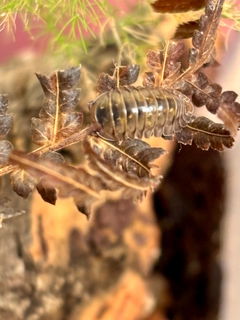
The klugii template: black, three rows of dots along the back, warm edging on the flanks. Adults in the 14 to 18mm band like the rest of the species.
You will notice the 2.1cm figure on nearly every klugii listing on the internet, ours historically included. It is the maximum ever recorded for the whole species, taken from a single unusual animal, which means it belongs to every line equally and distinguishes none of them. It is the single most copy-pasted number in this genus. Our guide to klugii works through the other claims that do not hold up.
Conditions
Drier and more open than the generic pill woodlouse setup, because the animal comes off sun-baked limestone rather than out of a wood. Fifty to seventy per cent, a genuinely dry end, and ventilation that actually crosses the container.
Build in vertical structure. Stacked bark, flat stones, anything producing narrow gaps at different heights, because a crevice-dweller with only open floor will not settle. Chalk stays in permanently for the shell, and warmth in the low twenties is what turns a colony that persists into a colony that grows.
Who it suits
Someone past their first species who wants the pattern and likes the idea of a named stretch of coastline behind their animals. If what you actually want is a large isopod, this is not it, and I would rather send you to the Spanish Porcellio than sell you a name.
Within the genus, Dubrovnik is the best-attested locality we carry and Skeleton and Nebula is the bred white-patched form. Everything else is in the Armadillidium range.
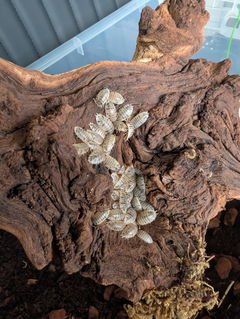
Bred here. Colonies go out on damp sphagnum sealed in a vented pot, packed into a twice-walled carton, dispatched between Monday and Thursday so nothing stands over a weekend. Tracked next-day arriving before 1pm, more animals in the pot than you paid for, live arrival guaranteed.
Use collapsible tabs for more detailed information that will help customers make a purchasing decision.
Ex: Shipping and return policies, size guides, and other common questions.