LIchen Sticks
- Free shipping over £65
- Low stock - 4 items left
- Backordered, shipping soon
We used to state on this listing that Ardentiella need lichen in the diet and will decline or die without it. We have taken that off, because we went looking for where the claim came from and could not find a floor underneath it. It traces to a couple of breeder pages, neither citing anything, one of them phrased as the author's own opinion. There is no published dietary study of any Ardentiella or Merulanella species at all. Cast the net wider and it thins out further: there is no published record of a woodlouse eating lichen in the wild anywhere. The one isopod on record as a lichen feeder is Campecopea hirsuta, recorded on it in 1963, and that animal is marine, from the intertidal zone. A laboratory study in 2017 went the other way again, finding that the secondary compounds in a common lichen actively deterred woodlice from feeding.
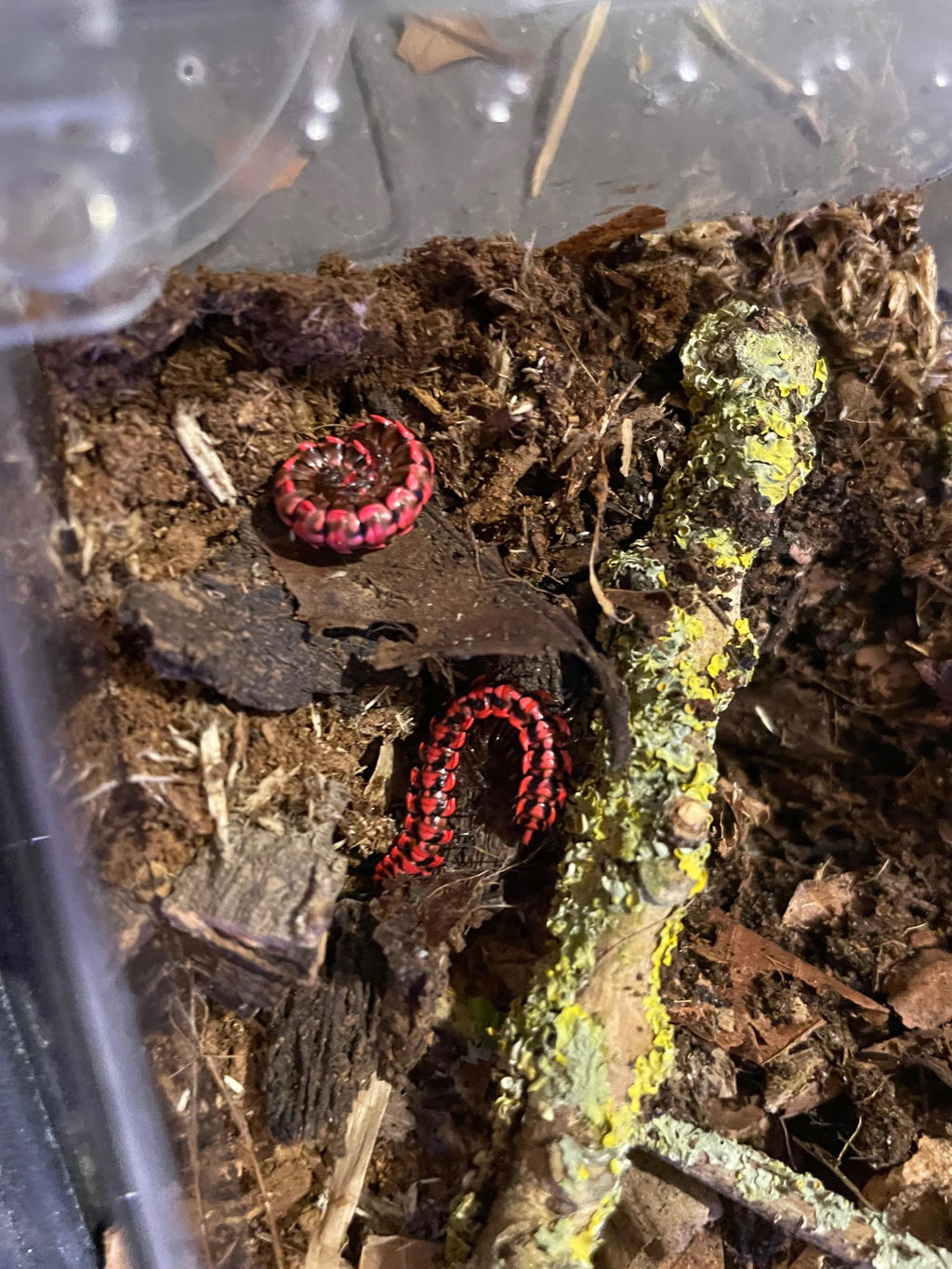
What we can report is what happens in a tub. Put a lichen-covered stick in and the lichen goes. The crust thins out over a few weeks and you can see where they have been working at it. That is a real observation and it is ours, and it is not the same thing as evidence that any species needs it to survive. That deterrence result also fits what keepers see, which is that some species go straight at it and others ignore it entirely. Offer it as variety, which is reason enough, and treat anyone selling it as a necessity with some suspicion.
Lichen is worth having in an enclosure because it is chemically unlike anything else you would put in there. It is not a plant. It is a composite: a fungus farming a photosynthetic partner, either an alga or a cyanobacterium, and since 2016 we have known there is usually a third partner too, basidiomycete yeasts living in the outer layer. It grows slowly, it holds its structure, and it presents a completely different surface to graze from leaf litter or rotting wood.
A note on collecting your own
If you are tempted, be careful where. Lichens concentrate what is in the air around them, so roadside and farmland material carries whatever the traffic and the spraying have put there. Some species also produce usnic acid, which has a documented record of liver injury in people who took it as a weight-loss supplement, to the point that a product containing it was pulled from sale in the United States. What usnic acid does to an isopod, in either direction, appears to be unknown. Given that, collecting from clean ground well away from roads and agriculture, and drying or freezing thoroughly before use, is the least you should do.
Ours are gathered from clean ground, dried and frozen before packing, so they need no preparation at your end. Lean them on a slab of cork bark, lay them flat across the substrate, or stand them where you can watch the lichen disappear. They work in either the damp or the dry end. When the lichen has gone the bare sticks stay useful as climbing structure and hardscape, so there is no point pulling them out. Species from limestone cave and forest-bark habitats are the ones most likely to make a beeline for them. The rest of the diet question is covered in what isopods eat.