



Tiny Flat-backed Millipede (Polydesmus sp.)
Care Info:
 ORIGIN
 TEMP
TEMP
 HUMIDITY
 LENGTH
 DIFFICULTY
 RARITY
- Free shipping over £65
- Low stock - 7 items left
Most millipedes people picture are cylindrical: the long, glossy hobby giants that coil into a neat spiral. The Tiny Flat-backed Millipede, Polydesmus sp., is a different animal in a different order. These little flat-backed millipedes belong to the order Polydesmida, and rather than aiming for size and spectacle they earn their keep as micro-cleanup crew, working quietly through leaf litter at a scale that suits a small bioactive setup.
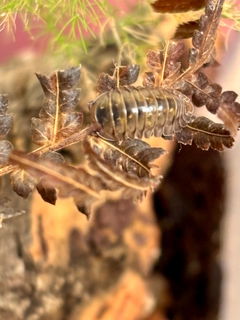
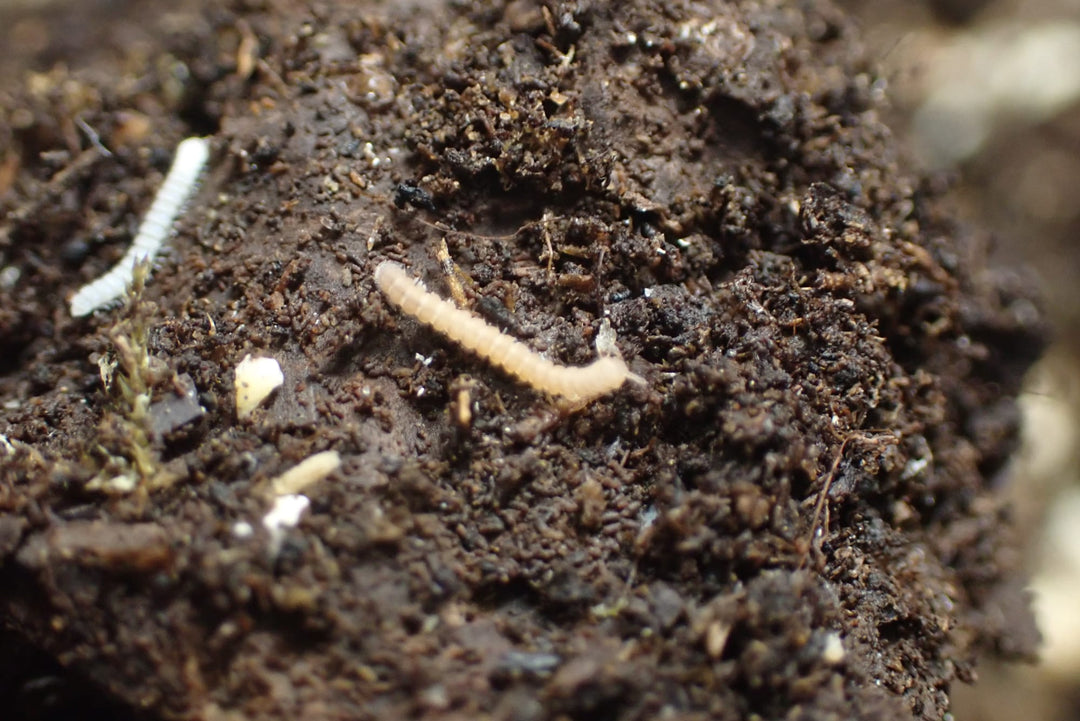
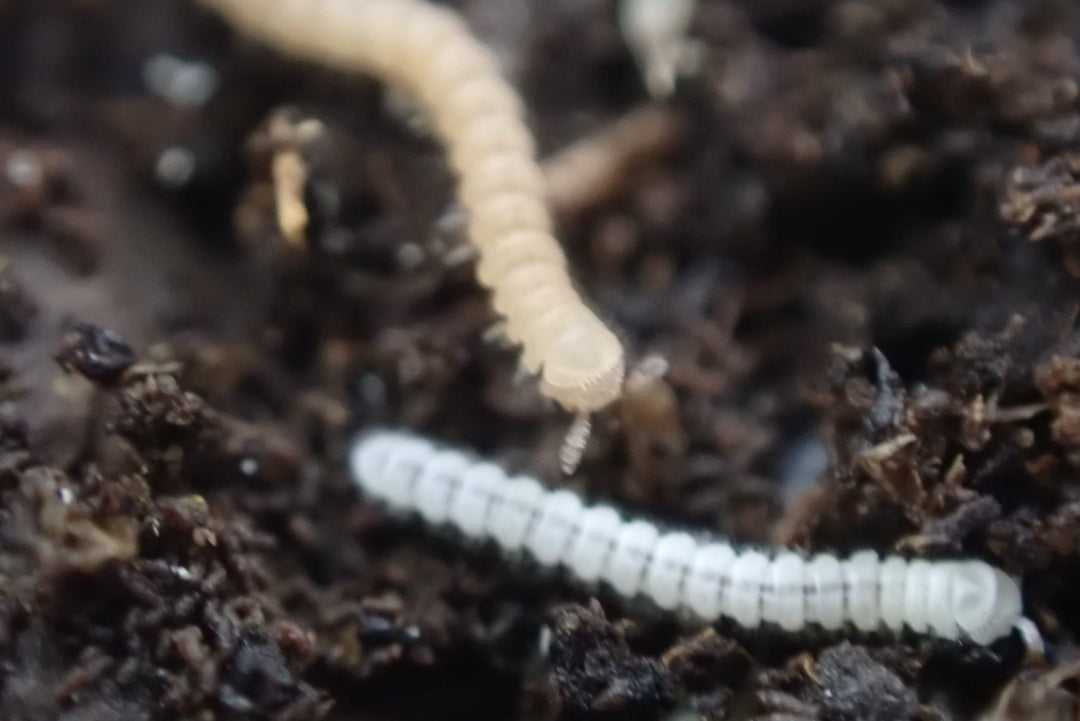
Adults reach roughly 20 to 25mm, which is small by millipede standards, with an orangey-brown to mottled brown body and a flat back edged by little lateral flanges of chitin along each of its twenty segments. The look is understated rather than showy, closer to a temperate woodland floor than a tropical display. These are temperate animals, most likely wild-collected, so I send them out as an establishing culture rather than making any firm captive-bred claim. They travel in careful double-walled packing under live-arrival cover, so you can settle a small starter group and let the culture find its feet.
Husbandry is forgiving. Room temperature suits them, around 18 to 24°C, with no supplementary heating and no bottom heat; if anything the risk is summer heat, so keep them below about 26°C and out of direct sun. Aim for 70 to 80% humidity from damp substrate rather than constant misting, with moderate ventilation to stop the air going stale. Give them depth: at least 5cm of substrate, 8 to 10cm if you can, built from coir, pesticide-free compost and crumbled decaying hardwood, topped with a generous layer of hardwood leaf litter. Never use softwood. A little cuttlebone or crushed eggshell keeps calcium available. They are leaf-litter dwellers rather than climbers, so a wide floor beats a tall enclosure and a snug lid is plenty. When disturbed they tuck into a loose coil rather than rolling into a tight ball the way an isopod conglobates.
Feeding is the easy part. They are detritivores, and hardwood leaf litter and decaying hardwood such as oak and beech form the whole foundation of the diet. Beyond that, a little soft veg or fruit now and then, cucumber, courgette or a piece of banana, works as a supplement; lift out anything uneaten after a day or so to keep mould down. They sit alongside springtails and a small isopod colony without treading on the same niche, which is part of why they make such tidy partners in a bioactive tub.
The one point worth stating plainly is defence chemistry. Like all flat-backed millipedes, Polydesmus releases a small amount of hydrogen cyanide when stressed, where the cylindrical millipedes rely on benzoquinones instead. The quantity from an animal this size is tiny and poses no danger in open air; wash your hands after handling, and you may catch a faint almond smell as you do. The one thing worth avoiding is a sealed container, since that is the only situation where the gas has anywhere to build up. Keep them away from other sensitive invertebrates in very small, closed containers, and don't mix them with small vertebrates that might try to eat them.
Given stable, moist, well-fed conditions they breed steadily. Eggs go down into the substrate, and the young hatch tiny with only three pairs of legs, adding segments and legs through successive moults. Development is slow, so a mixed starter group and a bit of patience serve you far better than any rush.
If you are assembling a broader collection, these make a neat order-level counterpoint to the cylindrical species in the millipede collection, and they slot in happily beside the isopod cleanup crews that many keepers already run.
Common questions
How big do they actually get? Most adults settle around 20 to 25mm, so treat them as small, leaf-litter animals rather than showpiece millipedes.
Is the cyanide something to worry about? No. The amount a single small millipede can produce is minute and does nothing to you in a ventilated enclosure; wash your hands afterwards, and keep the tub ventilated rather than sealed, which is the only situation where it could build up at all.
Will they get on with my isopods and springtails? Yes. In an invertebrate-only setup they coexist quietly with isopods and springtails and help share the cleanup workload.
All in, they are an easygoing, low-key millipede that rewards anyone who values quiet ecological usefulness over drama.
Use collapsible tabs for more detailed information that will help customers make a purchasing decision.
Ex: Shipping and return policies, size guides, and other common questions.