Porcellio Spinipennis Isopods
Care Info:
 ORIGIN
 TEMP
TEMP
 HUMIDITY
 LENGTH
 DIFFICULTY
 RARITY
- Free shipping over £65
Until today this page put the animal in Austria, Germany and Slovakia. There is not a single record from any of the three. That range came from a Wikipedia stub whose only citation is a European database entry from 2013 - and we made it worse by listing GBIF and Fauna Europaea alongside it as authoritative sources, when neither holds a single record from any of the three countries.
What the occurrence records actually show is narrower and more interesting: of roughly 350 records, more than three hundred are French and almost all of the rest Italian, concentrated in Provence-Alpes-Côte d'Azur and Liguria. This is an animal of the Maritime Alps and the Ligurian coast - the stretch of mountain and shoreline where south-eastern France meets north-western Italy - and the only locality tag it carries in the trade, Canton de Grasse, sits squarely inside it. Maritime Alps was on the page too. It should have stopped there.
Provenance
Our stock came through Mark Titterton, the UK breeder also behind the Moby Dick Cubaris. Nothing about that is published anywhere - it is our own record of where the animals came from, and we would sooner say that plainly than pretend it is documented.
What we can and cannot tell you
Porcellio spinipennis Budde-Lund, 1885. No brackets on the authority, because it has always sat in Porcellio. One synonym sits behind it: P. pujetanus Verhoeff, 1910.
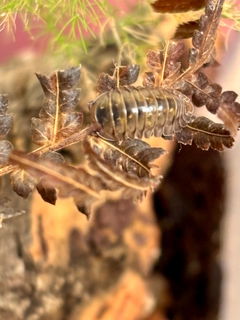
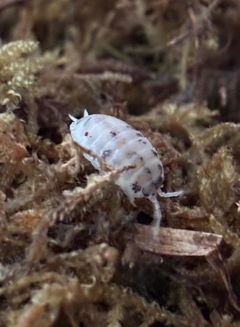
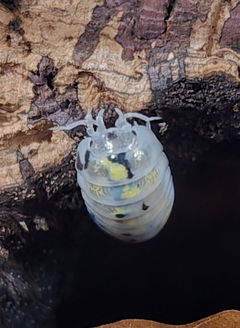
Beyond that the published record runs out fast. There is no accessible description of the animal's appearance, no published adult size, and no measured temperature or humidity tolerance. The three numbers on this page until today - around 20mm, 17 to 28°C, 55 to 65% - trace to one Dutch seller's listing for the Grasse line, and a second seller contradicts all three. Ours are a speckled animal with yellow dotting, males carrying the longer uropods. We are describing our own colony, since no published account exists to describe it against.
The epithet is spina and penna - the spiny lateral plates running down each side, and that is what to look for on the animal. We previously gave that as though we had a source for Budde-Lund's reasoning. We do not. The Latin is not ambiguous, but the intent is not recorded.
One footnote on the name. It carries a superseded nominotypical subspecies in the world checklist, meaning somebody once split it and the split is no longer recognised. Nothing follows from that for a keeper, but it is the sort of thing that generates confident-sounding half-facts online, so it is worth knowing where they come from.
Keeping them
They want a cool to moderate room, somewhere around 18 to 24 degrees, and no supplemental heat at all. Humidity moderate and graded, 55 to 65%, giving them a genuinely dry end to choose, and real ventilation - they dislike stagnant or waterlogged setups - because the habitat is Mediterranean mountain and coast, not damp woodland.
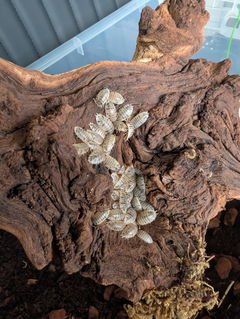
Give them 5cm of substrate and concentrate on the surface: stone slabs and bark layered so they can grip underneath, which is where they sit rather than in a burrow. Rotten hardwood and litter do the feeding, calcium stays in, protein goes in weekly.
No conglobation. The rolling families are a different branch entirely, and a threatened Porcellio runs for a gap instead.
It is uncommon in cultivation, not rare - our old page said rare, and five or so European sellers carry it, and it is a straightforward animal once you stop treating it as an alpine specialist.
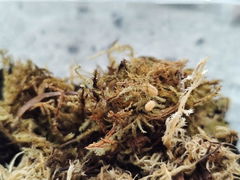
Colonies leave us between Monday and Thursday by tracked next-day post. Punched pot, moist moss, twin-wall board, a fifth more animals than the order shows, guaranteed alive on arrival.
Use collapsible tabs for more detailed information that will help customers make a purchasing decision.
Ex: Shipping and return policies, size guides, and other common questions.