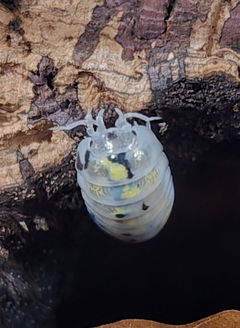
Red Edge Isopods (Cubaris sp.)
Care Info:
 ORIGIN
 TEMP
TEMP
 HUMIDITY
 LENGTH
 DIFFICULTY
 RARITY
- Free shipping over £65
- Low stock - 3 items left
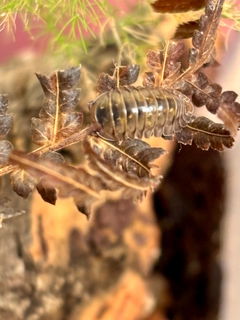
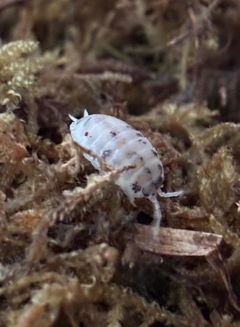
When someone in the hobby says "Red Edge", this is the one they mean: a dark Thai cave isopod outlined, segment by segment, in bright red. Listed here as Red Edge Isopods and catalogued by science as nothing more specific than Cubaris sp., it comes from the limestone cave systems of Thailand and sits among the most enduringly popular Cubaris anyone keeps. Newcomers and long-time collectors alike keep coming back to it, and once you have watched a colony pick its way across a leaf-strewn floor you understand the pull.
The appeal is all about contrast. The body runs dark blue-grey to near-black, and every segment is framed by a band of bright red skirting that traces the whole outline of the animal from head to tail. It is bold enough to read clearly from across a room, which is unusual among cave Cubaris, most of which lean towards the subtle and the muted. This is the standard Red Edge, the original stock from which the warmer Red Edge Orange and the pale Red Edge Blonde colour phases were both drawn, so keeping it puts you at the root of the whole line.
As a mid-range Cubaris it earns its keep by being rewarding without being fussy. It is more forgiving than headline species such as the Rubber Ducky, yet far more striking than a plain starter culture, which makes it a sensible step up once the basics feel familiar. If you are only now finding your feet with the genus, the hardy Cubaris murina is the gentler gateway, though plenty of keepers begin with Red Edge and never regret it. You can set it against the rest of the range in our Cubaris collection.
Care follows the familiar Thai cave template. Keep them warm at 22 to 26°C and humid, somewhere around 75 to 85%, with one damp end and a drier end so the colony can settle wherever it feels most comfortable along the gradient. Give them a deep, living substrate they can burrow down into: flake soil blended with rotted hardwood and a little topsoil suits them well, and it is worth keeping a plain coco-coir base out of the mix, since it offers them little to feed on. Cross-ventilation counts for just as much, because you want air moving steadily through the tub without letting it dry out. Leave calcium within reach at all times as cuttlebone or crushed limestone for clean moulting, and lay down leaf litter with cork bark or a few pieces of limestone so there is always cover to retreat beneath.
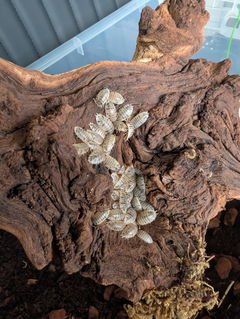
Breeding is steady rather than explosive, which is the reliable Cubaris way and no drawback at all. Settle a group into a mature, stable enclosure, leave them largely undisturbed, and small broods of mancae arrive at a dependable pace, building the colony over months instead of overnight. A thriving springtail culture alongside them keeps mould in check and works the substrate, and if you want to see where this species sits among its relatives, our guide to the types of Cubaris isopods is a good place to read on.
Every group leaves us captive-bred and packed for the trip: a ventilated tub set over damp sphagnum moss, cushioned inside a double-walled box. We dispatch Monday to Thursday on tracked next-day Royal Mail, aimed to reach you by 1pm, and stand behind each parcel with a live-arrival guarantee. We tuck a 20% overcount into every order as well, so your colony arrives with a few in hand.
Use collapsible tabs for more detailed information that will help customers make a purchasing decision.
Ex: Shipping and return policies, size guides, and other common questions.