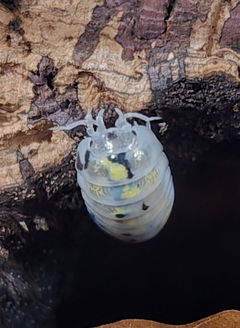
Salmon Isopods (Caribodillo martinicensis)
Care Info:
 ORIGIN
 TEMP
TEMP
 HUMIDITY
 LENGTH
 DIFFICULTY
 RARITY
- Free shipping over £65
- Low stock - 2 items left
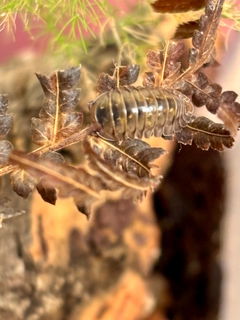
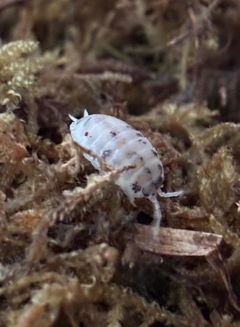
Very few isopods in the hobby come from the Caribbean. Almost all of the pillbug-family species you will see for sale trace back to Southeast Asia, so an animal from the far side of that map is worth stopping for. Salmon Isopods, Caribodillo martinicensis, come from the island of Martinique in the French West Indies, and they arrive with two things that are hard to find together: an unusual origin, and a deep orange-pink colour that is rare among isopods.
That colour is the reason most people want them. Where nearly all Armadillidae isopods wear dark grey, brown or banded coats, these are a warm salmon-pink from head to tail, and the shell carries a soft sheen that catches the light. It is not a subtle accent, it is the whole animal. Better still, the colour deepens with age, so younger stock that arrives looking pale and orange matures into the richer, saturated tone over a few months. An established group only looks better with time.
There is a good story behind the name too. For years these circulated as Cubaris sp. 'Salmon', but in late 2025 they were formally described and moved into a brand-new genus of their own, Caribodillo, endemic to Martinique and, for now, the only species in it. If you already keep collectable species such as Rubber Ducky, Panda King or Cappuccino, this is something a little different to sit alongside them: not another Asian cave isopod, but a Caribbean one with its own branch of the family tree.
I keep them as a warm tropical isopod. Aim for roughly 22 to 26°C, with gentle warmth in winter if your room runs cold, and give them a humidity gradient rather than a uniformly wet box: keep one end damp and let the other stay drier, so the colony can choose where to settle. A little cross-ventilation, a few small holes on opposite sides, stops the air going stale without drying everything out. The rule I follow is moist, not wet; the substrate should look damp but never drip when squeezed.
Underneath, give them a living substrate they can dig into, since they are keen burrowers, built on a base of topsoil and rotten hardwood with plenty of calcium worked through, cuttlebone or crushed shell, so their shells stay hard. I mix in flake soil for structure and food, then cover the top with a deep layer of leaf litter; magnolia leaf litter lasts especially well and gives them cover to graze under. They are unfussy eaters that take the usual leaf litter and rotten wood, topped up with a little veg and a regular pinch of protein, which this species seems to want slightly more of than most.
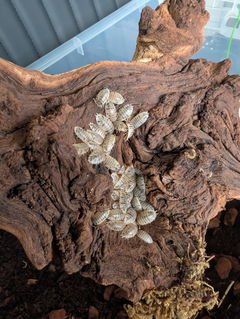
As breeders they are steady rather than explosive. Given stable warmth and humidity they produce moderate broods through the year, and a starter group grows into a full colony over months rather than weeks, which suits a collectable species you keep to watch and enjoy. Because the setup stays humid and a little protein-rich, I would run a springtail culture alongside them from the start; the springtails clear any mould before it takes hold and cause the isopods no trouble at all.
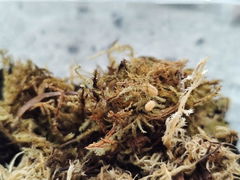
Every order is captive-bred, boxed double-walled around a ventilated tub of damp sphagnum, and posted Monday to Thursday by tracked next-day Royal Mail, with a live-arrival guarantee and a 20% overcount included as standard.
Use collapsible tabs for more detailed information that will help customers make a purchasing decision.
Ex: Shipping and return policies, size guides, and other common questions.