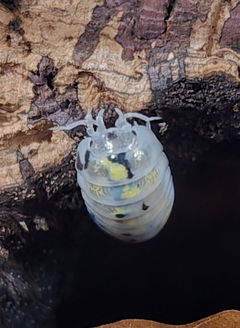
Yellow Phoenix Isopods (Ardentiella sp.)
Care Info:
 ORIGIN
 TEMP
TEMP
 HUMIDITY
 LENGTH
 DIFFICULTY
 RARITY
- Free shipping over £65
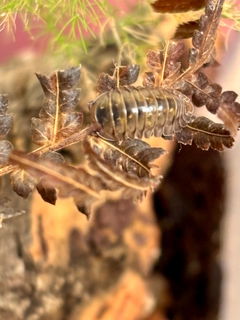
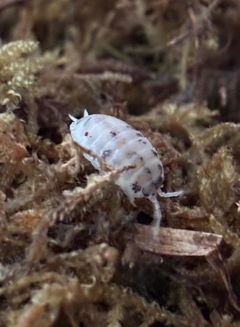
This line exists because somebody took the red out. The parent form, Ardentiella sp. 'Phoenix', carries yellow and black blotching shot through with red, and the Yellow Phoenix is what remains after generations of selecting against that red. Some animals still throw a trace of it. What you mostly get is bold yellow banding on black, which is a wasp of an isopod and among the most immediately striking things in the genus.
Where it sits
Against its relatives it is the high-contrast one. Where Scarlet and Red Diablo lead on red and Batman goes dark, the Yellow Phoenix is the loudest yellow in the group, and on a shelf of warm-toned Ardentiella it is the one people stop at.
It is a cultured line rather than a place, so unlike a locality animal there is no wild population of Yellow Phoenix to appeal to. No published description of it exists, which is true of nearly every trade name in this genus, so what we can tell you is what our own stock does and no more. Adults are comparable to the parent at around 19mm.
Worth knowing about the group as a whole. The genus was called Merulanella until a 2025 revision, and both names remain in use across the trade. The animals here are Vietnamese, none of the hobby morphs have been formally described, and the placement into Ardentiella is the hobby's reading of that paper rather than something the paper itself did. The genus guide linked below sets out what the revision actually said, and what it did not.
What it needs
The full genus regime is in our guide and this line asks for nothing different, so here instead are the three things that decide whether you keep them.
Cross-ventilation. Mesh two facing walls. Damp air that sits still is what kills this genus, and it does it slowly enough that people blame the food.
No heating. An ordinary British room is correct. These lean cool, and a hot spell is the hazard rather than a cold night.
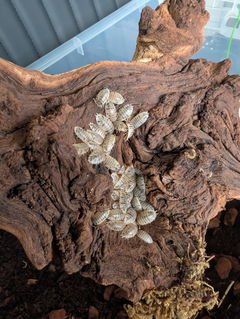
Height, not depth. They climb sheer glass and never burrow, so the box runs tall, the cork bark stands upright, and the lid closes tight everywhere but the vents. The young climb as well as the adults do.
Beyond that, litter and rotten wood carry the diet, calcium stays out permanently, and the substrate wants to be alive rather than deep.
One thing specific to this line
Because it is maintained by selecting against red rather than for yellow, an animal showing a red trace is not a fault or a mislabelled shipment. It is the parent form surfacing, and it will keep happening for as long as the line exists. Most keepers leave them in. If you are selecting to intensify the yellow, that trace is what you are selecting against, and you should expect the work to be permanent rather than finished.
Who it suits
Not a beginner, and not a first Ardentiella either. Ember Bee is the gentler way into the group. Once you have run one of these successfully the rest follow, including the parent Phoenix this line came out of, and the remainder sit in our Ardentiella range. What we send is bred here, which counts for a lot in this group, since imported stock is far harder to settle.
Cultures leave bedded on wet moss within a vented pot, walled twice over by the outer box. Nothing posts after a Thursday, which keeps every order out of the weekend queue. Delivery is tracked, arrives the following day before 1pm, and we count extras in and stand behind live arrival.
Use collapsible tabs for more detailed information that will help customers make a purchasing decision.
Ex: Shipping and return policies, size guides, and other common questions.