Armadillidium Nasatum Isopods

Armadillidium Nasatum Isopods

Care Info:

Origin icon ORIGIN
EUROPE
Temperature icon TEMP
20-25 ℃
Humidity icon HUMIDITY
50-75 %
Length icon LENGTH
12-15 mm
Difficulty icon DIFFICULTY
EASY
Rarity icon RARITY
COMMON
Regular price£10.00
/
Tax included. Shipping calculated at checkout.

Quantity
  • Free shipping over £65
  • In stock, ready to ship
  • Backordered, shipping soon

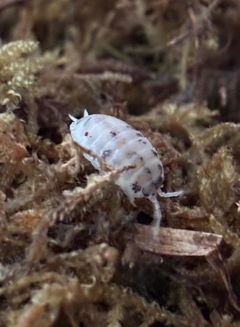
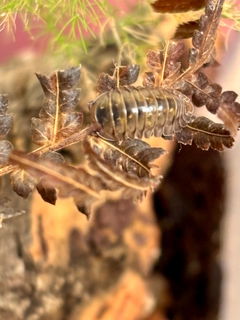
Armadillidium nasatum is one of the most reliable beginner Armadillidium species in the hobby and — properly importantly — a UK native species that occurs naturally in southern England and sporadically in Ireland. While most premium isopods in the catalogue come from far-flung Mediterranean, Vietnamese, or Thai localities, the Nosy Pill Woodlouse is a British woodlouse you might genuinely find under a flowerpot in a Hampshire garden — bred selectively in captivity for its warm peach, orange, and cream colouration.

The species earns its common name from a properly distinctive anatomical feature: a narrow protruding scutellum (essentially a small "nose") at the front of the head. The British Myriapod and Isopod Group describes it vividly as "reminiscent of the peak of a base-ball cap" — once you've seen it, you can't unsee it, and it's the diagnostic feature that distinguishes A. nasatum from the similar-looking A. vulgare. The Dutch common name "Neusoproller" (literally "Nose-Roller") captures the same observation.

For complete beginners ready to keep their first isopod colony, this is a properly forgiving starting point — hardy, prolific, accessibly priced, and visually distinctive thanks to the captive-bred peach colour line. Browse the full Armadillidium collection for related species.

Quick Care Summary

  • Scientific Name: Armadillidium nasatum Budde-Lund, 1885
  • Common Names: Nosy Pill Woodlouse, Peach Isopod, Nasatum
  • Family: Armadillidiidae
  • Origin: Western and Central Europe, including southern England (native) and parts of Ireland; introduced to North America
  • Adult Size: Typically 12–15 mm in hobby stock; species reaches up to 21 mm at maximum (per published sources)
  • Lifespan: 2–3 years typical
  • Difficulty: Easy — properly forgiving beginner-tier Armadillidium
  • Temperature: 20–25°C (UK room temperature works year-round)
  • Humidity: 50–75% — broad tolerance with moisture gradient
  • Ventilation: Adaptable — low to high both work
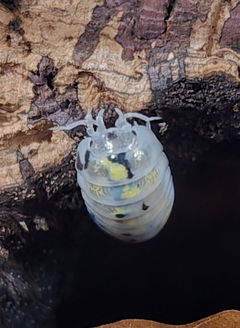
  • Conglobation: Yes, but imperfect — forms a defensive ball with antennae often protruding (a diagnostic trait)
  • Appearance: Hobby 'Peach' line shows warm peach, orange, and cream tones with subtle mottling; wild-type appearance is dark grey with pale longitudinal stripes and semi-translucent quality
  • Behaviour: Primarily nocturnal but active; ground-dwelling rather than climbing; readily handled
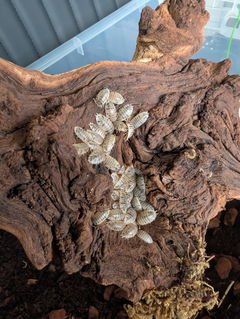
  • Breeding: Prolific — 15–30 mancae per brood, multiple broods per year
  • Rarity: Common — widely available in the hobby

What Makes Armadillidium nasatum Special

The "baseball cap" scutellum. This is the species's signature visual identifier — a narrow rectangular projection at the front of the head that gives the species its name (Latin nasatum = "nosed") and provides genuine diagnostic value. Distinguishes A. nasatum from the otherwise-similar A. vulgare at a glance once you know what to look for. Properly interesting anatomical feature for naturalist customers.

British native status. A. nasatum occurs genuinely in the wild in southern England — patchily distributed but established, with sporadic occurrences in Ireland. For UK keepers, this means the species you're keeping is part of the local fauna rather than a Vietnamese or Thai exotic. Adds a satisfying "could find one in the garden" quality to the keeping experience.

The Peach colour line. Hobby stock is typically selectively bred for warm peach, orange, and cream colouration — visibly different from the wild-type dark grey-and-stripes appearance. The Peach line is the standard you'll see in captive-bred stock today, and it's distinctly more attractive for display purposes than wild specimens.

Imperfect conglobation. Unlike most Armadillidium species, A. nasatum doesn't form a perfectly closed ball when threatened — the antennae remain visible, and there's a small gap. This is a genuine taxonomic feature shared only with A. depressum (another European Armadillidium) and helps confirm species identification in mixed colonies.

Five recognised subspecies. A. n. nasatum, A. n. flava, A. n. mehelyi, A. n. nigrescens, and A. n. saidovni — properly documented taxonomic depth for a beginner-tier species. Most hobby stock derives from A. n. nasatum.

Genuine taxonomic provenance. First described by Danish zoologist Gustav Budde-Lund in his 1885 work Crustacea Isopoda Terrestria, per Familias et Genera et Species Descripta — properly Victorian-era natural history with 140 years of continuous documentation. Type specimens are held at the Natural History Museum of Denmark.

Outstanding bioactive performance. Hardy, prolific, broadly tolerant of moisture and ventilation variation, and effective at processing organic waste — properly useful as cleanup crew in vivariums for dart frogs, crested geckos, bearded dragons, and similar setups.

How A. nasatum Compares to Other Beginner Armadillidium

  • vs Magic Potion (A. vulgare): Both are excellent beginner Armadillidium. Magic Potion is the orange-and-yellow selectively-bred A. vulgare morph; nasatum is the peach-toned selectively-bred A. nasatum. Nasatum has the "nose" feature and imperfect conglobation; Magic Potion rolls perfectly. Both forgiving, both prolific, both UK-room-temperature comfortable.
  • vs wild Common Pill Woodlouse: A. nasatum can be confused with A. vulgare in the wild — both occur in southern England. The "baseball cap" scutellum is diagnostic, and the imperfect ball-rolling differentiates A. nasatum at a glance.
  • vs other native British isopods: A. nasatum is one of several native UK isopod species also available in the catalogue, alongside the native Common Shiny Woodlouse (Oniscus asellus occidentalis) for a properly British keeper experience.
  • vs Dairy Cow (P. laevis): Both are beginner-tier non-Cubaris alternatives. Dairy Cow is the bold black-and-white Porcellio at larger size (18-22mm); A. nasatum is the smaller peach-toned Armadillidium with conglobation. Different visual identities; both excellent first colonies.

Setting Up the Enclosure

A 6–10 litre plastic container with a secure clip-lock lid suits a starter colony. A. nasatum are primarily ground-dwelling and don't climb smooth plastic, so enclosure security is straightforward — a properly-fitting lid prevents escapes. Drill ventilation holes on opposite sides for cross-ventilation, covered with fine mesh.

Provide cork bark flats, decaying wood, and a few flat hides. The species appreciates having multiple retreat options during moulting periods. Keep the enclosure out of direct sunlight.

Important husbandry note: A. nasatum do not need a standing water dish. Light misting one corner of the enclosure provides all the moisture they need — open water risks drowning small individuals and is unnecessary for a species comfortable across a broad humidity range. Skip the water dish.

Substrate

Use a substrate mix that retains moisture but drains well:

  • Organic topsoil base (pesticide-free) as the foundation
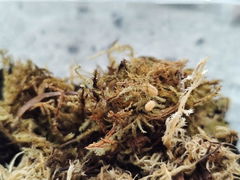
  • Sphagnum peat moss mixed lightly throughout
  • Composted hardwood leaf litter (oak, beech, sycamore — abundant)
  • Flake soil mixed in for added nutrition
  • Crushed limestone or eggshells distributed throughout for calcium
  • Rotting hardwood pieces (nutrition source)

We recommend a topsoil and sphagnum-based mix rather than coco coir. Substrate depth around 5–8 cm is sufficient — these are small ground-dwelling isopods that don't need deep burrowing space.

Top layer: Generous hardwood leaf litter — magnolia, oak, and beech all work well — plus a few flat cork bark hides. The peach colouration shows particularly well against dark substrate.

Humidity and Temperature

Maintain humidity around 50–75% with a moisture gradient — keep one corner consistently damp using sphagnum moss, while the rest stays drier with leaf litter coverage. A. nasatum is unusually adaptable to humidity variation, comfortably tolerating drier conditions than most isopods while still appreciating a moist retreat area.

Temperature should be 20–25°C — comfortably within UK room temperature year-round. They don't need supplementary heating in heated UK homes and handle minor temperature variation without difficulty.

Studies have shown A. nasatum populations actually benefit from crowding and the presence of larger animals, making them particularly effective in bioactive vivariums where they interact positively with the primary inhabitants.

Diet

A. nasatum are enthusiastic generalist detritivores happy with a broad diet:

  • Primary diet (always available): Mixed deciduous leaf litter (oak, beech, magnolia), rotting hardwood, decaying organic matter
  • Vegetables (1–2x weekly): Carrot, courgette, sweet potato, squash, cucumber. Replace within 24–48 hours.
  • Fruit (occasionally): Small amounts of soft fruit (apple, pear — avoid citrus)
  • Protein (weekly): Fish flakes, dried shrimp, dried daphnia, occasional bloodworm
  • Calcium (essential — always available): Cuttlefish bone, crushed limestone, oyster shell, eggshells. Important for healthy moulting.

These are forgiving feeders — variety helps but consistency is more important than precision. Remove uneaten fresh food within 24–48 hours to prevent mould.

Breeding

A. nasatum breed reliably and prolifically once established. Females develop a marsupium (brood pouch) and produce 15–30 mancae per brood, with multiple broods per year under stable conditions. Young inherit the peach colouration from birth, though colours may intensify through successive moults.

For breeding success:

  • Stable temperature within range (22–24°C is ideal for peak breeding)
  • Moderate moisture with proper gradient
  • Adequate calcium for breeding females
  • Regular protein supplementation supports population growth
  • Juveniles reach maturity within 4–6 months — faster than most isopods

Selective breeding from the most intensely-coloured individuals over generations can strengthen the peach colour line.

Who Should Buy Armadillidium nasatum?

Ideal for:

  • Complete beginners — this is genuinely the easiest Armadillidium starting point
  • Bioactive vivarium builders needing a working cleanup crew (dart frogs, crested geckos, bearded dragons)
  • Keepers interested in UK native species and biological literacy
  • Display keepers drawn to the warm peach colouration
  • People who appreciate the "baseball cap peak" anatomical detail
  • Educational keepers — A. nasatum demonstrates isopod biology beautifully (conglobation, moulting, reproduction visible)

Not ideal for:

  • Keepers wanting perfect conglobation — the imperfect ball is a species feature
  • Display keepers wanting bold high-contrast colouration — the peach is warm but subtle
  • Anyone wanting larger display animals (these are 12-15mm small isopods)

Realistic Expectations

The "nose" is real but subtle. The scutellum is small — visible on close inspection, particularly when conglobated. Don't expect a dramatic Pinocchio-like projection; expect the small but diagnostic bump that gives the species its name.

The ball is imperfect. Antennae remain visible when rolled, and there's a small gap. This is a species feature, not a defect.

The peach is warm, not vivid. Captive-bred Peach stock shows warm peach, orange, and cream tones with subtle variation. Don't expect saturated vivid orange — expect the gentle peach tones the colour line is named for.

They breed fast. Within months you'll have far more isopods than you started with. Plan for colony expansion.

UK native means UK climate. They handle British room temperature year-round without any heating requirement — properly low-maintenance for first-time keepers in any UK home.

Use collapsible tabs for more detailed information that will help customers make a purchasing decision.

Ex: Shipping and return policies, size guides, and other common questions.
You may also like


Recently viewed