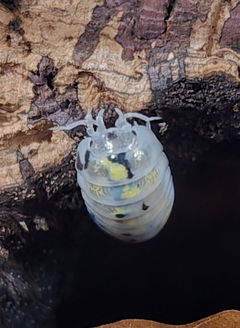
Chocolate Zebra Isopods (Armadillidium maculatum)
Care Info:
 ORIGIN
 TEMP
TEMP
 HUMIDITY
 LENGTH
 DIFFICULTY
 RARITY
- Free shipping over £65
- Low stock - 1 item left
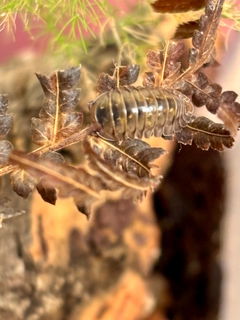
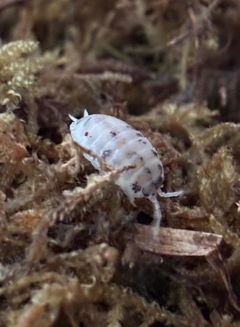
This is the Zebra isopod you already recognise, just wearing a different coat. The Chocolate Zebra (Armadillidium maculatum 'Chocolate') is the same classic banded species as the standard black-and-white Zebra, a medium Armadillidium of around 13 to 16 mm, but the stark black stripes have been swapped for a warm chocolate-brown. Same shape, same familiar pattern, same easy nature, only softer and warmer to look at. For anyone who has always liked the Zebra but wanted a gentler, more muted version of it, this is the one.
The brown runs across a lovely range, from milky cocoa through to deep, dark cacao, laid over a cream-to-white base. It gives them a more naturalistic, slightly vintage look next to the high-contrast wild type. That colour develops as they grow, so younger animals often show paler tones that deepen through successive moults, and a settled colony ends up with a warm spread of cocoa shades. They sit naturally alongside the standard Zebra and the Yellow Zebra, three colours of one easy species.
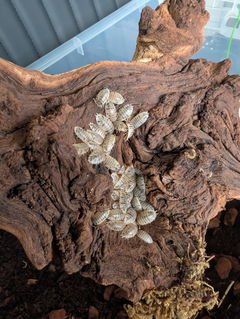
What I like most about maculatum is that they actually show themselves. Unlike a lot of isopods that vanish under the leaf litter, Zebras are daytime-active and bold, especially once a colony grows, so you tend to see them out and about rather than hunting for them under cover. That makes them a rewarding display species as well as an easy first colony. They breed readily too, with sub-adults often starting before they reach full size, and in a pure group the morph breeds true, the young coming through chocolate-striped as they mature. Like every Armadillidium they conglobate, rolling into a tight sealed ball when startled.
The wild species comes from southern France, a Mediterranean animal that wants a drier setup than most. Aim for a moisture gradient rather than a wet box: keep one damp corner going with sphagnum moss and damp leaf litter, and let the rest of the enclosure stay drier, somewhere around 50 to 70% overall. Give them medium ventilation with cross-airflow so nothing turns stagnant, mist the damp side when it needs it, and never let the whole substrate sit waterlogged.
Underneath, a topsoil and sphagnum mix suits them better than coco coir, with some flake soil worked in for nutrition and a good 5 to 8 cm of depth for burrowing and moulting. Top it with generous hardwood leaf litter, and magnolia leaf litter lasts particularly well as both cover and food. Keep calcium available throughout, from cuttlebone, crushed limestone or eggshell, since they need it for healthy moulting, and simply hold them at normal room temperature. They are very hardy, very prolific and about as beginner-friendly as isopods come, the same easy care as the standard Zebra.
If you like warm-toned Armadillidium, they pair nicely with something like Magic Potion, and you can see how they fit against the rest of the Armadillidium collection. They are unfussy detritivores that graze leaf litter and rotting wood and take the usual vegetable scraps and a little protein, so feeding is no trouble. I would point anyone who loves the classic Zebra shape but prefers softer, browner tones straight at these, whether as a first isopod, a bold display colony, or a hard-working cleanup crew for a bioactive setup.
Every order is captive-bred, boxed double-walled around a ventilated tub of damp sphagnum and posted Monday to Thursday by tracked next-day Royal Mail, with a live-arrival guarantee and a small overcount as standard.
Use collapsible tabs for more detailed information that will help customers make a purchasing decision.
Ex: Shipping and return policies, size guides, and other common questions.