Cubaris sp. 'Moby Dick' / 'Orcha' Isopods for Sale
Care Info:
 ORIGIN
 TEMP
TEMP
 HUMIDITY
 LENGTH
 DIFFICULTY
 RARITY
- Free shipping over £65
- Low stock - 1 item left
This one came from Mark Titterton, who bred the line and who sells as Isopods Online. We say that first because it is the most solid fact on the page. Every other line here is either our own observation or somebody's inference, and the breeder credit is the part with a real person behind it.
You will not find 'Moby Dick' anywhere else. We have checked the UK, European and US trade and it does not appear in any catalogue, any care sheet, any forum thread or any reference. The alternative names we use for it, 'Orcha' and 'Orca', return nothing as Cubaris names either. None of that makes the animal doubtful, since we have it in front of us, but it does mean that every sentence below is first-hand, not received, and we have rewritten the page to stop implying otherwise.
Appearance
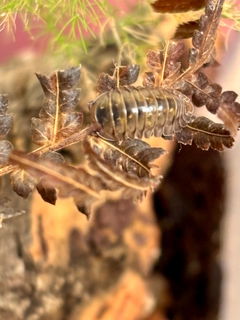
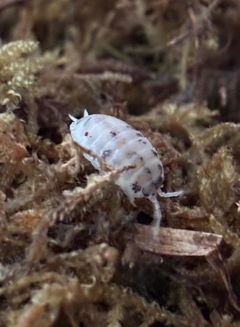
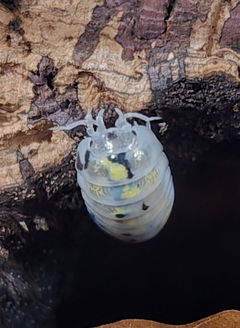
Worth saying that a pale Cubaris is harder to photograph than to look at. In the tub the effect is of an animal that catches the light, not one that is simply white, and pictures tend to flatten that out.
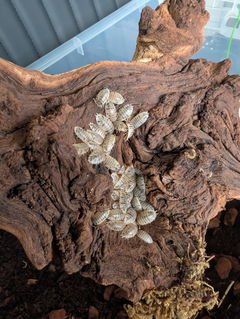
Very light bodies, white through to cream, with the gut visible as a darker line running down the centre. Against a dark substrate they are conspicuous in a way that most pale isopods are not, because the pale is uniform rather than mottled.
Our older copy put adult size at up to 15mm. Measuring a settled group here gives 10 to 12mm, so we have brought the figure down. The old page had the difficulty right, for the record: moderate, not easy, and not one for a first isopod.
They are also less nocturnal than most pale Cubaris we keep, which is part of why the line is worth having. You see them.
Where it came from
We have described this as a paler form of the White Side, also traded as Penguin, and that parent animal is real and listed by several European sellers. The derivation is our claim and Mark's, not a documented one - no source anywhere mentions a pale form of White Side under any name. We think it is right. We are flagging that we cannot prove it.
The two other names we use for it, Orcha and Orca, we inherited along with the animals. We have kept them on the page because customers who bought from Mark may know it by either, not because they are established anywhere in the trade.
Keeping them
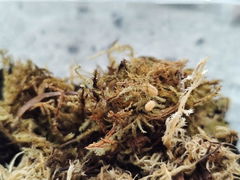
21 to 26°C, humidity 70 to 80% on a gentle gradient, cross-ventilation through mesh so the air moves without drying the tub out. Substrate 6cm or so with rotten hardwood through it, cork bark laid flat, deep litter, sphagnum in a corner. Permanent calcium - we use limestone alongside cuttlebone for the Cubaris because the pieces stay put and the animals visibly work at them.
Patience is what this one asks of you. A group of ten will not be a colony by the end of the season. Anyone wanting numbers quickly should be looking at the murina forms, which are cheaper and do exactly that.
Mark's stock is UK-bred and so is the generation we send out, so this is one of the few pages here carrying a captive-bred claim we are entirely happy to stand behind. Orders go early in the week by next-day post, in a vented pot on damp moss inside twin-wall card, with 20% more animals than the order states and a promise they reach you alive.
Use collapsible tabs for more detailed information that will help customers make a purchasing decision.
Ex: Shipping and return policies, size guides, and other common questions.