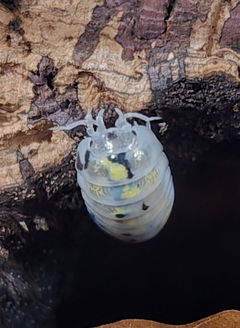
Sinodillo sp. 'China' Isopods
Care Info:
 ORIGIN
 TEMP
TEMP
 HUMIDITY
 LENGTH
 DIFFICULTY
 RARITY
- Free shipping over £65
- Low stock - 3 items left
This little isopod has been through a few names. Sold for years as a Merulanella, it has finally landed in the right genus, and the name that stuck says exactly where it is from. You will still see Sinodillo sp. 'China' traded under its older labels, Merulanella sp. 'Red Head' and Merulanella sp. 'Vietnam', but it now sits correctly in the genus Sinodillo, a southern-Chinese group described only relatively recently. The name is plainly descriptive: Sinodillo means something close to "little Chinese", from the Latin for China joined to the armadillo diminutive. That places it alongside the other former Merulanella species now spread across the reorganised Ardentiella and Sinodillo genera, including the closely related Merulanella sp. 'Red Diablo'. This is a corner of the hobby where the taxonomy is still on the move.
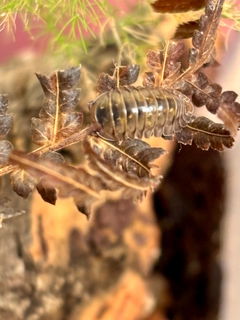
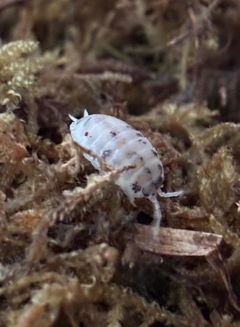
The look earns the attention. A warm cinnamon-red head sits over a paler, bluish-grey to grey-brown body, with the same red picked up along the skirt-like edges, so each animal reads as a sharp two-tone against a dark, naturalistic substrate. These are small isopods, topping out around 10 to 12 mm, with a compact, neatly rounded shape, and like the rest of their family they conglobate, rolling into a tight defensive ball when disturbed. Colonies stay reasonably active into the evening, so the colour is on show rather than always tucked away.
What makes it worth a place on the shelf is that a striking, unusual-looking Asian species stays approachable to keep. It is rated easy for an exotic and breeds reliably once settled, so it works as a step up rather than a leap. If you have kept a forgiving starter such as Cubaris murina and want more colour without the demands of a premium species like the Rubber Ducky, this fills the gap neatly.
Care comes down to warmth, humidity and air. Keep the enclosure warm and humid over a deep, living substrate the colony can work through, and pair that moisture with steady ventilation so the air never turns stale, which is the usual key with these Asian species. They sit a little cooler than many tropical Cubaris, so somewhere in the low to mid twenties Celsius suits them, held steady and away from windows or heat sources. A base rich in decaying matter suits them, and a scoop of flake soil adds nutrition and structure. Lay on plenty of cork bark and hardwood leaf litter for cover and food; magnolia leaves hold up well as a long-lasting top layer. Work a moisture gradient across the tub, damp on one side and drier under the litter on the other, so the colony can choose its own comfort. Keep a calcium source available for clean moults, offer the odd pinch of protein to support breeding, lift any spoiling fresh food before it turns, and let a springtail culture share the tub to deal with mould in the damper corners.
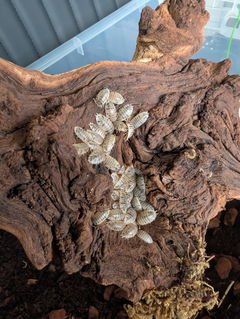
Breeding asks little more than patience once the conditions are right. Females carry their eggs in a brood pouch and release fully formed young, and a settled colony produces steadily rather than in fits and starts. The cinnamon head deepens as the juveniles mature, so a pure colony holds that two-tone look generation after generation. Give breeding females steady warmth, ample calcium and plenty of cover, and a slightly larger starting group settles and builds faster.
Every order goes out captive-bred, packed into a ventilated tub of damp sphagnum inside a double-walled box, and dispatched Monday to Thursday on tracked next-day Royal Mail for delivery by 1pm. Live arrival is guaranteed, and we add a 20% overcount as standard.
Use collapsible tabs for more detailed information that will help customers make a purchasing decision.
Ex: Shipping and return policies, size guides, and other common questions.