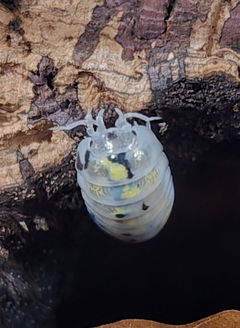
Cubaris sp. 'Latte' Isopods
Care Info:
 ORIGIN
 TEMP
TEMP
 HUMIDITY
 LENGTH
 DIFFICULTY
 RARITY
- Free shipping over £65
Cubaris sp. 'Latte' is the palest of the coffee-named Cubaris we stock, and no bigger claim than that is worth making for it. Everything published that separates Latte from Cappuccino comes down to one line from one seller, saying this is a lighter, milkier version of the same look. No distinct origin, no documented lineage, no different regime. If that reads thin, weigh it against what an isopod like this gets bought for. On an animal chosen for its colour, being the lightest one on the shelf is a sound enough reason to pick it.
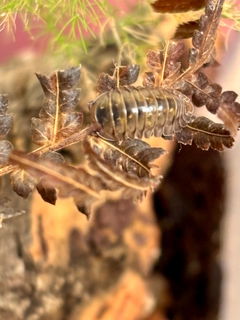
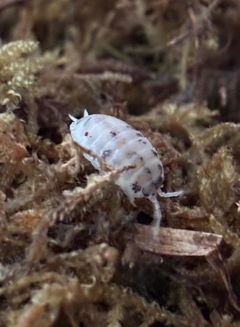
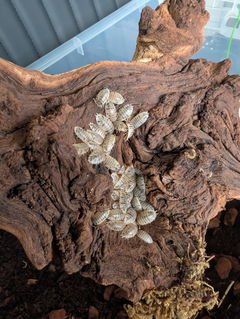
In our tubs the ground is cream running into a light milky brown, with soft marbling across the back that reads more clearly than it does on darker animals, because there is less pigment for it to sink into. Cappuccino carries a dark base with cream over the top. Latte is that same scheme diluted, which is where the name comes from. Adults reach roughly 15 to 20mm. Colour arrives with maturity, so juveniles look washed out beside their parents, which is normal and not a fault.
What it is
No formal description exists for this animal. It is Thai, cave-associated, placed in the family Armadillidae, and traded as Cubaris under a name the hobby invented. That label deserves one caveat: across this set of premium Thai forms the genus is provisional, and some of them will end up elsewhere once the group has been worked through. Of the near neighbours, Cappu Cream sits so close to Cappuccino that we say so on its own page, while Caramel Cream stands apart from the lot of them, coming off a different parent line, Cubaris sp. 'Caramel', and asking less of its keeper for it. Take the coffee names as sellers' shorthand and nothing firmer, because they are not a ranked family. Our Cubaris guide sets them out together.
Conditions
The decision that carries this species is airflow. A sealed box held at high humidity is the usual way a group gets lost, so build the enclosure with vents on opposing sides and let the air track between them. Within that airflow, humidity runs 60 to 80 per cent, and the spread matters more than the figure: keep the damp end towards the upper edge of that range, moist to the touch and never sodden, and leave the far side of the floor distinctly drier. Hold them at 21 to 26°C, an ordinary heated room in this country through most of the calendar, with a thermostatted mat on the side of the enclosure covering winter without baking the substrate from below.
Lay the base substrate 5 to 8cm deep, which gives an animal room to burrow and to shed its shell where nothing can reach it, then a thick layer of hardwood leaf litter with cork bark over the top. Litter is the everyday food and needs replacing before it disappears. Past that, a little squash or sweet potato now and then, a pinch of dried protein taken out again once they have finished with it, and limestone or cuttlebone sitting in there the whole time, because an animal off limestone rock draws on that supply heavily.
They conglobate, shutting into a tight ball when disturbed. Most movement happens after dark, though an established colony loses some of its caution and sits out more. Growth sits at normal to slow, breeding is fair without ever being quick, and individuals last two to three years, so expect a group that fills out across a year instead of one that runs away. Ours are captive-bred. This one suits a keeper who wants the lightest of these animals and is content that the colour is the reason for choosing it. The others sit alongside it in our Cubaris collection if a comparison helps.
We post Monday to Thursday and stop there, so no group of ours is left sitting in a sorting office across a weekend. Each order goes into a deli tub with air holes and a bed of damp sphagnum, and that tub is packed inside a double-walled carton. It travels on a tracked Royal Mail next-day service, delivering before 1pm. Every tub leaves here holding more animals than the count you paid for, and our live-arrival guarantee stands behind the lot.
Use collapsible tabs for more detailed information that will help customers make a purchasing decision.
Ex: Shipping and return policies, size guides, and other common questions.